

Article
Thomas Carothers
{
  "authors": [
    "Thomas Carothers"
  ],
  "type": "testimony",
  "centerAffiliationAll": "dc",
  "centers": [
    "Carnegie Endowment for International Peace"
  ],
  "collections": [
    "Democracy and Governance"
  ],
  "englishNewsletterAll": "democracy",
  "nonEnglishNewsletterAll": "",
  "primaryCenter": "Carnegie Endowment for International Peace",
  "programAffiliation": "DCG",
  "programs": [
    "Democracy, Conflict, and Governance"
  ],
  "projects": [],
  "regions": [],
  "topics": [
    "Political Reform",
    "Democracy",
    "Foreign Policy"
  ]
}
Source: Getty
Democracy assistance, once a bipartisan initiative, has come under threat in recent years, but the Obama administration has a unique opportunity to effectively promote democracy around the world.
Source: Cornell University
Democracy assistance, once a bipartisan initiative, has come under threat in recent years. After a decade of unprecedented democratic growth in the 1990s, democracy appears to have stagnated in the beginning of the 21st century. Additionally, the Bush administration damaged the reputation of U.S. democracy promotion by associating it with American military interventions and the pursuit of selfish interests. Yet, Thomas Carothers explained at Cornell University’s Einaudi Center for International Studies, it would be a mistake to see the Bush administration’s foreign policy as an expression of excessive democracy promotion. President Bush spoke eloquently on democracy, but the administration in fact pursued a realist policy in the war on terror, maintaining close relationships with authoritarian governments and proving willing to violate human rights.
Despite the inherent difficulties, Carothers asserted, President Obama cannot and should not avoid democracy promotion. The idea of democracy is too intertwined with America’s self-image and too important in the world to be ignored. The Obama administration understandably wants to distance itself from Bush era policies, but the problem was how the Bush administration promoted democracy, not democracy promotion itself. In fact, President Obama has a unique opportunity to effectively promote democracy around the world, Carothers added. Obama’s inspiring personal story and the global excitement surrounding his election, as well as his inclination towards cooperation and moderation, provide him with tools for rallying global support around democracy. The administration has already made encouraging steps in promising to close Guantanamo Bay prison, but Carothers concluded that it will need to go farther and articulate a positive vision for democracy promotion.

Harvey V. Fineberg Chair for Democracy Studies; Senior Fellow, Democracy, Conflict, and Governance Program
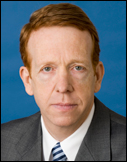
Thomas Carothers, a senior fellow in the Carnegie Endowment for International Peace’s Democracy, Conflict, and Governance Program, is a leading expert on comparative democratization and international support for democracy.
Recent Work
Thomas Carothers
Thomas Carothers
Carnegie does not take institutional positions on public policy issues; the views represented herein are those of the author(s) and do not necessarily reflect the views of Carnegie, its staff, or its trustees.

But their "principal to principal" model will only be as effective as the political strength of each leader back home.

Damien Ma

U.S. unpredictability has allowed China to capitalize on its positioning as the “responsible great power”. Paradoxically, the more China wins the perception game, the more likely expectations will rise for Beijing to deliver not just words but to demonstrate with its deeds.

Chong Ja Ian

Hanoi and Beijing have long treated each other as distant cousins rather than comrades in arms. That might be changing as both sides draw closer to hedge against uncertainty and America’s erratic behavior.

Nguyễn Khắc Giang

Across Asia, China is better positioned to withstand energy shocks from the fallout of the Iran war. Its abundant coal capacity can ensure stability in the near term. Yet at the same time, the country’s energy transition away from coal will make it even less vulnerable during the next shock.
Damien Ma

Malaysia’s chairmanship sought to fend off short-term challenges while laying the groundwork for minimizing ASEAN’s longer-term exposure to external stresses.

Elina Noor