

Commentary
Dmitri Trenin
{
  "authors": [
    "Dmitri Trenin"
  ],
  "type": "legacyinthemedia",
  "centerAffiliationAll": "",
  "centers": [
    "Carnegie Endowment for International Peace",
    "Carnegie Russia Eurasia Center"
  ],
  "collections": [],
  "englishNewsletterAll": "",
  "nonEnglishNewsletterAll": "",
  "primaryCenter": "Carnegie Russia Eurasia Center",
  "programAffiliation": "",
  "programs": [],
  "projects": [
    "Eurasia in Transition"
  ],
  "regions": [
    "East Asia",
    "China",
    "Caucasus",
    "Russia"
  ],
  "topics": [
    "Foreign Policy"
  ]
}
Source: Getty
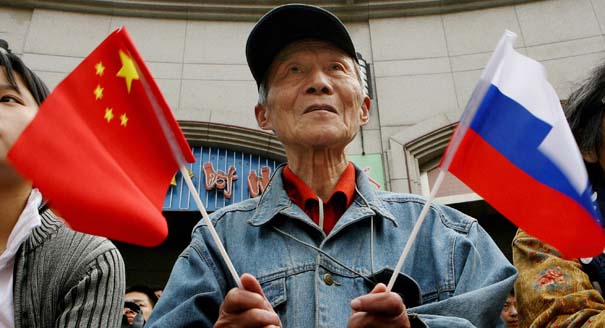
Good relations between Russia and China, promoted by economic and political cooperation, are one of the major and most valued aspects of Moscow's current foreign policy.
Source: China Daily

Russian President Dmitri Medvedev's visit to China is likely to promote further this pragmatic course, at the heart of which is economic exchange - especially energy.
Even though the price of Russian natural gas remains a sticky issue for China, Gazprom is hopeful that by 2015 it will start exporting gas to China. If built, the capacity of the "Altai" pipeline will be comparable to Russia's North and South Streams to Europe. Rosneft will begin exporting oil to China through a spur in its new East Siberia-Pacific Ocean pipeline from next year and will enter into a joint venture with China National Petroleum Corporation to build an oil refinery in Tianjin, the biggest Sino-Russian project so far.
Besides, Lukoil, Russia's leading privately owned energy company, plans to pump gas to western China from its Uzbek gas fields. Because of these and other moves, Russian energy exports, until recently almost exclusively directed toward Europe, will become diversified, and China's fast-growing economy will get access to its neighbor's vast oil and gas resources.
China has emerged as a self-confident Asian and global player, and Russia lays great stock on cooperating with it on regional security issues. The importance of the Shanghai Cooperation Organization will probably rise in the near future, and it could help resolve the terrorism issues in Afghanistan and Pakistan, and disentangle the mess over the Iranian nuclear issue. The situation in Central Asia, from the Ferghana Valley to the Pamir Mountains, also calls for closer coordination between Moscow and Beijing.
China is also a key member of the Six-Party Talks on the Korean Peninsula nuclear issue, another matter of concern to Russia. On the broader issue of world order and global governance, Beijing and Moscow have long advocated multi-polarity, territorial sovereignty and non-interference in the internal affairs of a country. Since the early 1990s, the People's Liberation Army of China has been a major customer of Russia's defense industry.
All these are notable bilateral achievements. But real efforts are required in a number of areas for the relationship to become more rewarding. Russia needs to find ways to diversify its raw-materials-heavy exports to China. Chinese nationals working in Russia need to acquire proper legal status. Sino-Russian elite dialogue has to become deeper and more sincere to deepen understanding and help establish trust. The study of Chinese language, history and civilization by young Russians should be expanded drastically, including through exchange programs with Chinese universities. Organizing the occasional "Year of China" and "Year of Mandarin" in Russia alone will not do.
The Russian political establishment needs to modify its traditional Euro-centric view of the world. Russia is a Euro-Pacific country, with its Pacific element growing in importance with the rise of Asia that is being driven in a big way by China. Developing eastern Siberia and the Far East is a national priority for Russia, and the success or failure of the enterprise will reflect on its prospects in the 21st century.
After Vladivostok hosts the Asia-Pacific Economic Cooperation meeting in 2012, Russia should turn it into a Pacific headquarters of its leadership. Vladivostok should be transformed into a venue for diplomatic contacts with Asian and Pacific countries, and a business gateway to the vast region.
But amid all this, is there a chance of Sino-Russian relationship suddenly turning sour? Not under the present circumstances and the current leaderships in the two countries. But a word of caution is needed. Both countries are seeing a rise in nationalism - defensive in post-Soviet Russia and more assertive in China, which is feeling its new strength and has not forgotten the humiliation it was subjected to in the past. The two phenomena are understandable from a historical perspective, but the governments in Moscow and Beijing need to ensure that national feelings of their citizens are converted into constructive patriotism, rather than destructive xenophobia.
Despite his obvious importance, Dmitri Medvedev will be only one of about 1 million Russians who come to China each year. It is ordinary people, tourists and business travelers; academics and artists who form and shape modern Sino-Russian ties. What started as party-to-party and then became state-to-state has now being transformed into a people-to-people relationship. This is, by far, the strongest bond between the neighboring countries.
Former Director, Carnegie Moscow Center
Trenin was director of the Carnegie Moscow Center from 2008 to early 2022.
Recent Work
Dmitri Trenin
Dmitri Trenin
Carnegie does not take institutional positions on public policy issues; the views represented herein are those of the author(s) and do not necessarily reflect the views of Carnegie, its staff, or its trustees.

Malaysia’s chairmanship sought to fend off short-term challenges while laying the groundwork for minimizing ASEAN’s longer-term exposure to external stresses.

Elina Noor

For Malaysia, the conjunction that works is “and” not “or” when it comes to the United States and China.
Elina Noor

ASEAN needs to determine how to balance perpetuating the benefits of technology cooperation with China while mitigating the risks of getting caught in the crosshairs of U.S.-China gamesmanship.
Elina Noor
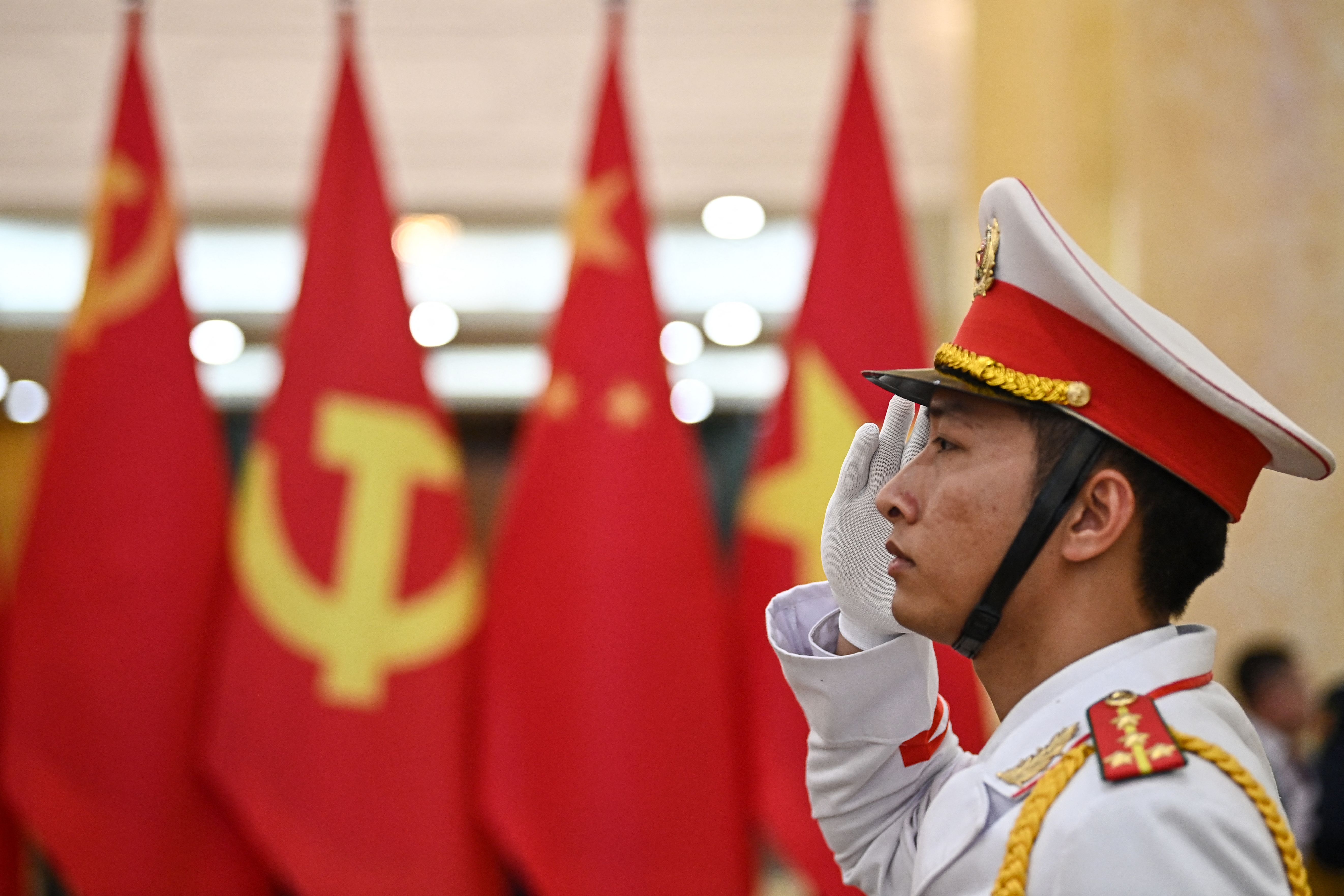
In July 2025, Vietnam and China held their first joint army drill, a modest but symbolic move reflecting Hanoi’s strategic hedging amid U.S.–China rivalry.

Nguyễn Khắc Giang

Regulation, not embargo, allows Beijing to shape how other countries and firms adapt to its terms.
Alvin Camba