

Commentary
Amr Hamzawy
{
  "authors": [
    "Amr Hamzawy"
  ],
  "type": "legacyinthemedia",
  "centerAffiliationAll": "",
  "centers": [
    "Carnegie Endowment for International Peace",
    "Malcolm H. Kerr Carnegie Middle East Center"
  ],
  "collections": [
    "Arab Awakening"
  ],
  "englishNewsletterAll": "",
  "nonEnglishNewsletterAll": "",
  "primaryCenter": "Carnegie Endowment for International Peace",
  "programAffiliation": "",
  "programs": [],
  "projects": [],
  "regions": [
    "North Africa",
    "Egypt"
  ],
  "topics": [
    "Political Reform"
  ]
}
Source: Getty
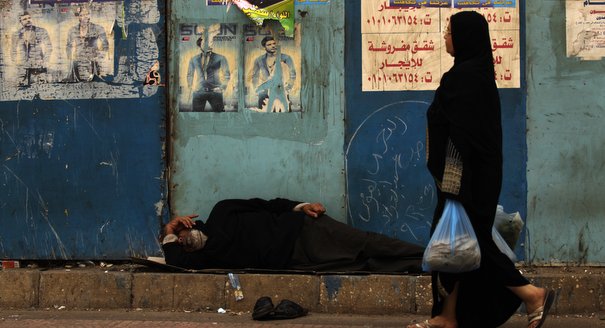
Unlike in previous periods of unrest in Egypt, when economic and political demands were separated, the ongoing protests integrate calls for bread and butter domestic issues with demands for democratic reform.
Source: The New York Times

First, the Jasmine Revolution in Tunisia sparked the momentum. Many anticipated that ripples throughout the Arab world could fracture the authoritarian order in other countries in the region. Egyptians had been prompted to break through their fear of dissent.
Another distinguishing factor was the purely domestic nature of the demands that drove the protests. The repetitive and ambiguous denunciations of globalism, Zionism and U.S. policy in the Middle East were nowhere to be heard.
Similarly absent was the ideological context in which Egypt’s political and public space is typically framed.
Members of the Muslim Brotherhood participated, for example, but the religious tone was nonexistent. The Jasmine Revolution effectively turned Arabs’ priorities from the banal rhetoric and distractions on regional politics toward pressing socioeconomic issues effecting daily life. By shifting focus, the movement in Egypt attracted citizens not typically involved in politics.
Also, because of the virtual world of social networking, young people free of any political affiliation mobilized in an unprecedented and dynamic expression of their rights. Their demands were simple and their language clear: stop state corruption; we need jobs; end torture now.
The most critical of factor distinguishing these protests from any other, however, was the one that fundamentally changed the rules of the game for the regime. Previously, economic and political demands were separated. As of Tuesday, bread and butter are issues have been integrated with — even fueled — the calls for democratic reform. The ruling establishment will now find it difficult to return to the logic of separate and divide.
To avoid the prospect of chaos, it is crucial that the regime respond to Egyptians’ legitimate demands.

Director, Middle East Program
Amr Hamzawy is a senior fellow and the director of the Carnegie Middle East Program. His research and writings focus on Egypt’s and other middle powers’ involvement in regional security in the Middle East, particularly through collective diplomacy and multilateral conflict resolution
Recent Work
Amr Hamzawy
Amr Hamzawy
Carnegie does not take institutional positions on public policy issues; the views represented herein are those of the author(s) and do not necessarily reflect the views of Carnegie, its staff, or its trustees.
Transactional relationships are stable but can be shallow.



Paul Haenle, Maha Yahya, Benjamin Ho, …

It’s about managing oil prices, bread prices, and strategic partnerships.


Amr Hamzawy, Karim Sadjadpour, Aaron David Miller, …

The murder of George Floyd has underscored the deep inequities that have long plagued American society. In a note to the Carnegie community, Bill Burns reflects on Carnegie’s commitment to build a more just future here at home and around the world, without which peace will remain beyond our grasp.

William J. Burns

While the world hoped this pandemic might lead to more cooperation between these two great powers, American and Chinese leaders instead fell into a blame game and allowed their increasing suspicions to guide their decision-making.
Lyu Jinghua

Biological viruses and computer malware differ in important respects. They have considerable potential to spread widely, invading, disrupting and destroying their targets.

Ariel (Eli) Levite, Lyu Jinghua