

Commentary
Amr Hamzawy
{
  "authors": [
    "Amr Hamzawy"
  ],
  "type": "legacyinthemedia",
  "centerAffiliationAll": "dc",
  "centers": [
    "Carnegie Endowment for International Peace",
    "Malcolm H. Kerr Carnegie Middle East Center"
  ],
  "collections": [
    "Arab Awakening"
  ],
  "englishNewsletterAll": "menaTransitions",
  "nonEnglishNewsletterAll": "",
  "primaryCenter": "Carnegie Endowment for International Peace",
  "programAffiliation": "MEP",
  "programs": [
    "Middle East"
  ],
  "projects": [],
  "regions": [
    "North Africa",
    "Egypt"
  ],
  "topics": [
    "Political Reform"
  ]
}
Source: Getty
The protesters in Egypt must look beyond the issue of whether and when President Mubarak will step down and begin to consider what it will take to engage in an orderly transition to democracy in Egypt.
Source: NPR

He's one of the so-called wise men who were talking with both protesters and the government and he joins us by phone from Egypt. Welcome to the program.
Mr. AMR HAMZAWY (Senior Associate, Carnegie Middle East Center): Thank you very much, Robert.
SIEGEL: It appears to us from afar that there's now a complete stalemate on the question of whether Hosni Mubarak should leave office at once or whether he should remain in office through some transition period. Is there any movement at all on that score?
Mr. HAMZAWY: No, unfortunately there is no movement up until today. The president and the establishment remain committed to keeping him in office until September, continue to reject our suggestion to call on the president to negate his presidential powers to the vice president to manage the transitional period to we are still stuck (unintelligible) like last week. And I see the (unintelligible). We really have to work beyond that question and see what it takes to define an orderly transition to democracy in Egypt.
SIEGEL: Well, that's a description of the intransigents you've discovered at the government. Among protesters it doesn't seem that handing off power to Vice President Suleiman would be satisfactory either. Or do you think they would accept that?
Mr. HAMZAWY: They would accept it. I mean, of course I have been with different protest movements and networks in Tahrir, in Cairo and elsewhere since January 25. And I am certain that if we reach a formula which really takes Mubarak out of the Egyptian critical theme, de facto taking him out, people will be satisfied. Rather than in the background, there's not only a sort of - not wishing to having Mubarak any longer, which I do understand. But it's really the growing mistrust in what he is capable to do in terms of suppressing the legitimate democracy aspirations in Egypt.
SIEGEL: Well, when his now chosen vice president, Suleiman, speaks of Egypt not being ready for democracy, do you get the impression that they're talking about the need for some relatively brief period of constitutional changes and preparations for an election? Or do they mean a multi-year extension of the current regime minus Hosni Mubarak?
Mr. HAMZAWY: You know, it's exactly where our fears are as of now. I mean, what I am seeing from an analytical point of view is more of a consolidation of authoritarianist(ph) pattern and much, much less a democratization pattern. I mean the response of the ruling establishment to the legitimate demands of a growing segment of the Egyptian public opinion and of the international community has been limited, has not really added up to a real reform package.
We are being offered some constitution amendments. We are being offered a possibility of lifting the emergency law, pending the security situation in the country. And so, in total, it does not really add up to a new reform package. So I'm seeing more of a consolidation concept, consolidation attempt. But that attempt to divide up the demands, the legitimate demands of the (unintelligible) by taking parties aside and offering a couple of seats when the elections get repeated.
So it's the same tactics, divide and rule authoritarian tactics which we have been knowing from Egypt from the last decade.
SIEGEL: So, what you're describing there is the regime being prepared to make some quantitative adjustments to its power, but not the qualitative one, not the one that says it's time for a new order in Egypt.
Mr. HAMZAWY: Exactly. They have yet to realize the change which really happened on January 25, at the latest on January 28th, which is the fact that citizens have recaptured the streets. We have yet to realize it and to reengineer the system to avert it. So we are trying to suppress it and I'm afraid we are going to be into a protracted crisis of sorts.
SIEGEL: Political scientist Amr Hamzawy of the Carnegie Middle East Center. Thanks for talking to us from Cairo.
Mr. HAMZAWY: My pleasure, Robert.

Director, Middle East Program
Amr Hamzawy is a senior fellow and the director of the Carnegie Middle East Program. His research and writings focus on Egypt’s and other middle powers’ involvement in regional security in the Middle East, particularly through collective diplomacy and multilateral conflict resolution
Recent Work
Amr Hamzawy
Amr Hamzawy
Carnegie does not take institutional positions on public policy issues; the views represented herein are those of the author(s) and do not necessarily reflect the views of Carnegie, its staff, or its trustees.
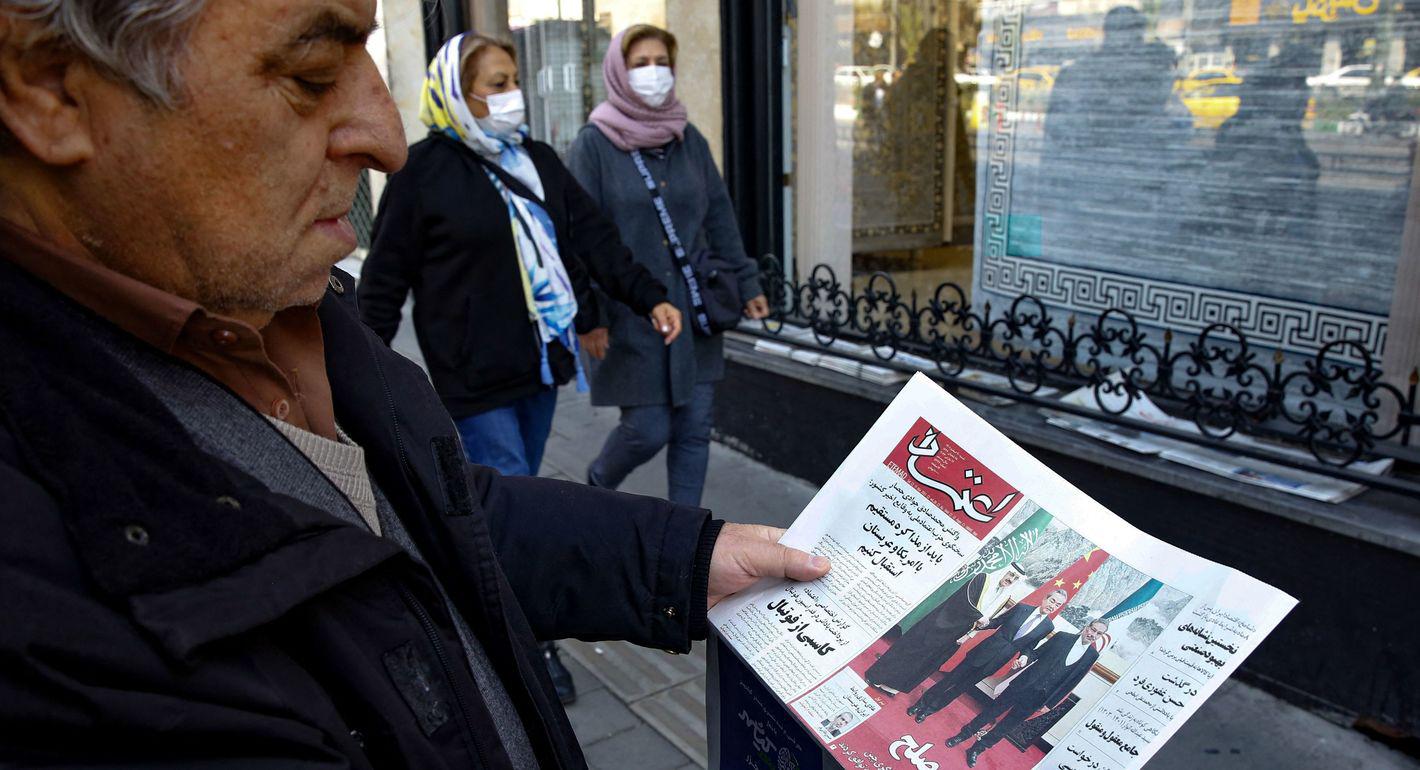
Transactional relationships are stable but can be shallow.


Paul Haenle, Maha Yahya, Benjamin Ho, …
It’s about managing oil prices, bread prices, and strategic partnerships.


Amr Hamzawy, Karim Sadjadpour, Aaron David Miller, …
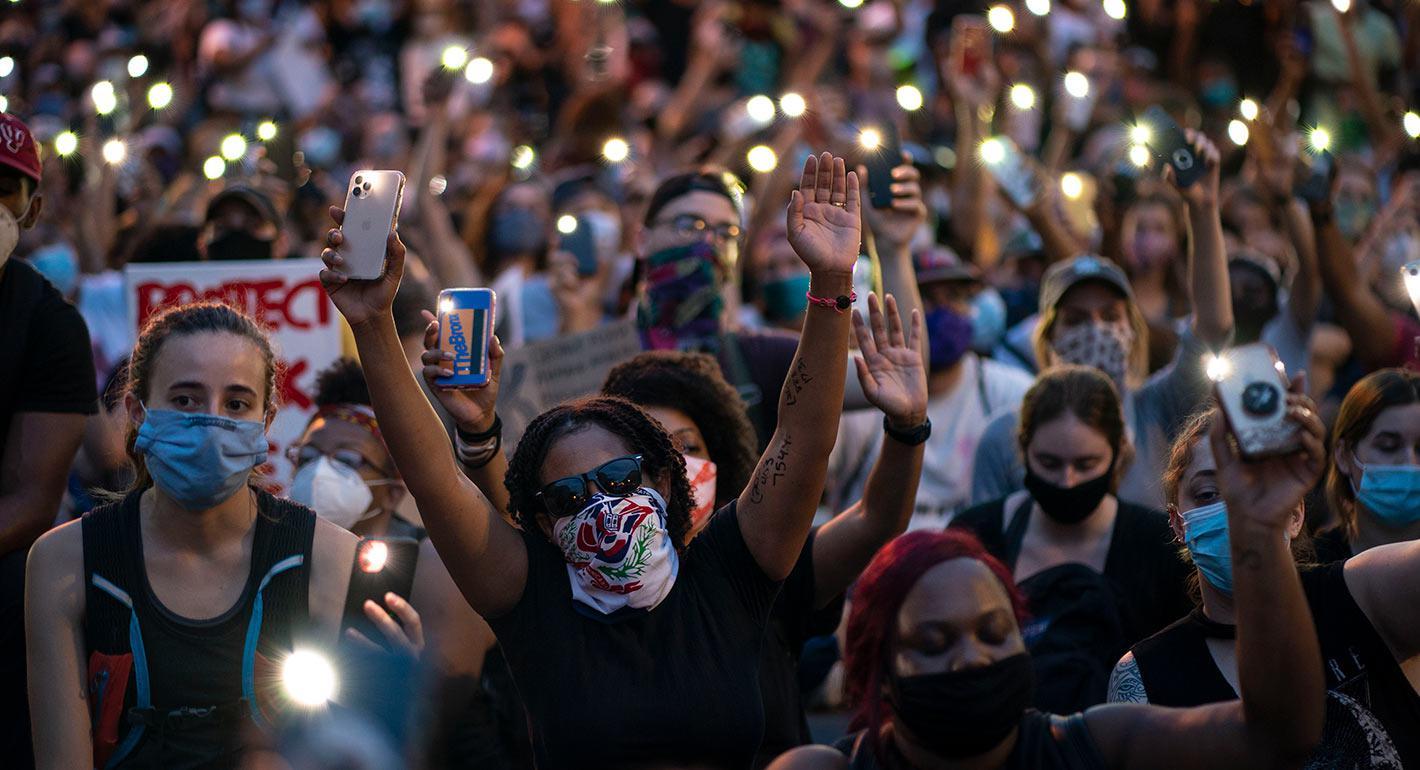
The murder of George Floyd has underscored the deep inequities that have long plagued American society. In a note to the Carnegie community, Bill Burns reflects on Carnegie’s commitment to build a more just future here at home and around the world, without which peace will remain beyond our grasp.
William J. Burns

While the world hoped this pandemic might lead to more cooperation between these two great powers, American and Chinese leaders instead fell into a blame game and allowed their increasing suspicions to guide their decision-making.
Lyu Jinghua

Biological viruses and computer malware differ in important respects. They have considerable potential to spread widely, invading, disrupting and destroying their targets.
Ariel (Eli) Levite, Lyu Jinghua