

Research
- +5
Alper Coşkun, Fatih Ceylan, Tacan İldem, …
{
  "authors": [
    "Sinan Ülgen"
  ],
  "type": "legacyinthemedia",
  "centerAffiliationAll": "",
  "centers": [
    "Carnegie Endowment for International Peace",
    "Carnegie Europe"
  ],
  "collections": [
    "Turkey’s Transformation",
    "Brexit and UK Politics"
  ],
  "englishNewsletterAll": "",
  "nonEnglishNewsletterAll": "",
  "primaryCenter": "Carnegie Europe",
  "programAffiliation": "",
  "programs": [],
  "projects": [],
  "regions": [
    "Middle East",
    "Europe",
    "Türkiye"
  ],
  "topics": [
    "Foreign Policy"
  ]
}
Source: Getty
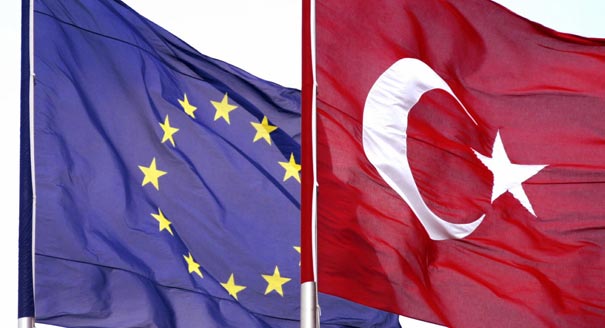
The ruling Justice and Development party's electoral success in Turkey means that Ankara is likely to continue its current policy of hesitant engagement with Brussels.
Source: European Voice

The AK's electoral success is closely linked to Turkey's economic track record. In the past decade, Turkey has averaged a growth rate of 5% per year. Last year, with 8.7% growth, Turkey ranked third in the global league of fastest-growing countries, directly after China and Argentina. Erdoğan administrations, however, have also made sure to address the grievances of the country's poor by launching a range of social programmes. Visible improvements in health services, which have led to quasi-universal health coverage, and the increased availability of affordable housing were significant vote winners for the AK.
Despite its impressive vote tally, the AK failed to secure the constitutional majority that Erdoğan sought. In fact, with 226 representatives, the ruling party will have ten fewer seats in parliament than before. The main opposition centre left Republican People's Party (CHP) also increased its share of the vote, from 22% to 26%. It will be represented by 135 deputies in the Turkish parliament. More remarkably, the Kurdish Peace and Democracy Party (BDP) won 36 seats, up from 21 in the previous round. As a result, Erdoğan and the AK will have to enter into substantive negotiations with the parliamentary opposition in order to push through the constitutional amendments that the country needs. Erdoğan will be forced to seek consensus with his political rivals, a welcome change for Turkey's highly polarised political environment.
This electoral victory will also be interpreted as a vindication of the more assertive and ambitious foreign policy that Erdoğan and Foreign Minister Ahmet Davutoğlu have championed. It would seem that the AK's foreign policy narrative has become the overriding paradigm for a significant part of Turkish public opinion. It is no coincidence that, in his speech on Sunday evening, Erdoğan chose to speak about Syria, Libya and Israel as part of his ‘tour d'horizon'. Having received a renewed, strong popular mandate, the government in Ankara will be all the more comfortable in its role as a regional power, even if this means remaining at odds with the country's partners in the West.
The EU dimension was conspicuously absent from Turkish electoral debates. Party leaders spoke about the challenges in Turkey's neighbourhood, but rarely about the EU. This clearly indicates the widespread loss of interest in the EU accession process. The EU issue has become so remote that it was not even found worthy of politicking. Turkey-EU relations have indeed lost their momentum, and accession negotiations stalled during the AK's last term. The Turkish electorate, however, has clearly not penalised the ruling party for this failure.
Going forward this can be taken as a sign that Turkey will continue with its current policy of hesitant engagement with Brussels. The political calculus in Ankara will be shaped by the outcome of upcoming elections in France, in 2012, and in Germany, in 2013. Only the replacement of the current Turkey-sceptics with new leadership more willing to open a place for Turkey in Europe can change the underlying dynamics of Turkish accession. Last week's election results have shown that this momentum will not be generated by a frustrated Turkish electorate.

Senior Fellow, Carnegie Europe
Sinan Ülgen is a senior fellow at Carnegie Europe in Brussels, where his research focuses on Turkish foreign policy, transatlantic relations, international trade, economic security, and digital policy.
Recent Work

Alper Coşkun, Fatih Ceylan, Tacan İldem, …
Carnegie does not take institutional positions on public policy issues; the views represented herein are those of the author(s) and do not necessarily reflect the views of Carnegie, its staff, or its trustees.

But their "principal to principal" model will only be as effective as the political strength of each leader back home.

Damien Ma

U.S. unpredictability has allowed China to capitalize on its positioning as the “responsible great power”. Paradoxically, the more China wins the perception game, the more likely expectations will rise for Beijing to deliver not just words but to demonstrate with its deeds.

Chong Ja Ian

Hanoi and Beijing have long treated each other as distant cousins rather than comrades in arms. That might be changing as both sides draw closer to hedge against uncertainty and America’s erratic behavior.

Nguyễn Khắc Giang

Across Asia, China is better positioned to withstand energy shocks from the fallout of the Iran war. Its abundant coal capacity can ensure stability in the near term. Yet at the same time, the country’s energy transition away from coal will make it even less vulnerable during the next shock.
Damien Ma

Malaysia’s chairmanship sought to fend off short-term challenges while laying the groundwork for minimizing ASEAN’s longer-term exposure to external stresses.

Elina Noor