Condoleezza Rice and Germany on the Sino-Pakistan Deal
Germany's comments about Chinese plans to export two power reactors to Pakistan do not help address international uncertainty over whether these exports would violate Nuclear Supplier Group guidelines.
Condoleezza Rice and Germany on the Sino-Pakistan The German federal government has published in its journal of record its answer to questions submitted a month ago by lawmakers concerning the then-upcoming 2011 plenary meeting of the Nuclear Suppliers Group (NSG).
Particularly interesting is what Germany had to say about China’s plans to export two power reactors to Pakistan as Chashma-3 and -4.
As many blog readers know, I have focused a certain amount of my attention on this issue since we were able in March 2010 to get confirmation from China that this transaction was for real. Because Pakistan does not apply IAEA full-scope safeguards to its nuclear activities, barring further information substantiating that China had made previous commercial arrangements with Pakistan for the export of these two reactors, many NSG members last year considered that, if China supplied the two reactors, that would violate NSG guidelines.
During the 2010 NSG plenary meeting held in New Zealand last June, the U.S. government expressed the view that, based on its information, China could not claim that the new exports to Pakistan could be “grandfathered” under previous agreements binding China and Pakistan. Instead, the U.S. elaborated last spring, China should seek an exemption from NSG trade rules conditioning exports of trigger list items to states without FSS, should it want to export more PWRs to Pakistan. (China had exported Chashma-1 and -2 before it joined NSG in 2004)
Assuming that what the German government told lawmakers represents the whole truth and nothing but the truth, the new German statement to parliament on NSG-related issues would suggest that the U.S. government last year and as early as 2004 had been grossly misinformed about the status of China’s pending export to Pakistan.
That’s what I would conclude from Germany’s answer to question 8, which asks: “Does the federal government share the Chinese view that supply [of Chashma-3 and -4] is covered (grandfathered) by a bilateral trade agreement concluded before [sic] China’s entry in the NSG in 2004?”
Germany’s answer:
There was a “Chinese government declaration” on September 21, 2010 which stated that a “bilateral agreement” in 2003 between Pakistan and China covered the export of Chashma-3 and -4 to Pakistan. For this reason, Germany told MPs, the export of the new reactors to Pakistan by China represents an “old case” and that “China can therefore supply [the reactors] without violating NSG guidelines.”
Really?
Was Germany not aware of what transpired during closed-door NSG meetings in 2004 when, on the occasion of China joining the NSG, NSG participating governments requested clarification from China about the contents of China’s pre-2004 bilateral nuclear cooperation agreement with Pakistan?
Germany was aware of this. In answering question 10, the German government last month told lawmakers that “when it joined the NSG, China made a statement regarding existing supply contracts” with Pakistan. “In this matter—as in all NSG matters—it was agreed that this would be held confidential.”
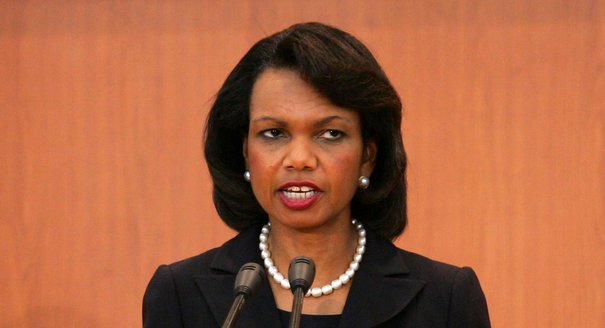
Confidential or not, I’m now a little confused by Germany’s answer, since then-Secretary of State Condoleezza Rice specified to the U.S. Senate Foreign Relations Committee back in April, 2005—about a year after the U.S. government during NSG consultations requested clarification from China about its Pakistan trade—precisely that existing agreements between China and Pakistan did not include the export of two more PWRs from China.
I’ve talked to people who were on hand during that interaction between NSG PGs and China back in 2004. They told me the same story that Ms Rice told the U.S. Senate.
Condi said namely:
“We are not aware at this time of any plans on the part of China to seek additional reactor exports to Pakistan… As part of its joining NSG in 2004, China disclosed its intention to continue its cooperation with Pakistan under the grandfathering to the NSG guideline provisions requiring FSS as a condition of nuclear supply.”
What did the Secretary of State say that China had told NSG participating governments was actually covered by the Sino-Pakistan nuclear agreement?
“This cooperation would include lifetime support and fuel supply for the safeguarded Chashma-1 and -2 power plants, supply of heavy water and operational safety service for the safeguarded Karachi nuclear power plant, and supply of fuel and operational safety service to the two safeguarded research reactors at PINSTECH.”
The bottom line:
“China has pledged—and is expected—to abide by the NSG guidelines on the transfers of nuclear equipment, technology, and material…If China did seek to provide additional reactors to Pakistan, it would need NSG accommodation… We do not believe that the 45 member states of the NSG would agree to such an accommodation…”
During last month’s 2011 NSG plenary meeting, the NSG’s participating governments did not agree on whether China’s export to Pakistan should be permitted to be grandfathered. It wasn’t even close.
With all due consideration for Germany’s resolve to keep secret China’s statement from 2004, what gives? If China’s explanation was watertight and substantiated—and if Condi Rice was wrong—China’s assertion that the commerce with Pakistan should be grandfathered should have been compelling for all PGs at last month’s NSG annual meeting. But it wasn’t.
Hibbs is a Germany-based nonresident senior fellow in Carnegie’s Nuclear Policy Program. His areas of expertise are nuclear verification and safeguards, multilateral nuclear trade policy, international nuclear cooperation, and nonproliferation arrangements.
Carnegie does not take institutional positions on public policy issues; the views represented herein are those of the author(s) and do not necessarily reflect the views of Carnegie, its staff, or its trustees.
Across Asia, China is better positioned to withstand energy shocks from the fallout of the Iran war. Its abundant coal capacity can ensure stability in the near term. Yet at the same time, the country’s energy transition away from coal will make it even less vulnerable during the next shock.
ASEAN needs to determine how to balance perpetuating the benefits of technology cooperation with China while mitigating the risks of getting caught in the crosshairs of U.S.-China gamesmanship.
In July 2025, Vietnam and China held their first joint army drill, a modest but symbolic move reflecting Hanoi’s strategic hedging amid U.S.–China rivalry.