

Paper
Paul Salem
{
  "authors": [
    "Paul Salem"
  ],
  "type": "legacyinthemedia",
  "centerAffiliationAll": "",
  "centers": [
    "Carnegie Endowment for International Peace",
    "Malcolm H. Kerr Carnegie Middle East Center"
  ],
  "collections": [],
  "englishNewsletterAll": "",
  "nonEnglishNewsletterAll": "",
  "primaryCenter": "Malcolm H. Kerr Carnegie Middle East Center",
  "programAffiliation": "",
  "programs": [],
  "projects": [],
  "regions": [
    "Levant",
    "Syria"
  ],
  "topics": [
    "Political Reform",
    "Security"
  ]
}
Source: Getty
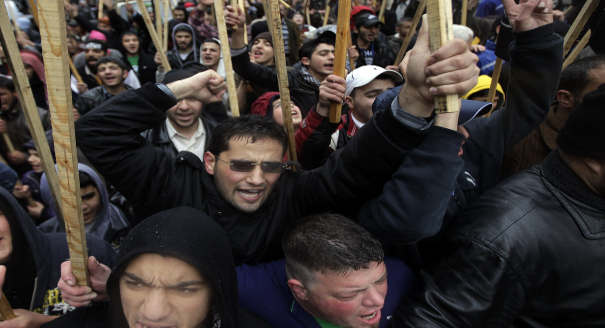
As armed clashes last weekend show, north Lebanon is becoming a growing support base for the Syrian revolution. Sunni mobilization in support of the uprising in Syria is mounting and the Lebanese government is losing its ability to maintain its policy of neutrality.
Source: AL-MONITOR

The weekend’s events were the result of a confluence of factors. The immediate trigger was the arrest of Shadi al-Mawlawi, a young Tripolitan Islamist and supporter of the Syrian revolution, for his alleged links to al-Qaeda and terror networks. Islamist and Salafist groups in Tripoli had already been protesting the five-year detention without trial of other Islamists, and Mawlawi’s arrest pushed them over the edge.
Salafist protesters closed down Tripoli’s main circle demanding Mawlawi’s immediate release, and armed men fanned out in many of Tripoli’s neighborhoods. They clashed with armed Alawi groups in the Jebel Muhsen area of the city and also with army units sent in to restore order.The manner in which the arrest was carried out inflamed tensions as much as the arrest itself. Lebanon’s General Security Directorate, whose head is close to Hizbullah, made the arrest, which took place in the heart of Tripoli in the social services offices of Muhammad Safadi, a Tripolitan leader, member of parliament, and the current minister of finance. The General Security Directorate, whose mandate is to control borders and ports of entry and exit, was also usurping the functions of the police and of the internal security force—which is under the authority of a Sunni officer. In addition, the directorate’s actions incensed members of the army and army intelligence who were not informed of the operation but had to deal with its consequences.
The operation and its aftermath have put the government of Prime Minister Najib Mikati in a difficult position. With the General Security Directorate going after activists wanted by Damascus and the Sunni street openly supporting the Syrian revolution, the government’s policy of neutrality and nonintervention in the Syrian crisis is collapsing. Reports have also emerged that Mikati is coming under increased pressure from the Syrian government to pick sides or risk his political future.
In fact, the Mikati government has been on the verge of collapse for weeks now, and under intense pressure from Michel Aoun—Hizbullah’s and Syria’s Christian ally in the Lebanese government. So far Mikati has stood firm but the middle ground might be receding from under him as the country’s communities line up on opposite sides of the Syrian uprising.
The Sunni show of force in north Lebanon can be seen as a delayed response to the Hizbullah takeover of Beirut in May 2008. In that episode, Hizbullah crushed armed Sunni groups and, adding to its power over the south of Lebanon and the Bekaa region, demonstrated its overwhelming superiority in the capital. It used that power to bring down the government of Saad Hariri in January 2011 and install one it had more control over.
The Sunni groups in Tripoli are now altering the balance of power by indicating that, like Hizbullah, they will use guns, religion, and external support to create their own enclave. Hizbullah, which has no forces north of Beirut, cannot confront them head-on; nor can the weak central government impose its authority. Some commentators are speaking of the emergence of a “Northern Dahiya” (northern suburb) to counter Hizbullah’s armed “Southern Dahiya.”
This tension, if it continues, has worrisome repercussions. Internally, it could not only bring down the government but also possibly spur tension in the capital. Hizbullah has been fairly comfortable since 2008 but will be looking for ways to deal with this new challenge in the north. As of now, the Christian regions sit as a buffer zone between the Sunni north and the Shi’i-dominated capital and south. But with Christian parties allied with opposing sides of this conflict, they too might come under pressure to take stronger positions. Although a return to widespread sectarian confrontations in Lebanon—beyond the localized Sunni-Alawi skirmishing in Jebel Muhsen—still appears remote, there is no doubt that internal tensions are rising dangerously.
Externally, the mobilization of the Sunni north in support of the Syrian revolution might elicit a response from the Syrian regime. North Lebanon is close to the strategic cities of Homs and Hama and abuts the Alawi heartland in northwest Syria. The Assad regime controlled north Lebanon when its troops and intelligence agents dominated Lebanon between 1976 and 2005. But they withdrew from the north in April 2005, and Hizbullah was not able to replace Syrian power there. There has already been an escalating pattern of cross-border incidents in which Syrian troops shot across or temporarily entered Lebanese territory. Whether the embattled Assad regime will respond to the growing mobilization in north Lebanon with an escalation of such actions is yet to be seen.
It is perhaps not surprising that, given the close social and communal ties between the two countries, Lebanon would not be able to remain detached from events in Syria. It is urgent, however, that leaders in Lebanon find a way to manage these new dynamics politically, without allowing instability and insecurity to return to Tripoli or other parts of the country.
It is incumbent on leaders, both in the region and internationally, to be aware of the precariousness and volatility of the Lebanese situation. They should help maintain stability in Lebanon while redoubling their efforts to push for negotiated political change in Syria that would grant all Syrians their political rights and avoid a destructive civil war. As events in Tripoli show, that civil war would not stay within Syria’s borders.
This article was originally published in Al-Monitor.
Senior Fellow at the Middle East Institute
Paul Salem is a senior fellow at the Middle East Institute.
Recent Work
Paul Salem
Paul Salem
Carnegie does not take institutional positions on public policy issues; the views represented herein are those of the author(s) and do not necessarily reflect the views of Carnegie, its staff, or its trustees.

The Thai-Cambodian conflict highlights the limits to China's peacemaker ambition and the significance of this role on Southeast Asia’s balance of power.

Pongphisoot (Paul) Busbarat

Beijing believes that Washington is overestimating its own leverage and its ability to handle the trade war’s impacts.


Rick Waters, Sheena Chestnut Greitens
Tapping our network of China experts in the region, Carnegie China offers this latest “China Through a Southeast Asian Lens” report to offer preliminary assessments of whether the U.S. effort to reshape the global trading order will lead countries in the region to tilt toward Beijing.


Selina Ho, Khin Khin Kyaw Kyee, Joseph Ching Velasco, …
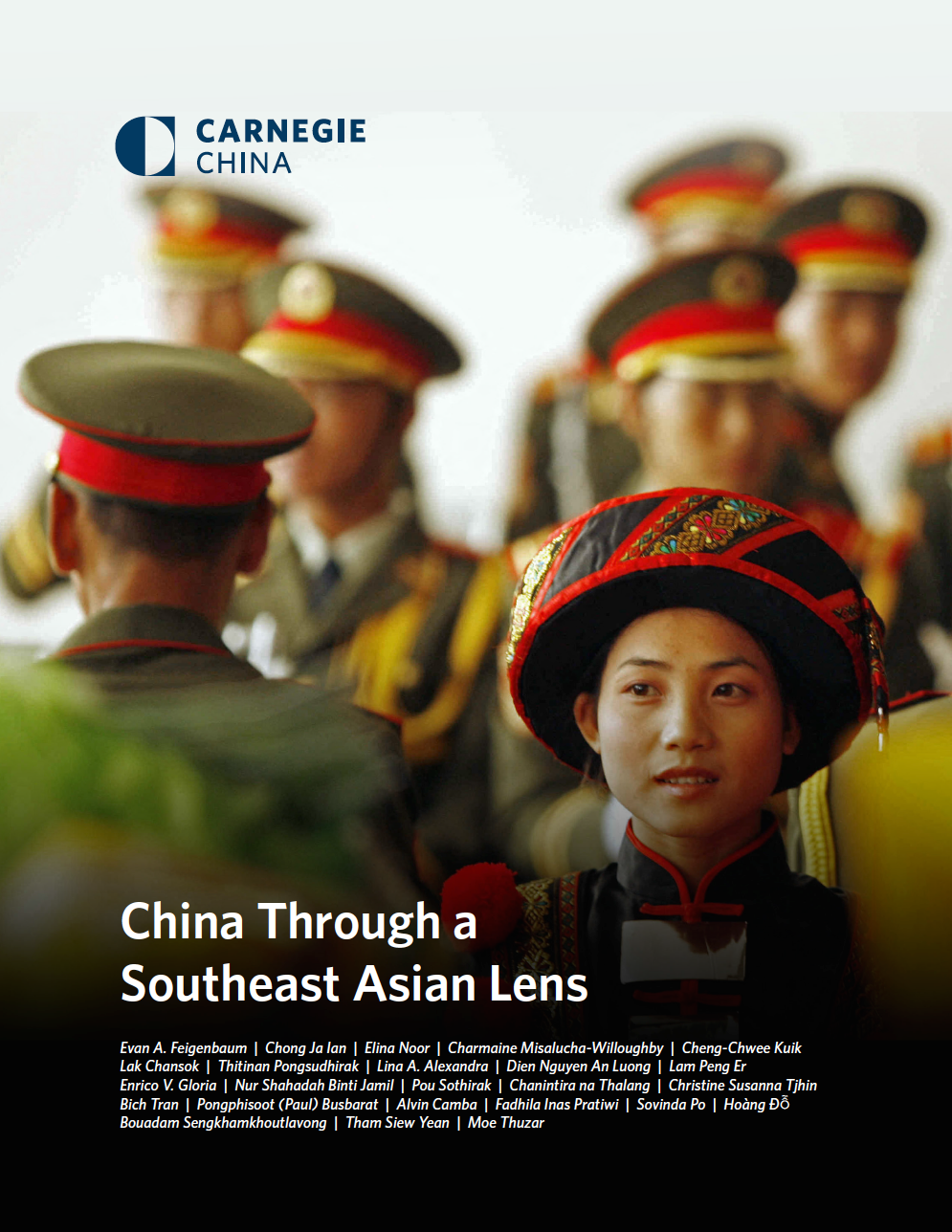
Because strategic, economic, and ideological perceptions of China contain multiple, sometimes contradictory facets in Southeast Asia, receptions of and responses to Beijing diverge across and within state lines.



Evan A. Feigenbaum, Chong Ja Ian, Elina Noor
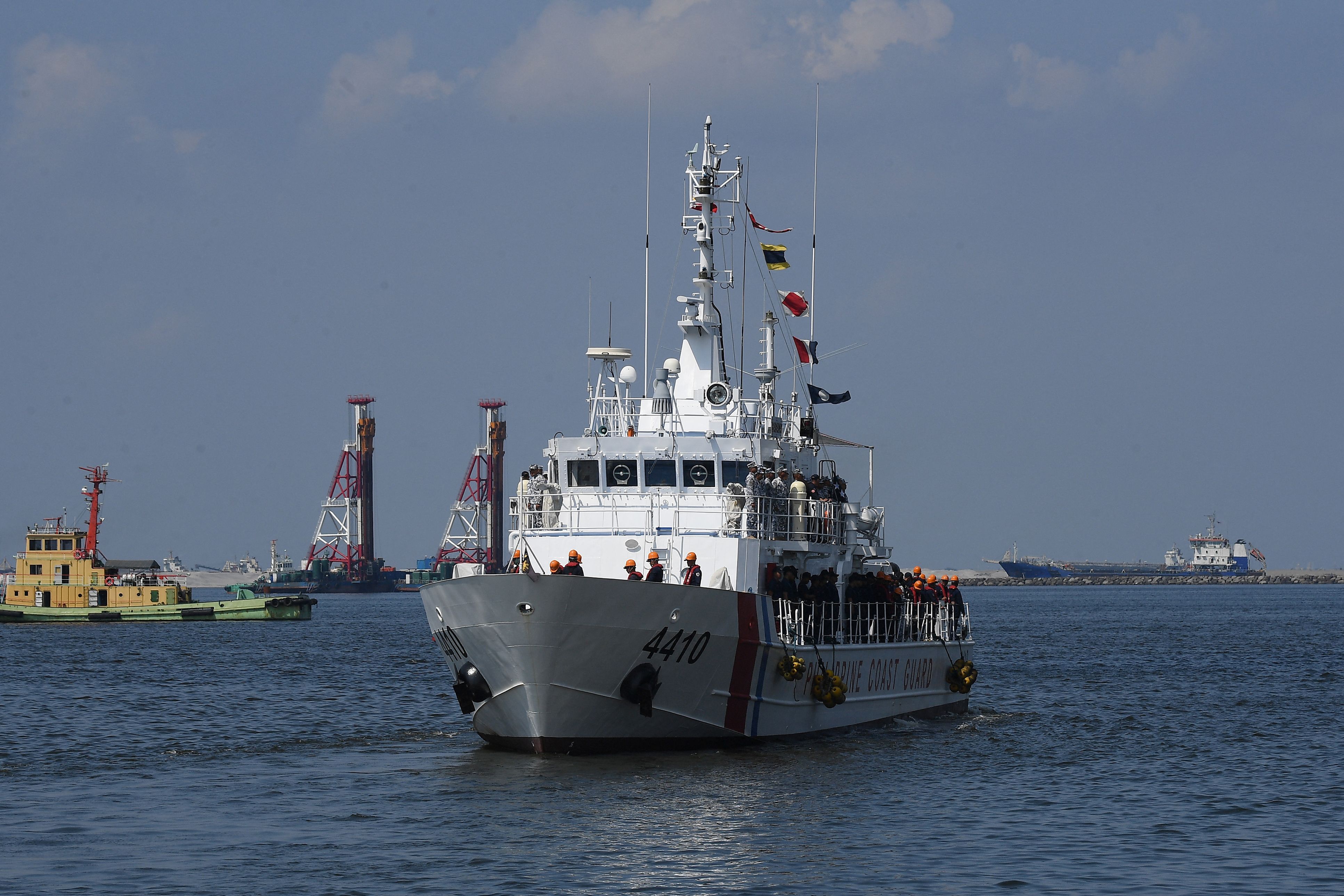
Most Southeast Asian states behave as if the actions of their Northeast Asian neighbors and the Philippines will be sufficient to maintain a regional status quo from which they can benefit.
Chong Ja Ian