

Paper
David Burwell
{
  "authors": [
    "David Burwell"
  ],
  "type": "legacyinthemedia",
  "centerAffiliationAll": "dc",
  "centers": [
    "Carnegie Endowment for International Peace"
  ],
  "collections": [],
  "englishNewsletterAll": "ctw",
  "nonEnglishNewsletterAll": "",
  "primaryCenter": "Carnegie Endowment for International Peace",
  "programAffiliation": "SCP",
  "programs": [
    "Sustainability, Climate, and Geopolitics"
  ],
  "projects": [],
  "regions": [
    "North America",
    "United States"
  ],
  "topics": [
    "Climate Change"
  ]
}
Source: Getty
Making the Keystone XL pipeline an earmark on the transportation bill hurts important objectives such as ensuring energy independence, creating more jobs, ending wasteful spending, and maintaining America’s global exceptionalism.
Source: Roll Call

Whatever one thinks of the tea partyers’ politics, this is a strategic mistake from their own point of view because it contradicts one of their core policy goals — a permanent ban on earmarks — and hurts other objectives such as ensuring energy independence, creating more jobs, ending wasteful spending and maintaining America’s global exceptionalism.
The tea party is effectively killing a transportation bill without gaining anything in return. It should be pushing for the bill instead. Here’s why:Energy independence. The reality of the 21st century is that there are a lot more fossil fuels stored in the earth than we ever realized. While no country is truly energy independent in a globalized world, the newly discovered stores of oil and natural gas here in the United States give us new leeway to think hard about how dependent we want to be on Canadian tar sands.
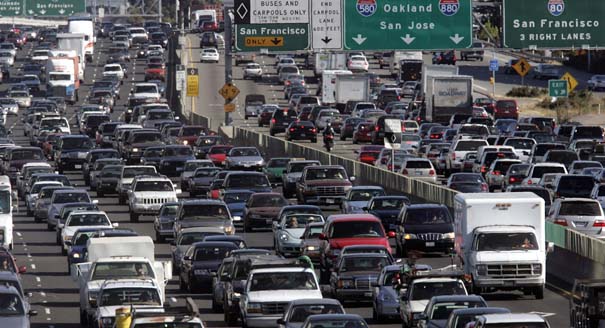
Regardless of whether one is for or against Keystone XL or believes sourcing 100 percent of the oil we consume within North America is actually possible, it is certainly true that passage of the transportation bill would advance energy independence. Transportation represents 70 percent of U.S. oil consumption, and much of that consumption is wasted through congestion, travel delays and too few trip choices. The transportation bill addresses all of these inefficiencies. Jeopardizing the bill by forcing immediate approval of this pipeline risks losing the benefit of an improved transportation system.
Jobs. Sure, Keystone XL will provide some new jobs, but the number is highly uncertain. And oil jobs are not something the United States is lacking right now. Unemployment in North Dakota, home of the Bakken shale oil field, is 3 percent. In Oklahoma, another shale oil producer, it is 4.8 percent. In contrast, the unemployment rate in the construction industry is more than 14 percent and weighs down economies in virtually every state in the nation.
Plus, transportation infrastructure is crumbling. America, according to the World Economic Forum, has fallen from fifth to 24th place in the quality of its infrastructure. Latching Keystone XL to the transportation bill as a “non-negotiable” demand to gain a few thousand oil-sector jobs risks hundreds of thousands of ready-to-go construction jobs in the middle of the construction season. There’s no sense in that.
Global competitiveness. One of the more pointed tea party criticisms raised against federal transportation spending is that it is just that: spending, not investment. More than 85 percent of federal transportation funds are now distributed by formula to states and localities with little accountability beyond verifying that the money distributed has actually been spent.
The transportation bill hits hard on this subject. In its current version, the bill would reduce the amount of money spread around like peanut butter and instead focus on actual need by requiring states and localities to establish specific performance metrics and demonstrate progress as a condition of continued federal support.
Killing the transportation bill will simply assure the perpetuation of transportation as a federal spending program, not an investment program.
The most ironic result of attaching Keystone XL to the transportation bill will be the demise of the tea party’s greatest contribution to good governance — a permanent ban on earmarks. The transportation bill codifies this wise policy into law with zero earmarks allowed.
And if Keystone XL is truly a non-negotiable condition of House approval, the bill is doomed.
This means that the present law, enacted in 2005, will be extended for a 10th time. It contains 6,229 earmarks, more or less, including the famed “Bridge to Nowhere.” States will continue to receive earmarked funds in direct proportion to the number and cost of earmarked projects.
The tea party is endangering these benefits to energy independence, job creation and global competitiveness for a project that will almost certainly be approved within a year pending environmental review of a new pipeline location.
Attaching Keystone XL approval to the transportation bill serves no other purpose than to kill a good transportation reform bill outright.
Former Nonresident Senior Fellow, Energy and Climate Program
Burwell focused on the intersection between energy, transportation, and climate issues, as well as policies and practice reforms to reduce global dependence on fossil fuels.
Recent Work
David Burwell
David Burwell
Carnegie does not take institutional positions on public policy issues; the views represented herein are those of the author(s) and do not necessarily reflect the views of Carnegie, its staff, or its trustees.

But their "principal to principal" model will only be as effective as the political strength of each leader back home.

Damien Ma

U.S. unpredictability has allowed China to capitalize on its positioning as the “responsible great power”. Paradoxically, the more China wins the perception game, the more likely expectations will rise for Beijing to deliver not just words but to demonstrate with its deeds.

Chong Ja Ian

For Malaysia, the conjunction that works is “and” not “or” when it comes to the United States and China.

Elina Noor

Regulation, not embargo, allows Beijing to shape how other countries and firms adapt to its terms.

Alvin Camba
Beijing believes that Washington is overestimating its own leverage and its ability to handle the trade war’s impacts.


Rick Waters, Sheena Chestnut Greitens