

Commentary
Judy Dempsey
{
  "authors": [
    "Judy Dempsey"
  ],
  "type": "legacyinthemedia",
  "centerAffiliationAll": "",
  "centers": [
    "Carnegie Endowment for International Peace",
    "Carnegie Europe"
  ],
  "collections": [
    "Transatlantic Cooperation"
  ],
  "englishNewsletterAll": "",
  "nonEnglishNewsletterAll": "",
  "primaryCenter": "Carnegie Europe",
  "programAffiliation": "",
  "programs": [],
  "projects": [],
  "regions": [
    "Europe",
    "North America"
  ],
  "topics": []
}
Source: Getty
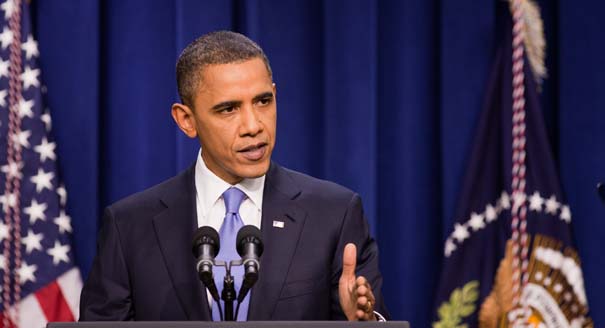
Barack Obama’s ratings may be low in Europe but his star is already beginning to shine again, all thanks to Mitt Romney, his Republican challenger.
Source: New York Times

But when the Obama administration did just that, Europeans still weren’t satisfied. They were pleased with the withdrawal of U.S. troops from Iraq and — to be completed by 2014 — Afghanistan.
They were less happy when the White House shifted its foreign policy toward Asia to counter the growing influence of China, and when Washington publicly criticized Europe for failing to spend more on defense and for depending on the United States to compensate for NATO’s military shortfalls.But now, because it is election time in the United States, Mr. Obama’s star is beginning to shine again in Europe. The reason is his Republican rival, Mitt Romney, whose ideas and policies have raised hackles in many European capitals. “Romney in the White House would be bad news for Europe,” said one high-ranking European diplomat who declined to be identified.
Mr. Romney, who in the 1960s spent two years in France as a Mormon missionary, has lambasted Europe during his campaign. He has harshly criticized Europe’s handling of the euro crisis and, unlike Mr. Obama, the role of the state in Europe, be it for the provision of health care, a fair tax structure or a social welfare system that protects the disadvantaged.
In stark contrast to Mr. Obama and almost all European leaders, Mr. Romney is also overtly pro-Israel and a close friend of Prime Minister Benjamin Netanyahu. He plans to visit Israel in the coming weeks.
Republicans in Congress have also stated that they would fully fund the missile defense shield that the White House has cut back. They would impose much tougher sanctions on Iran. They would keep those accused of being terrorism combatants detained in Guantánamo Bay, Cuba, and try them in military, not civilian courts.
“We are a nation at war,” the party states in its “Pledge to America.” “We must confront the worldwide threat of terrorism and to deal with the world as it is, not as we wish it to be.”
Once Election Day is over, however, the differences between both contenders may turn out to be much less significant than Europeans now think. Two major factors will severely limit the scope of action of any future U.S. administration.
First, the ultralibertarian Tea Party movement is going to be a powerful force in the next Congress, putting a brake on new domestic initiatives as well as on any new intervention abroad. “Romney cannot ignore the Tea Party’s foreign policy,” said Stephen J. Flanagan, a security expert at the independent Center for Strategic and International Studies in Washington. “The Tea Party is skeptical about foreign intervention and somewhat isolationist,” he added.
Representative Ron Paul, the Texas Republican who is credited as a founder of the Tea Party, argued in 2010 that “a return to the traditional U.S. foreign policy of active private engagement but government noninterventionism is the only alternative that can restore our moral and fiscal health.” Indeed, the second factor restraining the next administration is the fiscal situation of the U.S. government, which is bound by the Budget Control Act of 2011 to implement painful savings starting next year.
The effect is that Europe, instead of worrying about U.S. interventionism, might soon become concerned about a revival in American isolationism. At the very least, no U.S. president will be willing to continue footing the bill for NATO’s military spending.
Curiously, Europe seems strangely unconcerned. “There has been no strategic thinking of any sort on this side of the Atlantic,” said Sven Biscop, a security expert at Egmont, the Royal Institute for International Affairs in Brussels. “No matter who wins the next U.S. election, Europe must understand that the trans-Atlantic relationship has changed fundamentally.”
Yet new avenues of cooperation are opening as Washington is, by choice or by necessity, limiting its ambitions as a world power. The U.S. State Department, for example, recently sent a confidential two-page note to Catherine Ashton, the E.U. foreign policy chief.
The note, called “Enhancing U.S.-E.U. Dialogue and Engagement on Asia-Pacific Issues,” proposes how the United States and Europe could work together in Asia on issues like human rights, good governance and development aid.
In sub-Saharan Africa, the European Union and the United States are working together with countries in the region to try and stabilize Mali, where an offshoot of Al Qaeda has seized control of northern areas.
Analysts suggest that both Europe and the United States will benefit if they choose to work on such issues together. “Maybe,” Mr. Flanagan said. “But whoever wins, Europe will be expected to take on more of the burden sharing on security. We still don’t see that happening.”
Barack Obama’s ratings may be low in Europe but his star is already beginning to shine again, all thanks to Mitt Romney, his Republican challenger.
As I write in my latest Page Two column: Romney’s ideas and policies have raised hackles in many European capitals. “Romney in the White House would be bad news for Europe,” one high-ranking European diplomat told me.
The Europeans support the Democrats, mostly for cultural and historical reasons. The Democrats are mostly secular in outlook and believe the state has much more of a role to play in providing some basic services than the Republicans.
That is why Europeans found it difficult to understand why the Republicans were so against Mr. Obama’s plans for mandatory health insurance.
Europeans also find it very difficult to relate to the growing role of religion among American conservatives. They have not forgotten how former president George W. Bush justified the war in Iraq as a war against evil. They also see how the Christian right exerts huge influence when it comes to Israel.
But for all the differences, the Europeans may discover after next November that the Democrats and Republicans have a few things in common.
Both worry about China, and so will shift U.S. foreign policy towards Asia.
Both are no longer willing to foot the bill for European security and NATO’s inefficiencies.
And whatever Republicans might say, there is no longer the appetite or the money for any more big military campaigns.
The Europeans have yet to take stock of such shifts in the transatlantic relationship.

Nonresident Senior Fellow, Carnegie Europe
Judy Dempsey is a nonresident senior fellow at Carnegie Europe
Recent Work
Judy Dempsey
Judy Dempsey
Carnegie does not take institutional positions on public policy issues; the views represented herein are those of the author(s) and do not necessarily reflect the views of Carnegie, its staff, or its trustees.
Carnegie China scholars share their assessment of the Biden-Xi meeting and its implications for U.S.-China relations going forward.



Paul Haenle, Xue Gong, Ngeow Chow Bing, …
Southeast Asian capitals would prefer that the U.S. and PRC manage their relationship, if not get along.

Paul Haenle, Chong Ja Ian
As the world undergoes a new round of fragmentation and major power rivalry that includes the advancing of divergent visions of global order, Singapore is discovering that its interests are increasingly being pulled in different directions.
Chong Ja Ian
There is a certain level of restraint, but there is also a lingering distrust.

Paul Haenle, Huong Le Thu

China views U.S. missile defense as posing a greater potential threat to China’s nuclear deterrent than other U.S. military capabilities.

Tong Zhao, Dmitry Stefanovich