

Commentary
Judy Dempsey
{
  "authors": [
    "Judy Dempsey"
  ],
  "type": "commentary",
  "blog": "Strategic Europe",
  "centerAffiliationAll": "",
  "centers": [
    "Carnegie Endowment for International Peace",
    "Carnegie Europe"
  ],
  "englishNewsletterAll": "",
  "nonEnglishNewsletterAll": "",
  "primaryCenter": "Carnegie Europe",
  "programAffiliation": "",
  "regions": [
    "Europe",
    "United States",
    "Ukraine"
  ],
  "topics": [
    "EU",
    "Foreign Policy",
    "Defense",
    "Technology"
  ]
}
Source: Getty
Too many national interests, too many EU institutions, and too little political will are preventing Europe from acting in its own best interests.
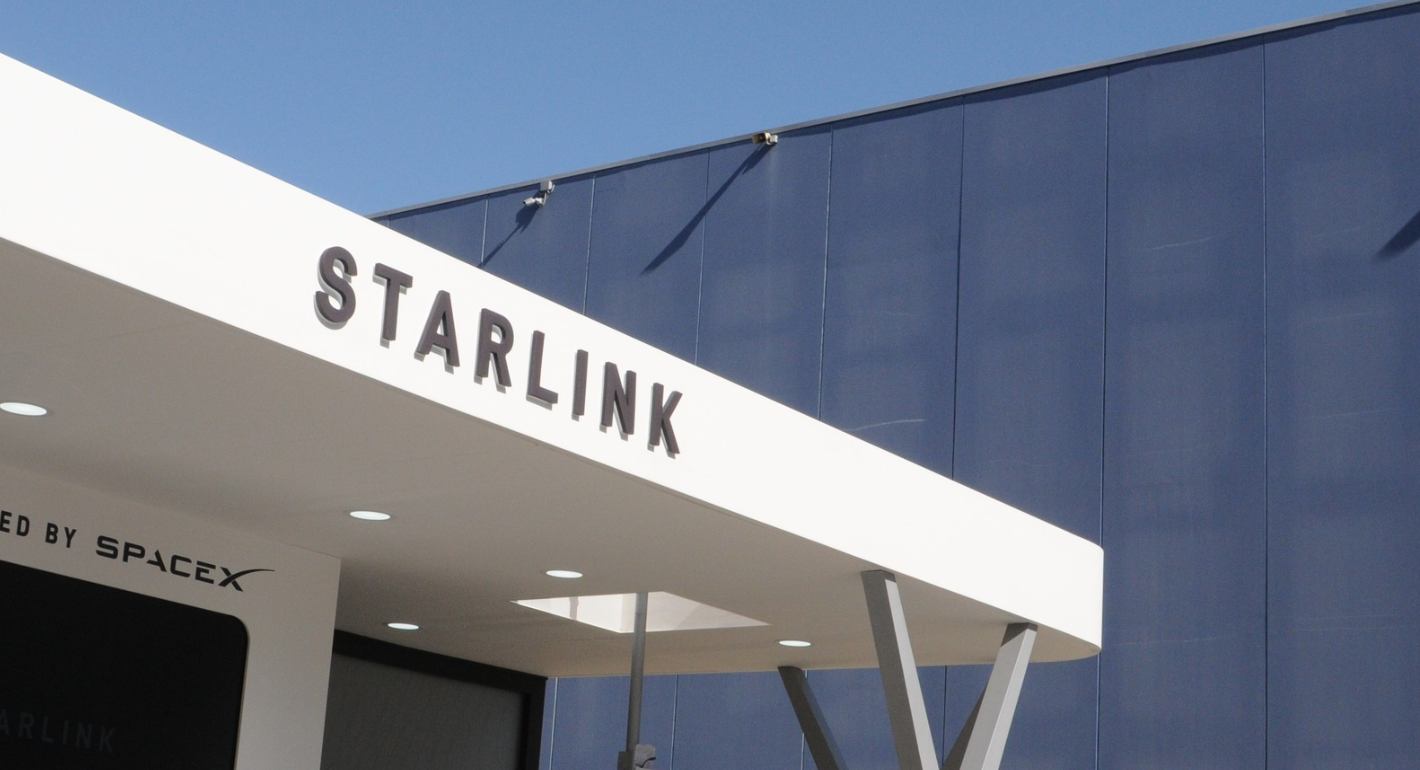
Surely, now is the time for the EU to grasp how dependence on the Starlink satellite system threatens the bloc’s security.
The evidence of this dependence is clear. Over the past six weeks, the billionaire SpaceX founder Elon Musk has twice used his influence at Starlink’s parent company to reduce the speed of the satellite system used by Ukraine to intercept Russian drones.
Restricting Starshield, the Starlink service funded by the Pentagon, has left Ukraine vulnerable. President Volodymyr Zelensky said the speed limits were “helping the Russians kill more Ukrainians and carry out more accurate strikes against Ukraine.” According to Ukrainian officials, that restricted range was U.S. President Donald Trump’s way of putting pressure on Zelensky to make concessions in peace talks.
The country’s dependence on Starlink has lessons and implications for Europe. They are dependent on the system, just as they are on the United States’ nuclear security umbrella. They also rely on a plethora of American military systems, such as Patriot missiles, which, in turn, Ukraine desperately needs to protect civilians from Russia’s incessant bombing of cities, towns, and critical infrastructure. Despite promises made several months ago to supply them, as well as offers by Europe to buy and deliver them to Kyiv, Trump has refused both.
The upshot is that Ukraine no longer has any illusions about Trump’s unequivocal support for Russian President Vladimir Putin. Neither have European governments. Yet, the problem for the EU is that a combination of national interests and a reactive decisionmaking culture is preventing the bloc as a whole from acting strategically toward Musk, Trump, and Putin. Acting strategically means having a critical collective outlook and goal that takes precedence over national interests.
European leaders realize that Starlink’s pressure on Ukraine means they need a satellite system of their own. They don’t want their dependence on the United States to be weaponized, which is what is happening in Ukraine. Imagine if Starlink were to be restricted while a NATO ally was under attack. The Europeans also know they face a tough fight with the White House if, when the spectrum coverage arrangements for satellite-to-device internet communication come up for renewal, they choose European companies—U.S. Ambassador to the EU Andrew Puzder warned of a “devastating” retaliation.
Ironically, that intervention might be the spur for the bloc to build up its own capabilities in critical technologies.
Maybe.
Several European companies are either working together or competing with each other to develop their own equivalent of Starlink. They need scale, finance, know-how, speed, collaboration, and strong political will from the EU. All are lacking. If they could harness all six, maybe Europe could reduce its dependence on the United States over time.
That’s a big if. The union has a history of national interests getting in the way when Brussels wants to act big and creatively.
Remember Galileo, the EU’s satellite navigation system? It was first proposed back in 1981! After years of haggling, endless committees, member states quarrelling over which companies would build what, and spiraling costs, the first part of the system became operable in 2011. The second part followed a few years later. A European Parliament report was blunt in its assessment: “[There were] divisions between companies but also between member states, which intervened in the interest of their national industries and held up decisions.”
Security and defense is another example. In June 2025, France and Germany abandoned the €100 billion ($109 billion) Future Combat Air System, a manned fighter jet designed to replace France’s Rafale jets and the Eurofighter Typhoon fleets. The collapse of the venture followed bitter disputes between France’s Dassault Aviation and Airbus over leadership, the distribution of the costs, and the division of labor.
Infighting also hampered the Eurofighter. The consortium, which consists of Italy, Germany, Spain, and the UK, has been plagued by export vetoes among many other issues. These projects were supposed to have given Europe its own military and defense capability.
These disputes continue even when Europe is caught between two antagonist pressures. On the one hand is the political and economic pressure by the Trump administration, which has disdain for the EU and NATO. On the other, Europe faces Russian hybrid attacks: cybersecurity threats, the explosive-laden drone at Leipzig airport, and threats to prominent business executives, not to mention support for anti-Ukraine and anti-immigration political parties throughout Europe.
These pressures mean that the continent can no longer reply on the United States for its security or as a defender of democratic values. Trump’s stance plays into Putin’s hands. His agenda is to weaken and divide NATO and the EU. The question is how Europe should respond—strategically. That is why a European alternative to Starlink is a strategic necessity to wean the continent off the negative aspects of American dependence. But any European alternative to Starlink must avoid becoming embroiled in national interests.
All of this is a big if. It’s about turning these initiatives into a competitive European industry—and response—instead of a collection of national and protected projects. So much is at stake. So much rides on the ability of member states to see the strategic logic in pulling together. Don’t bank on it.
Subscribe to Strategic Europe, delivered every Tuesday and Thursday!

Nonresident Senior Fellow, Carnegie Europe
Judy Dempsey is a nonresident senior fellow at Carnegie Europe
Recent Work
Judy Dempsey
Judy Dempsey
Carnegie does not take institutional positions on public policy issues; the views represented herein are those of the author(s) and do not necessarily reflect the views of Carnegie, its staff, or its trustees.
A sizeable funding shortfall looks increasingly likely to hit Ukraine in 2027. Can the Europeans, with their strained budgets and economies, come up with the cash without seizing frozen Russian assets?

Rym Momtaz, ed.
A blue wave has swept over the U.S. midterms, with Democrats regaining control of both houses of Congress. But Europeans hoping for a return to business as usual should think again.
Rym Momtaz

In Germany, competing perceptions of Russia are highlighting a tension between public opinion and government policy. In the country’s east, where division is widespread, populist parties are taking advantage.

Gwendolyn Sasse
The European Commission is preparing the EU for its next enlargement. But member states need to make it a project that European citizens can understand, shape, and support.

Iliriana Gjoni
Resetting relations with the EU is a central plank of the UK’s current foreign policy. Is Andy Burnham being bold enough or is he falling into the same trap as his predecessors, misreading the power dynamic?
Rym Momtaz, ed.