

Paper
Paul Salem
{
  "authors": [
    "Paul Salem"
  ],
  "type": "legacyinthemedia",
  "centerAffiliationAll": "",
  "centers": [
    "Carnegie Endowment for International Peace",
    "Malcolm H. Kerr Carnegie Middle East Center"
  ],
  "collections": [
    "Arab Awakening"
  ],
  "englishNewsletterAll": "",
  "nonEnglishNewsletterAll": "",
  "primaryCenter": "Malcolm H. Kerr Carnegie Middle East Center",
  "programAffiliation": "",
  "programs": [],
  "projects": [],
  "regions": [
    "Levant",
    "Syria",
    "Middle East"
  ],
  "topics": [
    "Political Reform",
    "Security"
  ]
}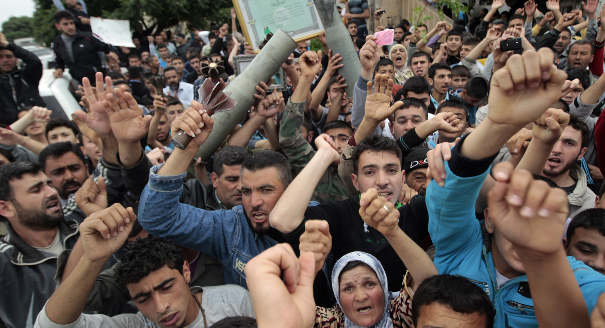
Source: Getty
If diplomacy in Syria does not succeed, the depth and breadth of devastation will increase dramatically. International actors must act swiftly and decisively in order to avoid further escalation of violence in Syria and its neighboring countries.
Source: National

On the other hand, the agreement did not explicitly call for Bashar Al Assad's departure, nor did it include a timetable, nor a course of action to be followed should its clauses not be respected.
The Syrian government has largely ignored the statement. The opposition is divided, with some welcoming the decision as the only way forward, and others considering it a mockery to ask opposition groups to form a government alongside their "executioners".While there is little hope for this plan to be implemented right away, the Syrian regime is coming under intensifying pressure. Some reports from Syria and the Arab press claim Russia now recognises that Mr Al Assad and the small clique around him must go as part of any resolution. Other reports say Russian President Vladimir Putin and US President Barack Obama discussed the outlines of a post-Assad transition during a recent meeting.
The Geneva statement says that the transitional government will be formed by "mutual consent" of the parties. Western officials have interpreted this as excluding Mr Al Assad, because the opposition will never consent to his inclusion.
The statement also stipulates that "public services must be preserved or restored ... this includes the military forces and security services". This reflects Russia's insistence that even if Mr Al Assad leaves, the military and security institutions with which they have longtime relations and large investments will remain, and that there will be no repeat of the Iraqi experience of dissolving the army.
Indeed, Russia - and possibly even Iran - might hope that in a Russian-orchestrated process, Syria's internal transition could be managed without altering its regional and international alignments, allowing it to remain close to Russia, Iran and Hizbollah.
The regime itself remains defiant. Mr Al Assad has announced a new antiterrorism law that increases jail sentences for his opponents. Security agencies have stepped up the depth and breadth of arrests in recent weeks, going beyond direct opposition activists to target those who indirectly support them. There are also fears of a dramatic escalation in regime violence.
The regime so far has not used the full military means at its disposal; following Mr Al Assad's declaration last week that Syria is in a civil war, there are fears that the regime could attempt larger military operations this summer to try again to settle the conflict by force.
But such an escalation would only increase the death toll without forcing a conclusion. Many units of the armed forces are not willing to engage in such an escalation, and would defect in higher numbers. There is already remarkably widespread collaboration between rebels and some members of government security forces who stay at their posts but quietly help the rebels, either for money or out of sympathy. Meanwhile, the opposition is becoming increasingly well-armed and mobile, and could survive an escalated set of assaults.
Indeed, we may have entered a period in which diplomacy is being given its last chance. Saudi Arabia, Qatar and Turkey are already providing material support to the rebels, and the US and UK are providing intelligence and other forms of "soft" assistance. Kofi Annan, the Arab League and UN envoy, as well as the West, have accommodated Russia's position at the political level, and are giving Mr Putin a chance to engineer a political resolution.
Moscow is eager to prove Russia's influence in the Middle East, and to demonstrate that Russia is a capable and necessary partner. Mr Putin does not want to fail in Syria, nor does he want to get dragged into a proxy war with the West, Turkey and the GCC.
Moscow is in close contact with the Syrian regime as well as with hundreds of officers in the Russian-trained and equipped security forces. It will also host the Syrian opposition later this month. There is still a chance that Russia can engineer a resolution.
Although there has been much talk of a "Yemeni model", what Russia is contemplating might be closer to an Egyptian model: in Egypt, the armed forces assisted in the "soft" removal of the president and his inner circle while preserving their own power and continuing to dominate the political, security and constitutional processes.
In any case, if Mr Putin is able to translate the Geneva communique into results on the ground, the worst will be avoided and the country might actually enter into a managed transition. If he fails, then the stage is set for a rapid escalation of conflict in Syria with serious regional and international proxy support for opposing sides. Such an escalation would not only devastate Syria, but would also threaten the stability of Lebanon, and could cause serious security concerns for Turkey, Iraq and Jordan.
Indeed, if diplomacy does not succeed, the depth and breadth of devastation will increase dramatically. There is still a chance to step back from the brink, but the brink is getting closer every day.
Senior Fellow at the Middle East Institute
Paul Salem is a senior fellow at the Middle East Institute.
Recent Work
Paul Salem
Paul Salem
Carnegie does not take institutional positions on public policy issues; the views represented herein are those of the author(s) and do not necessarily reflect the views of Carnegie, its staff, or its trustees.
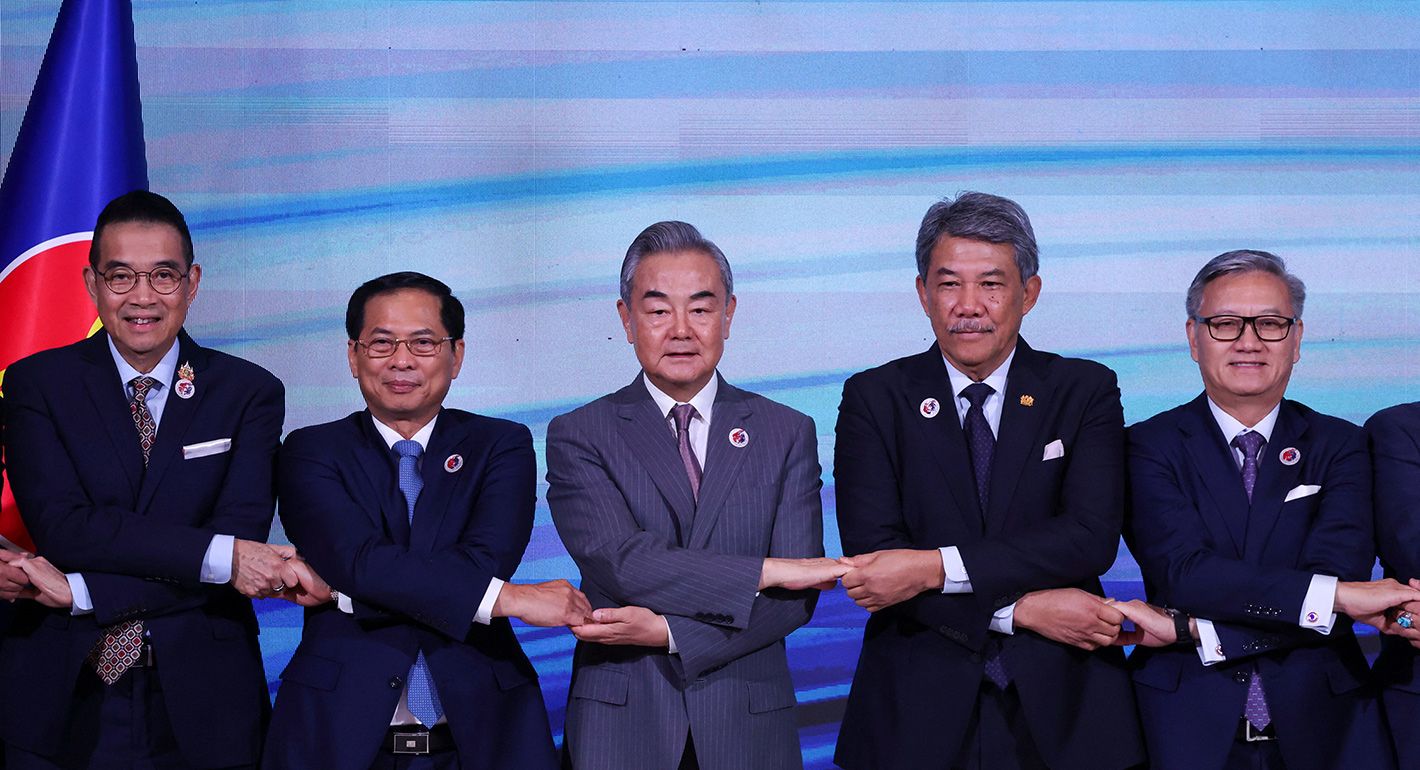
The Thai-Cambodian conflict highlights the limits to China's peacemaker ambition and the significance of this role on Southeast Asia’s balance of power.
Pongphisoot (Paul) Busbarat
Beijing believes that Washington is overestimating its own leverage and its ability to handle the trade war’s impacts.

Rick Waters, Sheena Chestnut Greitens
Tapping our network of China experts in the region, Carnegie China offers this latest “China Through a Southeast Asian Lens” report to offer preliminary assessments of whether the U.S. effort to reshape the global trading order will lead countries in the region to tilt toward Beijing.


Selina Ho, Khin Khin Kyaw Kyee, Joseph Ching Velasco, …
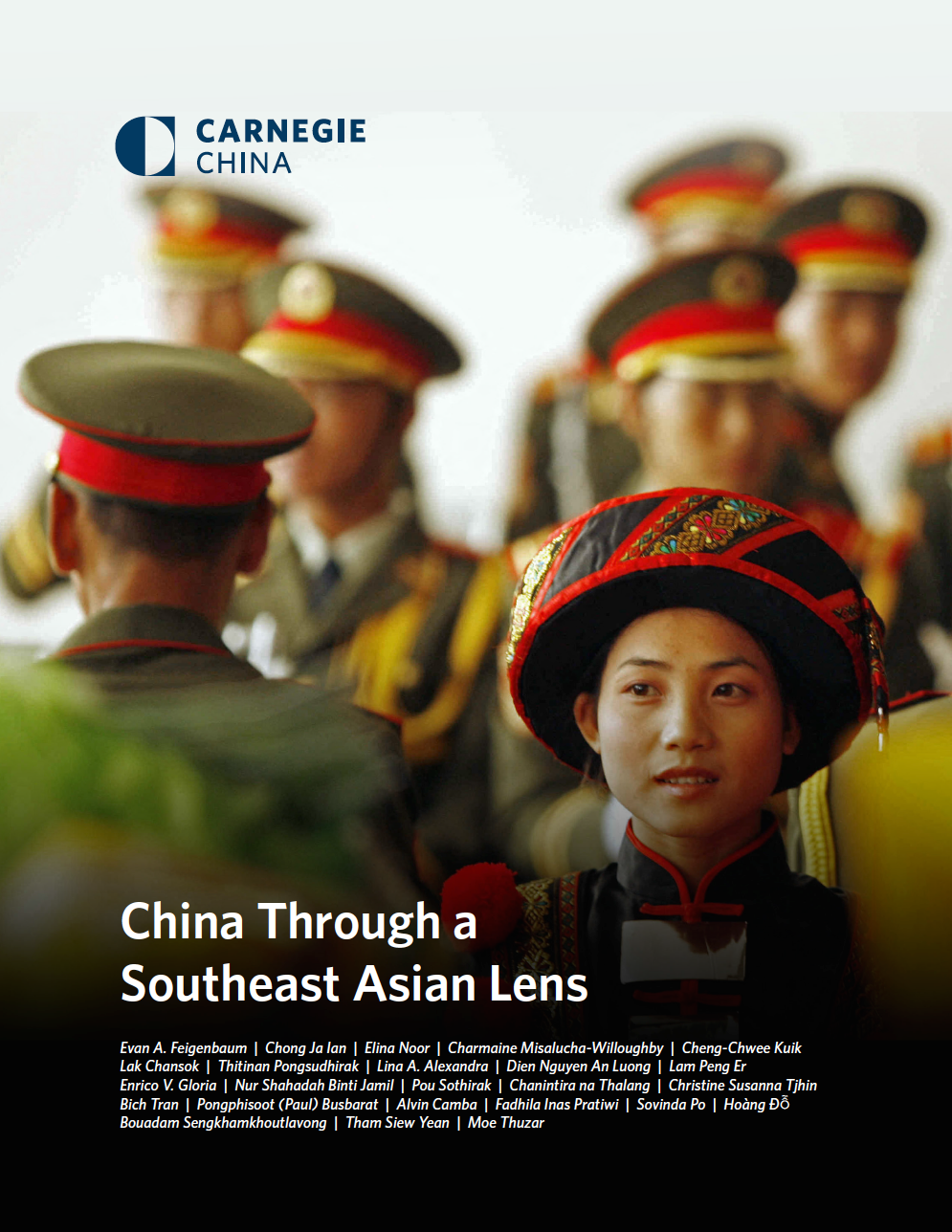
Because strategic, economic, and ideological perceptions of China contain multiple, sometimes contradictory facets in Southeast Asia, receptions of and responses to Beijing diverge across and within state lines.



Evan A. Feigenbaum, Chong Ja Ian, Elina Noor
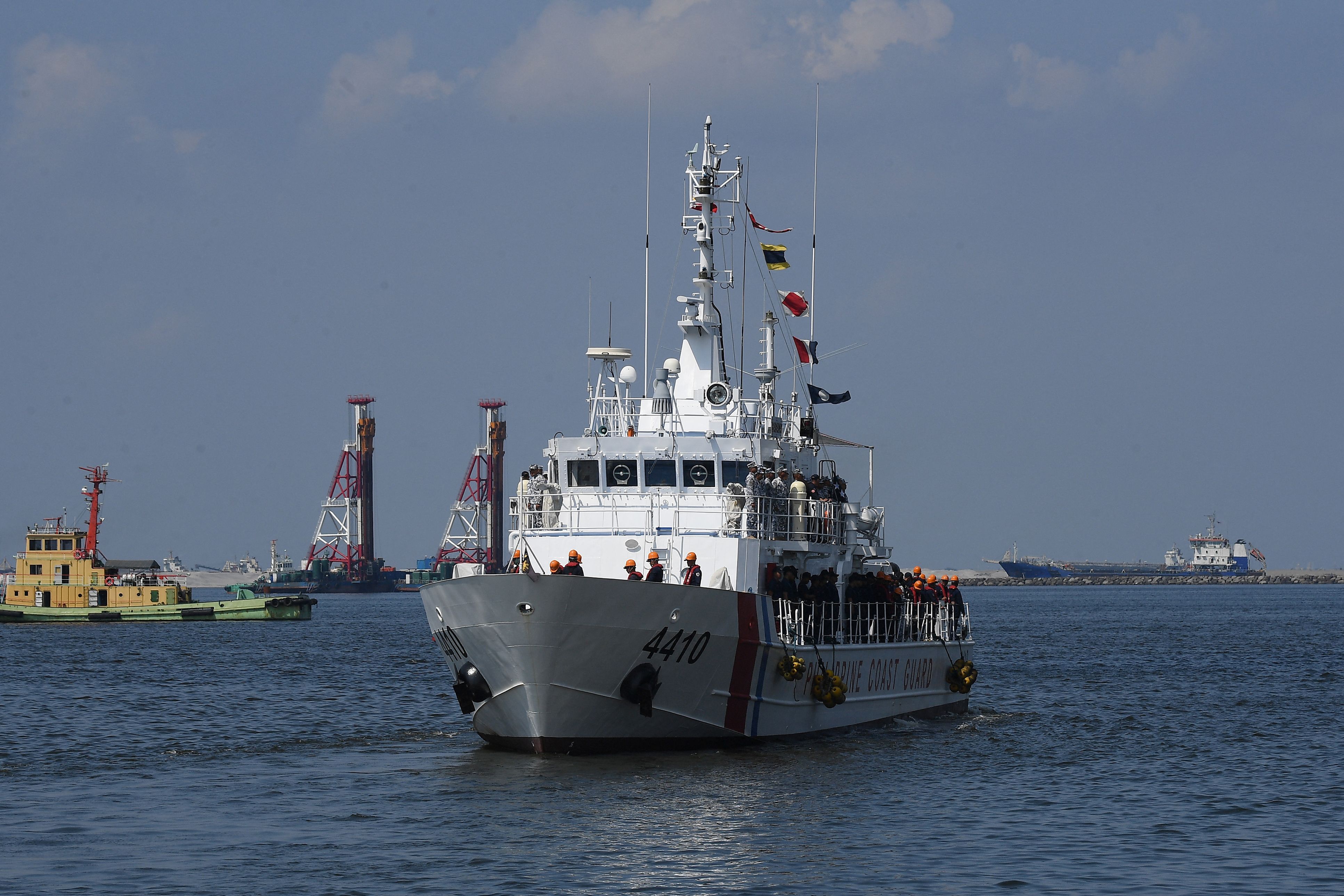
Most Southeast Asian states behave as if the actions of their Northeast Asian neighbors and the Philippines will be sufficient to maintain a regional status quo from which they can benefit.
Chong Ja Ian