

Paper
The nuclear relationship between China and the United States is increasingly shaped by widening perception gaps rather than deliberate strategic design.
Tong Zhao
{
  "authors": [
    "Mykola Siruk",
    "Matthew Rojansky",
    "Steven Pifer"
  ],
  "type": "legacyinthemedia",
  "centerAffiliationAll": "dc",
  "centers": [
    "Carnegie Endowment for International Peace",
    "Carnegie Russia Eurasia Center"
  ],
  "collections": [],
  "englishNewsletterAll": "ctw",
  "nonEnglishNewsletterAll": "",
  "primaryCenter": "Carnegie Endowment for International Peace",
  "programAffiliation": "russia",
  "programs": [
    "Russia and Eurasia"
  ],
  "projects": [],
  "regions": [
    "North America",
    "United States"
  ],
  "topics": [
    "Political Reform",
    "Foreign Policy"
  ]
}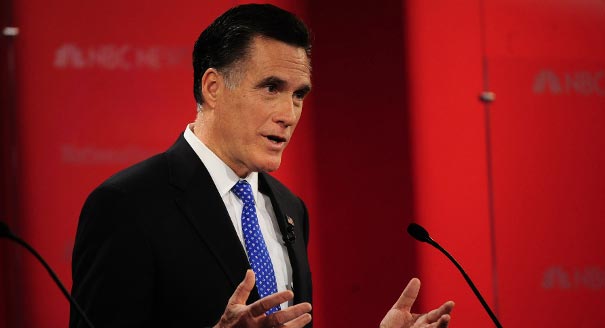
Source: Getty
Mitt Romney’s tour of Great Britain, Poland, and Israel is unlikely to change the U.S. presidential campaign’s pace because the economy, not the foreign policy, is the main issue in the campaign.
Source: Day

“The visit to Poland perhaps fits in with the efforts to play in ‘common values’ with our allies. George Bush Jr. once focused his attention on Poland as a role model of ‘Western values,’ although that country has not-so-easy relations with its neighbors. But, on the other hand, Poland is taking good advantage of the fact that many ethnic Polish voters live in the US Middle West.”
Steven Pifer: “Governor Romney’s tour of Britain, Israel, and Poland very much resembles foreign trips by other candidates in the summer before the US presidential elections. The aim of Romney’s team is to show that he is knowledgeable about foreign-policy matters on the whole. They are trying to project the image of an individual who, if elected to the White House, will be able to really manage the US foreign policy, especially taking into account that President Obama is generally rated as a strong leader in foreign-policy matters. The governor’s visit to London to take part in the Olympic Games opening ceremony was planned to remind US voters of the role the governor played in the successful organization of the 2002 winter Olympics in the state of Utah. In the course of his visit to Israel, he will be emphasizing his support for that country.”
M.R.: “In my view, this trip can also be of benefit for Romney. But it is wrong to think that Obama’s tour of Europe in 2008 was a decisive factor for his victory. In reality, he was subjected to a lot of criticism and told that a candidate should pay more attention to domestic problems. In all probability, the same will occur in the case of Romney. I doubt that foreign policy may be one of the key issues in the election campaign. There has not been a precedent like this in history. Besides, Romney has already harshly criticized Obama in foreign-policy matters. But this does not change the fact that the coverage of the campaign, advertising materials, and speeches mainly focus on the economy.”
S.P.: “Governor Romney should exercise caution during this trip. A candidate may criticize the incumbent president’s foreign policy as much as he pleases. Therefore, the US electorate is taking a dim view of the candidates who express criticism from abroad.”
M.R.: “I think the margin between the two candidates will be slim. I doubt that Romney’s taxes, the Bain situation, and the country’s financial condition under Obama’s presidency will be a crucial issue. What will really matter is the economic situation in the fall of 2012 as well as which of the candidates is better prepared, in the opinion of voters, to improve the overall situation in the country.”
S.P.: “As for the trip’s impact on the presidential campaign in general, I cannot say I am an expert in the question of US politics, but I suspect that the campaign will focus on the domestic problems that will most strongly influence the voters’ choice. Foreign policy will be a secondary issue when the Americans go to the polls in November.”
Mykola Siruk

Former Deputy Director, Russia and Eurasia Program
Rojansky, formerly executive director of the Partnership for a Secure America, is an expert on U.S. and Russian national security and nuclear-weapon policies.
Steven Pifer
Carnegie does not take institutional positions on public policy issues; the views represented herein are those of the author(s) and do not necessarily reflect the views of Carnegie, its staff, or its trustees.

The nuclear relationship between China and the United States is increasingly shaped by widening perception gaps rather than deliberate strategic design.

Tong Zhao

But their "principal to principal" model will only be as effective as the political strength of each leader back home.

Damien Ma

U.S. unpredictability has allowed China to capitalize on its positioning as the “responsible great power”. Paradoxically, the more China wins the perception game, the more likely expectations will rise for Beijing to deliver not just words but to demonstrate with its deeds.

Chong Ja Ian

Hanoi and Beijing have long treated each other as distant cousins rather than comrades in arms. That might be changing as both sides draw closer to hedge against uncertainty and America’s erratic behavior.

Nguyễn Khắc Giang

Across Asia, China is better positioned to withstand energy shocks from the fallout of the Iran war. Its abundant coal capacity can ensure stability in the near term. Yet at the same time, the country’s energy transition away from coal will make it even less vulnerable during the next shock.
Damien Ma