

In The Media
Lilia Shevtsova
{
  "authors": [
    "Lilia Shevtsova"
  ],
  "type": "legacyinthemedia",
  "centerAffiliationAll": "",
  "centers": [
    "Carnegie Endowment for International Peace",
    "Carnegie China",
    "Carnegie Russia Eurasia Center"
  ],
  "collections": [
    "China’s Foreign Relations"
  ],
  "englishNewsletterAll": "",
  "nonEnglishNewsletterAll": "",
  "primaryCenter": "Carnegie Russia Eurasia Center",
  "programAffiliation": "",
  "programs": [],
  "projects": [],
  "regions": [
    "East Asia",
    "China",
    "Russia"
  ],
  "topics": [
    "Economy"
  ]
}
Source: Getty
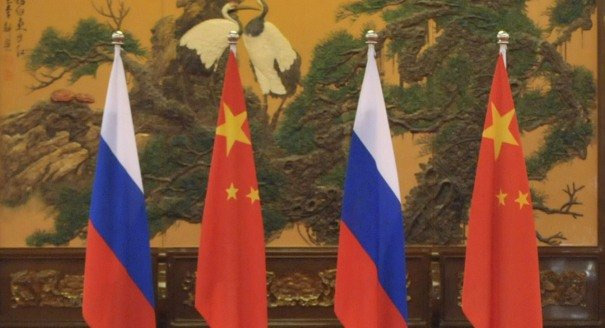
A comparison of China and Russia can reveal not only the dramas of undemocratic societies and the limitations of modernization efforts by top-down governments, but also the challenges that the West faces.
Source: American Interest
When Russia and China come up as subjects in the media and in political and academic discourse (as they frequently do), they are discussed in terms of bilateral relations, as a segue into a discussion of regional and global politics, as authoritarian threats to the West, or as examples of attempts at authoritarian modernization. Ever since Bobo Lo and I endeavored to compare Russia’s and China’s roads to modernization (see “A 21st Century Myth: Authoritarian Modernization in Russia and China”), I cannot help feeling that a comparison of these two civilizations and their centralized states, as they both look for an appropriate response to the Western democracies, would reveal not only the dramas of undemocratic societies and an understanding of the limitations of modernization efforts by top-down governments, but also the challenges that the West faces—challenges that it is, to date, incapable of assessing correctly.
Observing the authoritarian experiments of these two serious global actors (although one of them has been weakened), as well as their search for an appropriate international role, has made for interesting viewing, revealing several paradoxes: first, the paradox of stability covering up a deeper instability and impending upheavals; second, the paradox of economic growth that is most likely only a brief respite before a precipitous fall; third, the paradox of outward displays of force that conceal inner weakness and disorientation. These paradoxes illustrate that there is a conflict between perceptions and reality in these two authoritarian states. The only question is to what extent they are the results of conscious distortions of reality as opposed to naivety or unwillingness to accept inconvenient truths.Were Arnold Toynbee alive today, a comparison of Russia and China would provide him with ample material for his theories on the rise and fall of civilizations. Perhaps, Samuel Huntington would have revised some of his conclusions on reform from the top and the role of the middle class in modernization. I hope, too, that Francis Fukuyama will have a chance to compare the modern evolutions of Russia and China, and their systems’ struggles for survival, in the upcoming second volume of The Origins of Political Order.
The West should be particularly concerned about the future of these two models of the centralized state. The impact that Russia and China have on global security and the world economy is not the only cause for concern. More importantly, both authoritarian systems have found a way to exploit liberal democracy, and both have been quite successful at doing this. Since the fall of Communism, Russia’s personalized regime has been able to use the West as an important guarantor of its stability. It has also been sponging off liberal democracies, in the form of its elite’s personal integration into Western society. This integration has led to the creation of powerful pro-Kremlin lobbying structures that are undermining the normative foundation of liberal democracy (in fact, the Western politicians often don’t even recognize that this is what is happening). It is unclear how the Putin regime will survive, now that it has embarked on the path of consolidating itself by rejecting the West and treating it as an enemy.
Through the force of economic might, China earned the West’s admiration and is now treated as a future global superpower, forcing the United States to struggle with the question of how to adapt its policy to this perception. Moreover, it has made the United States, still the world’s only superpower, its debtor.
Regional and global stability, as well our assessments on the prospects for liberal democracy to formulate foreign policy equal to these challenges, are contingent on Russia’s and China’s successful exit from the centralized state model, in which the state survives by limiting society’s freedom. ...

Former Senior Associate, Russian Domestic Politics and Political Institutions Program, Moscow Center
Shevtsova chaired the Russian Domestic Politics and Political Institutions Program at the Carnegie Moscow Center, dividing her time between Carnegie’s offices in Washington, DC, and Moscow. She had been with Carnegie since 1995.
Recent Work
Lilia Shevtsova
Lilia Shevtsova

China’s banking crisis in the 2000s was resolved by transferring the costs to households through financial repression—a decision that recapitalized the banks while exacerbating the structural imbalances that continue to shape the Chinese economy today.

Michael Pettis

Chinese biotech companies have been on the receiving end of U.S. economic coercion. Yet their responses have differed significantly because firm and state interests are not uniformly aligned. For Washington, treating all Chinese tech firms the same, irrespective of their actual interests, risks pushing them farther into Beijing’s corner.

Xue Gong

China’s latest energy plan explicitly calls for integrating data centers into the electricity system, particularly connecting them to green energy. It appears Beijing wants to use compute as a source of domestic demand to absorb renewables excess capacity.

Damien Ma

But their "principal to principal" model will only be as effective as the political strength of each leader back home.
Damien Ma

U.S. unpredictability has allowed China to capitalize on its positioning as the “responsible great power”. Paradoxically, the more China wins the perception game, the more likely expectations will rise for Beijing to deliver not just words but to demonstrate with its deeds.

Chong Ja Ian