

Commentary
Michael Pettis
{
  "authors": [
    "Michael Pettis"
  ],
  "type": "legacyinthemedia",
  "centerAffiliationAll": "dc",
  "centers": [
    "Carnegie Endowment for International Peace",
    "Carnegie China"
  ],
  "collections": [],
  "englishNewsletterAll": "asia",
  "nonEnglishNewsletterAll": "",
  "primaryCenter": "Carnegie Endowment for International Peace",
  "programAffiliation": "AP",
  "programs": [
    "Asia"
  ],
  "projects": [],
  "regions": [
    "East Asia",
    "China",
    "Japan",
    "Western Europe",
    "Germany"
  ],
  "topics": [
    "Economy",
    "Trade"
  ]
}
Source: Getty
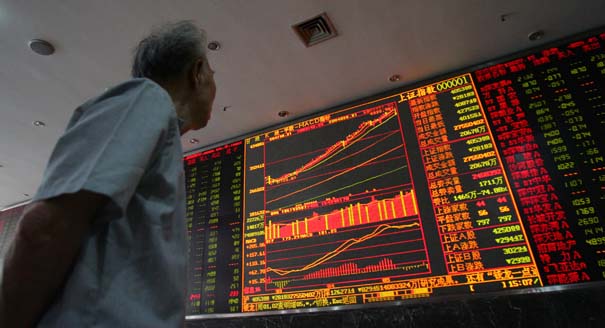
The link between domestic economic policy and its direct impact on global imbalances and trade tensions is not well enough understood.
Source: Diplomat
Pacific Money's James Parker interviewed Professor Michael Pettis following the publication of his new book: The Great Rebalancing: Trade, Conflict and the Perilous Road Ahead for the World Economy.
To the extent that the imbalances support the case for international cooperation, I suspect they will ultimately be strengthened, but in the short term I expect national policies will prevail. In my opinion the environment for international cooperation will probably get worse before it gets better.
Yes, because it reflects a silly requirement among commentators that any analyst choose one side or the other of the debate — either that China has discovered the elixir of growth or that China will collapse within months. Neither is true. I am called a bear because I was a skeptic during the long period in which there was so much hype about China that anyone placing China within an appropriate historical context was considered wildly contrarian and impossibly pessimistic. I think the atmosphere has changed a lot in the past three years, however, and there is a much wider understanding, especially within China but perhaps less so abroad, of the need for an economic adjustment and the political difficulties associated with this adjustment.
The numbers that are being proposed are too small to make much of an impact, but already it is clear that it is going to be politically difficult to impose even these reforms. I think the new leadership understands the problems and are eager to increase the household share of income as well as to reduce inequality, but few countries in history with similar conditions have been able to pull it off sufficiently to allow them to enter the next stage of growth to developed country status. That doesn't mean that China cannot do it. It just means that it is going to be very hard.
I would probably parrot Hyman Minsky and insist that it is impossible to design a stable financial system even in theory. Instead of trying to enforce financial stability it is much better to create incentives and balance sheet structures that acknowledge instability, improve the efficiency of capital allocation, and counteract the economic impacts of financial crises with automatic countercyclical measures.
There are broadly speaking two kinds of countries right now. Countries loudly engaged in currency war, and countries quietly engaged in currency war.
It really isn't difficult. My students are amazing and I love teaching. I am writing about what is likely to go down among economic historians as one of the most interesting periods in history. And the Beijing underground music scene has become one of the best in the world and I am right in the middle of it. When you are doing things that are a lot of fun it isn't a problem allocating time and effort. It also helps to be surrounded with really good people.

Nonresident Senior Fellow, Carnegie China
Michael Pettis is a nonresident senior fellow at the Carnegie Endowment for International Peace. An expert on China’s economy, Pettis is professor of finance at Peking University’s Guanghua School of Management, where he specializes in Chinese financial markets.
Recent Work
Michael Pettis
Michael Pettis

China’s banking crisis in the 2000s was resolved by transferring the costs to households through financial repression—a decision that recapitalized the banks while exacerbating the structural imbalances that continue to shape the Chinese economy today.
Michael Pettis

Chinese biotech companies have been on the receiving end of U.S. economic coercion. Yet their responses have differed significantly because firm and state interests are not uniformly aligned. For Washington, treating all Chinese tech firms the same, irrespective of their actual interests, risks pushing them farther into Beijing’s corner.

Xue Gong
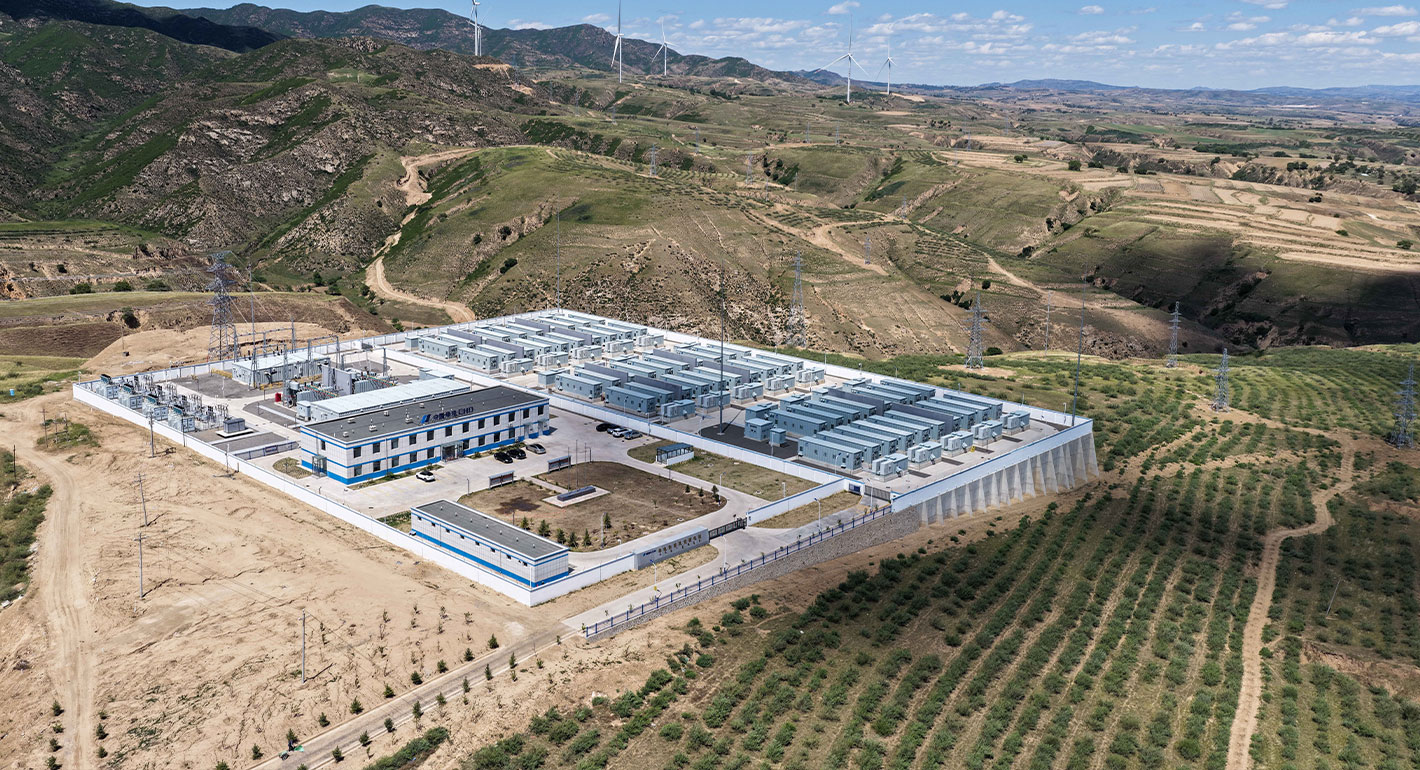
China’s latest energy plan explicitly calls for integrating data centers into the electricity system, particularly connecting them to green energy. It appears Beijing wants to use compute as a source of domestic demand to absorb renewables excess capacity.

Damien Ma

But their "principal to principal" model will only be as effective as the political strength of each leader back home.
Damien Ma

U.S. unpredictability has allowed China to capitalize on its positioning as the “responsible great power”. Paradoxically, the more China wins the perception game, the more likely expectations will rise for Beijing to deliver not just words but to demonstrate with its deeds.

Chong Ja Ian