

In The Media
David Rothkopf
{
  "authors": [
    "David Rothkopf"
  ],
  "type": "legacyinthemedia",
  "centerAffiliationAll": "",
  "centers": [
    "Carnegie Endowment for International Peace"
  ],
  "collections": [],
  "englishNewsletterAll": "",
  "nonEnglishNewsletterAll": "",
  "primaryCenter": "Carnegie Endowment for International Peace",
  "programAffiliation": "",
  "programs": [],
  "projects": [],
  "regions": [
    "North America",
    "Middle East",
    "Israel"
  ],
  "topics": [
    "Political Reform",
    "Foreign Policy"
  ]
}
Source: Getty
It is time, as many in high places on the Obama team well know, for strategy to supplant optics in America's national security strategy and diplomacy.
Source: Foreign Policy
"The problem with this administration," one senior official who works for an Obama cabinet department and is a loyal and enthusiastic supporter of the president told me, "is that we don't do strategy, we do deliverables."
This is a common lament in modern Washington. Trapped within the news cycle like hamsters within a plastic exercise ball, the political and communications pros in the White House focus heavily on the next media event, the next speech, the next thing that advances the perpetual campaign that even lame-duck presidents seem compelled to conduct these days. The focus quickly becomes what announcement the president can make that is newsworthy enough to grab the next set of headlines -- the deliverable.This is bad enough when what it promotes is short-sightedness. But in a Washington where it is hard to get anything substantively done, in which the cupboards are bare and the bankbooks moth-eaten, in which the political will to take risks in distant parts of the world is close to zero, the list of available deliverables becomes so slim and oomphless that by focusing on the deliverable one is focusing on empty symbolism.
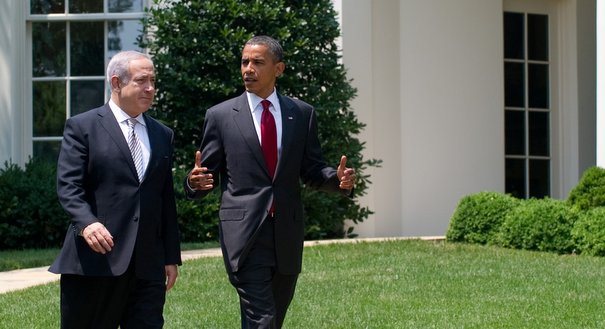
As the president's upcoming trip to Israel reveals, this weakness is compounded by another impulse within the administration, which is the conviction that the president himself is an adequate deliverable. The president is seen too often by those close to him as such a powerful symbol that his mere appearance or the presentation of his views or support in the form of a speech is considered to be an adequate response to many a problem or need.
On the domestic front, this has led to a repeated phenomenon of the president framing an issue in an address -- say, health care or gun control -- but then stepping back and leaving it to others to actually make things happen. While this has seemingly been at least somewhat redressed recently with his outreach to congressional leaders on the budget, the approach seems to be driving Obama's current trip to the Middle East.
Perhaps the thinking is that getting on a plane and flying off to meet regional leaders is enough. Perhaps the fear was that U.S.-Israel relations had sagged so badly that the appearance of fence-mending alone was adequate. But whatever the case, as the president sets off for the region, expectations surrounding the trip are focused on photo ops and carefully worded statements and a soupçon of theater. This is all airy enough to be a good soufflé recipe perhaps, but nothing like meaningful foreign policy.
Further, as inadequate as the posing and posturing will be to moving the needle between the retrenching Israelis and the fragmented and obstructionist Palestinians, putting the trip in the context of the much more important regional problems that fester beyond Israel's borders makes the gestures only seem that much more hollow.
Syria in particular looms as perhaps the most worrisome sign of what a policy of fussing at the margins of an issue can produce. Not only are some 70,000 dead and perhaps two million people dislocated, but the ultimate fall of the Assad regime raises the specter of further slaughter and, worse in a geopolitical sense, the spreading of unrest, armed factions, and destabilizing trends to Lebanon, Jordan, and perhaps Iraq as well. "This could be Obama's Rwanda," one former top George W. Bush national security official told me. And even discounting for the political subcurrents that may have infused that comment, it is impossible not to wonder if the failure to act sooner in Syria may ultimately prove to lastingly damage both Obama's reputation and, much more importantly, the region and its people.
What could the United States and its allies have done? Well, it is undeniable that we could do more than we have so far. We could have worked with our allies to impose a no-fly zone over the country, to establish humanitarian corridors for the dislocated, to make regions of the country off-limits to the fighting, and to arm select rebel groups. We could have put more pressure on the Russians to abandon their criminal support of Bashar al-Assad -- and let's be clear, if Assad and his cronies are ever brought up on human rights violations, their Russian sponsors and enablers ought to also be held accountable. We could have worked more aggressively with regional leaders to support their militaries taking a more active role in the crisis. Indeed, by the standards of past U.S. responses to similar crises, the reality is we could hardly have done less.
Iran too will come up as an issue in the president's discussions. He will again offer himself and his resolve as the principal U.S. deliverable. But the reality of the situation is illustrated well by the lead story in Monday's Washington Post suggesting that the U.S. sanctions regime -- robust as it no doubt is -- has yet to have the desired effect of dissuading the Iranians from developing a nuclear weapon. This is a classic dog-bites-man story. No one who has studied sanctions believed that they would have much effect. Sanctions almost never do.
Much has been made of this administration's "light footprint" approach to counterterrorism. What has received less attention is its simultaneous "light footprint" approach to every other aspect of its involvement in the Middle East. Maybe this is sensible. Certainly, as we reflect on this week's 10th anniversary of the U.S. invasion of Iraq, we can see that overreaction and too much intervention certainly carries with it great risks and high price. But, we are also learning of a great hidden cost associated with fiascos like our efforts in Iraq and Afghanistan. We overreact to our overreactions. We conclude that the only alternative to too much is too little.
The problem of course, is that doing too little to address problems -- focusing on photo ops rather than the real strategic spadework needed to put a lid on the region's unrest, on building new alliances and new partnerships and on mustering the resources necessary to support them -- invites the kind of calamities that require much more costly interventions or dangerous outcomes later on. Appeasement was the natural response to the horrors of World War I. It was also a fatal error.
I am not saying America needs to single-handedly intervene to clean up the problems of the Middle East. We have proven the hard way that we can't and we shouldn't. Rather, we need to figure out how we can act more effectively in concert with others. This requires a strategic vision of a new set of alliances and mechanisms designed to deal with the kind of problems the Middle East is sending our way. It actually requires that we realize that the Israel-Palestine issue is not only not central to U.S. concerns in the region, it is a dangerous distraction.
If the president really wanted to advance the cause of peace in the Middle East, he would be better off traveling to Berlin, Paris, Brussels, and London to work on remaking a more effective alliance with America's European partners there who are essential to any lasting solution, to Moscow to explain to the Russians that he will no longer coddle them if they will so recklessly endanger regional and international stability, to Beijing to find a way to deepen U.S. working relations with China, and to the moderate countries of the Middle East to encourage the formation of a more effective partnership to find regional solutions for regional problems. Obama would also do the heavy lifting on Capitol Hill and with American voters to find more money for real aid programs today to avoid costlier interventions tomorrow. These efforts will no doubt be frustrating, time-consuming, and take place behind the scenes -- and, it must be acknowledged, some limited progress is already being made on some of these fronts. But more must be done. Time is running out on some of these problems, and it is hard not to wonder if, with regard to Syria and Iran, at least, we will all too soon reap the whirlwind.
In other words, not only is the president an inadequate deliverable for the problems faced by Israel and the Palestinians, he is delivering that inadequate deliverable to deal with the wrong problem at the wrong time in the wrong way. It is time, as many in high places on the Obama team well know, for strategy to supplant optics in America's national security strategy and diplomacy.
Former Visiting Scholar
David Rothkopf was a visiting scholar at the Carnegie Endowment as well as the former CEO and editor in chief of the FP Group.
Recent Work
David Rothkopf
David Rothkopf
Carnegie does not take institutional positions on public policy issues; the views represented herein are those of the author(s) and do not necessarily reflect the views of Carnegie, its staff, or its trustees.

China’s political future will be shaped between now and next October. As the Communist Party enters its intense “campaign season” to prepare for a major political transition in 2027, reading Beijing's actions and responses may become more difficult as domestic politics weigh on its behavior more than usual.

Damien Ma

But their "principal to principal" model will only be as effective as the political strength of each leader back home.
Damien Ma

U.S. unpredictability has allowed China to capitalize on its positioning as the “responsible great power”. Paradoxically, the more China wins the perception game, the more likely expectations will rise for Beijing to deliver not just words but to demonstrate with its deeds.

Chong Ja Ian

Hanoi and Beijing have long treated each other as distant cousins rather than comrades in arms. That might be changing as both sides draw closer to hedge against uncertainty and America’s erratic behavior.

Nguyễn Khắc Giang

Across Asia, China is better positioned to withstand energy shocks from the fallout of the Iran war. Its abundant coal capacity can ensure stability in the near term. Yet at the same time, the country’s energy transition away from coal will make it even less vulnerable during the next shock.
Damien Ma