

Paper
Ibrahim Saif, Ahmed Ghoneim
{
  "authors": [
    "Ibrahim Saif"
  ],
  "type": "legacyinthemedia",
  "centerAffiliationAll": "",
  "centers": [
    "Carnegie Endowment for International Peace",
    "Malcolm H. Kerr Carnegie Middle East Center"
  ],
  "collections": [],
  "englishNewsletterAll": "",
  "nonEnglishNewsletterAll": "",
  "primaryCenter": "Malcolm H. Kerr Carnegie Middle East Center",
  "programAffiliation": "",
  "programs": [],
  "projects": [],
  "regions": [
    "Egypt",
    "North Africa"
  ],
  "topics": [
    "Political Reform",
    "Economy",
    "Civil Society"
  ]
}
Source: Getty
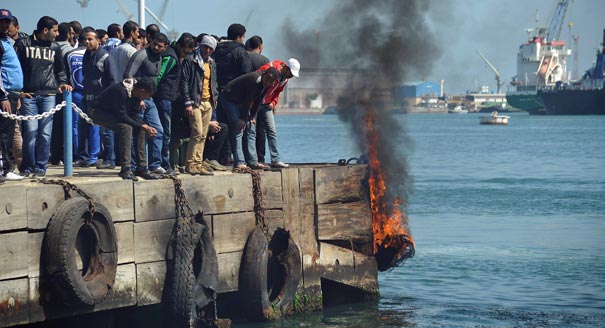
Egypt’s political leadership has not paid close enough attention to the economic situation at the street level.
Source: Al-Hayat
Egypt’s political leadership has not paid close enough attention to the economic situation at the street level. Ordinary Egyptians who previously focused solely on eking out a living are now demanding full-fledged job opportunities and a substantial improvement in their standards of living as part of the changes in the country’s highest institutions of governance. However, political factions from across the spectrum are currently engaged in a tug of war that will likely lead nowhere. Some observers attribute this impasse to Egypt’s deep state, while others link the problem to the rising influence of the Muslim Brotherhood in Egyptian institutions; either way, the crisis is deepening.
Instead of proposing realistic solutions, Islamist and liberal political groups have resorted to blaming each other for Egypt’s economic problems, which are growing steadily worse. These groups appear to be unaware of the critical state of the country’s economy and the consequences that could result from an economic collapse. All indicators point to a serious crisis on the horizon.
Foreign reserves, with the exception of gold, have declined rapidly to untenable levels and continue to drop. Capital flight has taken place and foreign investment has stalled, with the exception of some limited inflows from the Gulf, particularly from Qatar. These limited investments are not nearly enough to support Egypt’s economy at this stage. In addition, international credit institutions have downgraded Egypt’s credit rating, meaning that interest rates will rise and obtaining concessional loans from international institutions will become even more difficult.The private sector is also in a critical state. The private sector in this case is a new, national private sector willing to invest and adapt to political change, and not the private sector linked to the old regime that accumulated its wealth through personal ties to regime figures. However, this new, ”untainted” national private sector is unable to invest or make strategic decisions due to the deterioration of security conditions and lingering negative impressions of the role of the private sector itself, which have prevented its members from taking initiatives during the transitional phase.
A division also exists between businessmen with ties to the Muslim Brotherhood and other businessmen who feel threatened by the changes under way. These distinct categories of businessmen are similar to the system that existed under former president Hosni Mubarak. Under that system, businessmen with ties to the National Democratic Party were able to reap economic gains thanks to political connections. The emerging landscape in Egypt has led a number of businessmen to seek safe haven abroad until the economic situation stabilizes. This will contribute to the continued deterioration of the Egyptian economy as the transitional period proceeds without a clear vision for economic recovery.
Politicians have yet to formulate any clearly defined, three-to- five-year program that sets out policies to address the major demands that led to the revolution, such as the desire for equal opportunity, social justice, and improvement of public services. The fact that the incumbent Freedom and Justice Party (FJP) seeks to avoid responsibility for the currently poor conditions constitutes a key impediment to progress.
FJP party leaders contend that deep state networks are an obstacle to their sovereignty, while other political camps argue that the Brotherhood’s influence is becoming more pronounced in state institutions. Some groups also claim that there is no impetus to improve the performance of public institutions, to render them more responsive to the demands of the citizenry, and to address the problems the system faces, such as in the areas of transportation—which has become a general issue of concern—and public sanitation.
Once again, the key sources of weakness in the Egyptian economy must be pinpointed. Does weakness stem from institutions so fragile that they are incapable of improvement, irrespective of who is in power? In a political framework that gives control of critical institutions to the ruling party or the covert resistance to this control? Egypt lacks institutions that may facilitate dialogue on this question, while the rival groups continue to hold each other responsible for the current situation. Very few voices are proposing ways to overcome this problem.
Under these circumstances, it comes as no surprise that Egypt is seeking assistance from the International Monetary Fund (IMF). Contrary to the popular belief that the FJP and al-Nour Party, among other Islamist parties, would oppose such a move, the FJP is on its way to signing what has been dubbed a transitional agreement between the Egyptian government and the IMF. The $4.8 billion loan, which is conditional upon a program of reforms, is to be signed following the parliamentary elections.
Two years after the ousting of the former regime, the shape of the transition remains murky. Political disputes are unlikely to be resolved through official dialogue, but rather in the streets and via media platforms. This renders observers pessimistic about Egypt’s capacity to establish strong foundations for political dialogue that enables Egypt to move to the post-Mubarak era.
As time passes, a growing number of Egyptians are becoming disenchanted with the political process, and polls show that voter support for political parties is on the decline. The transitional phase has been marked by an inability to confront challenges, indicating a future tainted with uncertainty.
Former Senior Associate, Middle East Center
Saif is an economist specializing in the political economy of the Middle East. His research focuses on international trade and structural adjustment programs in developing countries, with emphasis on Jordan and the Middle East.
Recent Work
Ibrahim Saif, Ahmed Ghoneim
Ibrahim Saif, Muhammad Abu Rumman
Carnegie does not take institutional positions on public policy issues; the views represented herein are those of the author(s) and do not necessarily reflect the views of Carnegie, its staff, or its trustees.

China’s banking crisis in the 2000s was resolved by transferring the costs to households through financial repression—a decision that recapitalized the banks while exacerbating the structural imbalances that continue to shape the Chinese economy today.

Michael Pettis

In the latest Five-Year Plan, the Chinese president cements the shift to an innovation-driven economy over a consumption-driven one.

Damien Ma
Rather than climate ambitions, compatibility with investment and exports is why China supports both green and high-emission technologies.

Mathias Larsen
“Involution” is a new word for an old problem, and without a very different set of policies to rein it in, it is a problem that is likely to persist.
Michael Pettis
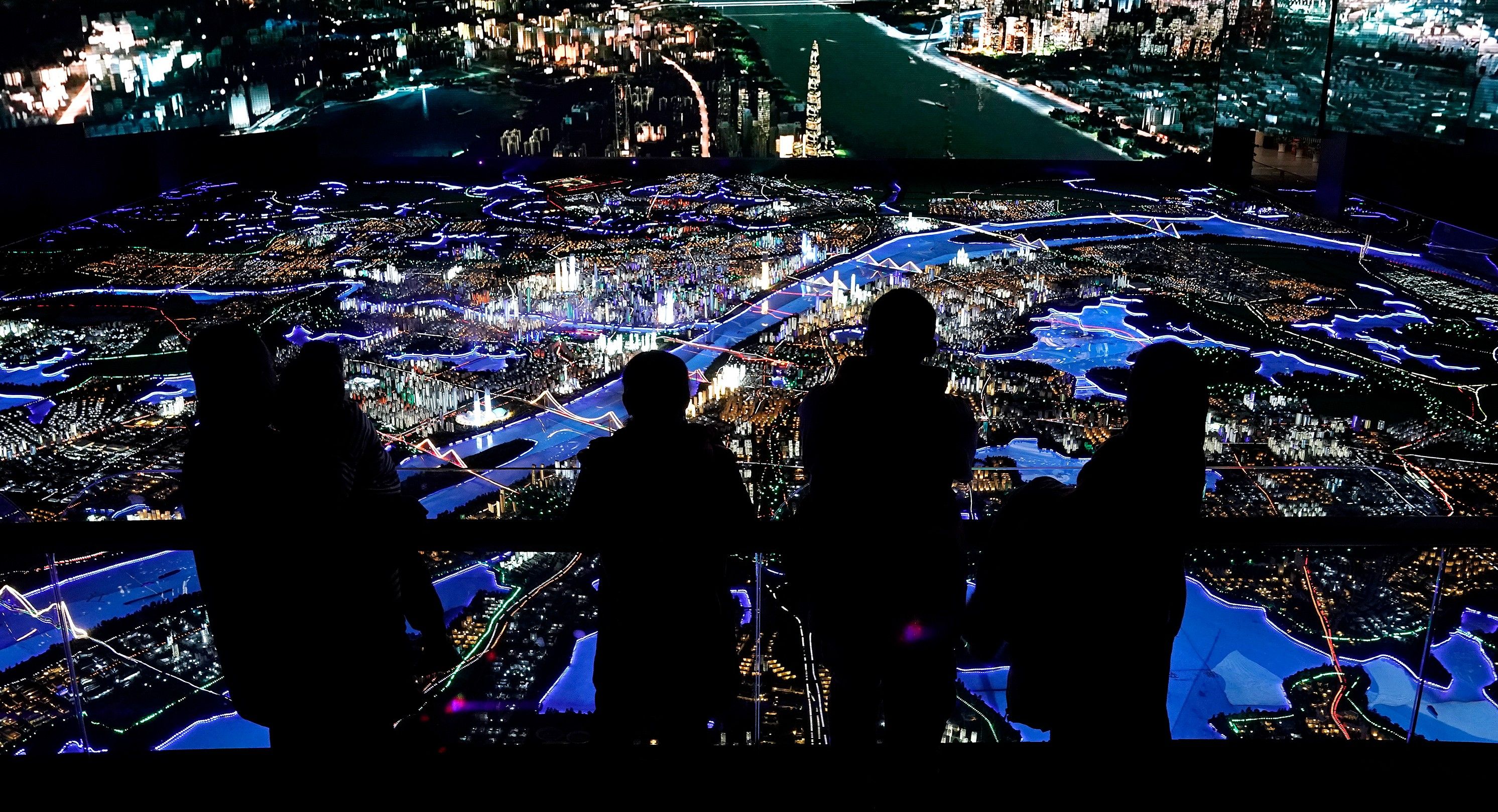
While China's investment story seems contradictory from the outside, the real answers to Beijing's high-quality growth ambitions are hiding in plain sight across the nation's cities.
Yuhan Zhang