

Paper
Matthew Rojansky
{
  "authors": [
    "Matthew Rojansky"
  ],
  "type": "legacyinthemedia",
  "centerAffiliationAll": "dc",
  "centers": [
    "Carnegie Endowment for International Peace",
    "Carnegie Russia Eurasia Center"
  ],
  "collections": [],
  "englishNewsletterAll": "ctw",
  "nonEnglishNewsletterAll": "",
  "primaryCenter": "Carnegie Endowment for International Peace",
  "programAffiliation": "russia",
  "programs": [
    "Russia and Eurasia"
  ],
  "projects": [],
  "regions": [
    "North America",
    "United States",
    "Caucasus",
    "Russia"
  ],
  "topics": [
    "Security"
  ]
}
Source: Getty
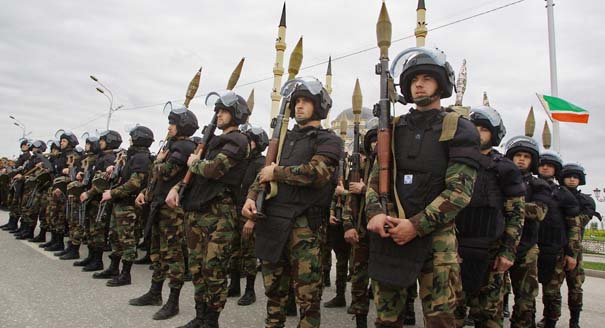
There is so far no evidence that the two suspects in the Boston bombings had direct links with any known terrorist organizations in the region. Most likely, the overall environment was conducive to their radicalization.
Source: CNN Piers Morgan Live
Speaking on Piers Morgan Live, Carnegie's Matthew Rojansky commented on the Chechen radical links of the Boston bombers. Rojansky pointed out that both of the brothers were too young to participate in either of the two Chechen Wars, fought during the 1990s and early 2000s. The elder Tamerlan's six month trip to Chechnya is a cause for suspicion, but there is so far no evidence that he had direct links with any known terrorist organizations in the region. Most likely, the overall environment was conducive to his radicalization. Rojansky also noted that the Russians turned to the United States for assistance in 2011 prior to his travel to the region. This was a huge missed opportunity on the part of the United States not to follow up with him after his trip to Chechnya and underscores the need for more U.S.-Russia cooperation on counterterrorism.

Former Deputy Director, Russia and Eurasia Program
Rojansky, formerly executive director of the Partnership for a Secure America, is an expert on U.S. and Russian national security and nuclear-weapon policies.
Recent Work
Matthew Rojansky
Matthew Rojansky
Carnegie does not take institutional positions on public policy issues; the views represented herein are those of the author(s) and do not necessarily reflect the views of Carnegie, its staff, or its trustees.

But their "principal to principal" model will only be as effective as the political strength of each leader back home.

Damien Ma

U.S. unpredictability has allowed China to capitalize on its positioning as the “responsible great power”. Paradoxically, the more China wins the perception game, the more likely expectations will rise for Beijing to deliver not just words but to demonstrate with its deeds.

Chong Ja Ian
For Malaysia, the conjunction that works is “and” not “or” when it comes to the United States and China.

Elina Noor

Regulation, not embargo, allows Beijing to shape how other countries and firms adapt to its terms.
Alvin Camba

The Thai-Cambodian conflict highlights the limits to China's peacemaker ambition and the significance of this role on Southeast Asia’s balance of power.

Pongphisoot (Paul) Busbarat