
• Commentary
  • Research
  • Experts
  • Events
Carnegie China logoCarnegie lettermark logo
{
  "authors": [
    "Zhang Chuanjie"
  ],
  "type": "legacyinthemedia",
  "centerAffiliationAll": "",
  "centers": [
    "Carnegie Endowment for International Peace",
    "Carnegie China"
  ],
  "collections": [
    "U.S.-China Relations",
    "China’s Foreign Relations"
  ],
  "englishNewsletterAll": "",
  "nonEnglishNewsletterAll": "",
  "primaryCenter": "Carnegie China",
  "programAffiliation": "",
  "programs": [],
  "projects": [],
  "regions": [
    "North America",
    "United States",
    "East Asia",
    "China",
    "North Korea"
  ],
  "topics": [
    "Security",
    "Nuclear Policy"
  ]
}

Source: Getty

In The Media
Carnegie China

Xi's U.S. Visit

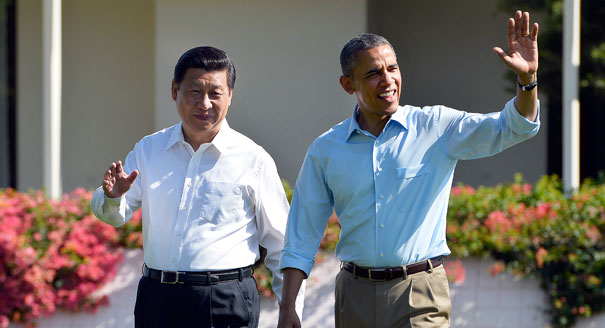
The informal surroundings at Sunnylands enable Xi and Obama to have private and meaningful discussion about critical bilateral and global issues.

Link Copied
By Zhang Chuanjie
Published on Jun 8, 2013

Source: CCTV

Speaking on CCTV, Carnegie’s Zhang Chuanjie explained that the benefit of the informal meeting in Sunnylands, California between Presidents Xi Jinping and Barack Obama is that “neither has any pressure to come up with an agreement.”

He predicted that cybersecurity will be an important point of discussion between the two leaders. Zhang suggested that both countries should send groups to work out “rules and regulations” to help improve cooperation on cybersecurity. Another commonality that the two countries should cooperate on is North Korea, since both have a vested interest in stability on the peninsula, he added.

About the Author

Zhang Chuanjie

Former Resident Scholar, Carnegie-Tsinghua Center for Global Policy

Zhang Chuanjie was a resident scholar at the Carnegie-Tsinghua Center until June 2020.

Zhang Chuanjie
Former Resident Scholar, Carnegie-Tsinghua Center for Global Policy
Zhang Chuanjie
SecurityNuclear PolicyNorth AmericaUnited StatesEast AsiaChinaNorth Korea

Carnegie does not take institutional positions on public policy issues; the views represented herein are those of the author(s) and do not necessarily reflect the views of Carnegie, its staff, or its trustees.

More Work from Carnegie China

  • Commentary
    When It Comes to Superpower Geopolitics, Malaysia Is Staunchly Nonpartisan

    For Malaysia, the conjunction that works is “and” not “or” when it comes to the United States and China.

      Elina Noor

  • Commentary
    ASEAN-China Digital Cooperation: Deeper but Clear-Eyed Engagement

    ASEAN needs to determine how to balance perpetuating the benefits of technology cooperation with China while mitigating the risks of getting caught in the crosshairs of U.S.-China gamesmanship.

      Elina Noor

  • Commentary
    Neither Comrade nor Ally: Decoding Vietnam’s First Army Drill with China

    In July 2025, Vietnam and China held their first joint army drill, a modest but symbolic move reflecting Hanoi’s strategic hedging amid U.S.–China rivalry.

      • Nguyen-khac-giang

      Nguyễn Khắc Giang

  • Commentary
    Today’s Rare Earths Conflict Echoes the 1973 Oil Crisis — But It’s Not the Same

    Regulation, not embargo, allows Beijing to shape how other countries and firms adapt to its terms.

      Alvin Camba

  • Commentary
    How China’s Growth Model Determines Its Climate Performance

    Rather than climate ambitions, compatibility with investment and exports is why China supports both green and high-emission technologies.

      Mathias Larsen

Get more news and analysis from
Carnegie China
Carnegie China logo, white
  • Research
  • About
  • Experts
  • Events
  • Contact
  • Careers
  • Privacy
  • For Media
Get more news and analysis from
Carnegie China
© 2026 Carnegie Endowment for International Peace. All rights reserved.