

Article
Thomas de Waal
{
  "authors": [
    "Thomas de Waal"
  ],
  "type": "commentary",
  "centerAffiliationAll": "",
  "centers": [
    "Carnegie Endowment for International Peace",
    "Carnegie Europe",
    "Carnegie Russia Eurasia Center"
  ],
  "collections": [],
  "englishNewsletterAll": "",
  "nonEnglishNewsletterAll": "",
  "primaryCenter": "Carnegie Europe",
  "programAffiliation": "",
  "programs": [],
  "projects": [
    "Eurasia in Transition"
  ],
  "regions": [
    "Middle East",
    "Türkiye"
  ],
  "topics": []
}
Source: Getty
The long-awaited “democratic package” of proposals offered by Turkish Prime Minister Erdogan is small for the Kurds. By doing something but not everything, he is clearly playing for time.
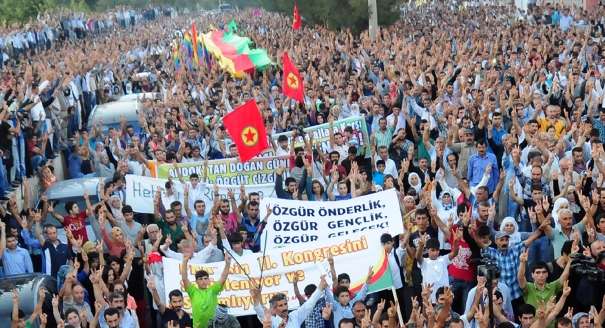
This is a city of two competing governments in the same space. Diyarbakir in south-eastern Turkey is, in all but a full political sense, a Kurdish capital. The walls are covered with signs and graffiti in Kurdish, the old men stroll along in baggy pants, the women in bright headscarves. The municipal government is run by the Kurdish party, the BDP, which is also the political wing of the Kurdish separatist militant movement, the PKK.
Yet the Turkish state is still in overall control. So there was a stand-off on Monday, which was curious to an outsider but completely habitual in these parts. The party of local government, the BDP, held a rally in response to the long-awaited “democratic package” of proposals offered by Turkish Prime Minister Recep Tayyip Erdogan, while the police and army blocked the streets and prevented the BDP leaders from making speeches.
Everyone had been waiting for the “democratic package” to see whether its new ideas were enough to keep the Turkish government’s ceasefire deal with the PKK, agreed in May, on track.
The answer I heard in Diyarbakir was “only just.”
Galip, a former teacher, said, “It’s a small package. It is for them, not us.”
Kurds will no longer be fined for writing the three letters, Q, W, and X, which have been banned since the 1920s (since these letters exist in the Kurdish, but not the Turkish alphabet, and the Kurdish alphabet is not recognized in Turkey). And, in a move strong on symbolism, Turkified towns and villages can be renamed, so that Tunceli can for example reclaim its old name of Dersim.
But when I asked the mayor of the local municipality, Abdullah Demirtas, what his main demand from the central government in Ankara was, he said: “Education in mother tongue.”
Assumed as an automatic right in most of the European continent from Cardiff to Grozny, education in Kurdish has always been banned by the unitary Turkish state. Erdogan announced a half-measure: Kurdish classes would now be permissible in private schools but not for the mass of the students in public schools.
Erdogan also made no firm commitment to change the electoral law to lower the threshold for representation in parliament from its current ten percent of the vote—a move that would benefit the BDP first of all.
By doing something but not everything, the prime minister is clearly playing for time. The consummate vote-winner clearly wants to keep his options open, ahead of next spring’s municipal elections.
So Erdogan has bought himself a little time with the Kurds—but he will hear more from Diyarbakir before long.

Senior Fellow, Carnegie Europe
Thomas de Waal is a senior fellow at Carnegie Europe, specializing in Eastern Europe and the Caucasus.
Recent Work
Thomas de Waal
Thomas de Waal
Carnegie does not take institutional positions on public policy issues; the views represented herein are those of the author(s) and do not necessarily reflect the views of Carnegie, its staff, or its trustees.

The advantage that China has over other global powers, especially America, is that its foreign policy is closely aligned with those of many of the Middle Eastern countries.



Jin Liangxiang, Maha Yahya, Hesham Alghannam

It’s about managing oil prices, bread prices, and strategic partnerships.



Amr Hamzawy, Karim Sadjadpour, Aaron David Miller, …
Fundamentally, it seems irrational to leave an agreement that’s working today out of a fixation on potential growth of Iran’s nuclear program more than a decade from now, when such growth could happen tomorrow if we unravel the agreement.
John Kerry
The smart way to get tough on Iran would be to commit to the nuclear deal, enforce it to the hilt, and work with global partners on a long-term strategy to deal with Iran’s challenge.
William J. Burns, Jake Sullivan
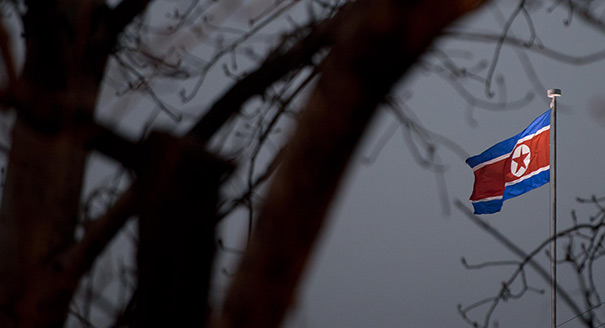
Increased tensions between the United States and Iran over the last couple days, along with U.S. President Donald Trump’s calls to end the Iran Nuclear Deal, could put Iran on the same path as North Korea as an imminent threat potentially needing military consideration.
Jake Sullivan