

Report
- +3
James M. Acton, Alexey Arbatov, Vladimir Dvorkin, …
{
  "authors": [
    "Petr Topychkanov"
  ],
  "type": "commentary",
  "centerAffiliationAll": "",
  "centers": [
    "Carnegie Endowment for International Peace",
    "Carnegie Russia Eurasia Center"
  ],
  "collections": [],
  "englishNewsletterAll": "",
  "nonEnglishNewsletterAll": "",
  "primaryCenter": "Carnegie Russia Eurasia Center",
  "programAffiliation": "",
  "programs": [],
  "projects": [
    "Eurasia in Transition"
  ],
  "regions": [
    "South Asia",
    "India",
    "Pakistan",
    "Central Asia",
    "Russia"
  ],
  "topics": [
    "Economy",
    "Trade",
    "Climate Change",
    "Foreign Policy"
  ]
}
Source: Getty
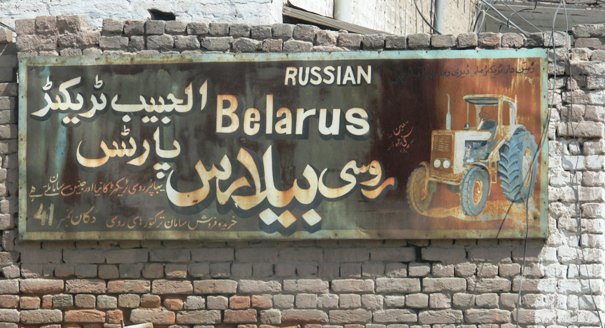
Pakistan is not an important Russian trading partner in South Asia. However, with Eurasian integration involving Central Asia and traditional Russian-Indian economic ties revived, there is no sense for Pakistan to remain in a limbo.
Discussions about the prospects of the relations between Russia and Pakistan are focused usually on several projects, which still exist on paper only, like the Trans-Afghanistan pipeline (TAPI), and Central Asia—South Asia regional energy project (CASA-1000). The Karachi Steel Mill is another field of possible cooperation between the two countries, often mentioned in bilateral discussions. These and other similar projects must be welcomed, because they will stimulate regional integration and development.
But why is it that Russia and Pakistan cannot achieve even a small amount of progress in all these projects? Some people would say: “India is the reason.” According to them, Moscow doesn’t want to move forward in the relations with Islamabad, because it doesn’t want to evoke anger in New Delhi. This answer isn’t correct. In every mentioned case the main reasons are economic and political. Without political stability in Afghanistan there are no prospects for the energy projects between Central Asia and South Asia.
Without the right economic conditions in Pakistan Russian projects there will never materialize. The annulment of the privatization of the Karachi Steel Mill by the Supreme Court of Pakistan has sent a very bad signal not only to a leading Russian metal company, which won the tender with its partners from Pakistan and Saudi Arabia, but also to all probable investors from Russia. It was only a short time before that Moscow and Islamabad had signed the intergovernmental Memorandum of Understanding on Cooperation in Modernization, Reconstruction and Expansion of Production Capacity of the Karachi Steel Mill.
The economic situation in Russia is better than in Pakistan, but Russian companies’ resources are still limited, that is why they prefer either short-term investment with high financial returns or long-term projects with high level of stability and predictability. Neither option is currently available in Pakistan due to its domestic political and economic problems. The latter has some chance in the state sector of economy. In this context, Multan-2 and Guddu thermal power stations look like possible areas of cooperation between the two countries.
It doesn’t mean that Russia should wait for a better time in Pakistan. There are ways to improve bilateral trade, including but not limited to energizing the work of the Russian-Pakistani Intergovernmental Commission on Trade and Economic, Scientific and Technical Cooperation. Regular economic conferences with participants from governments and businesses will help Russia and Pakistan to better understand the economic opportunities and risks in their bilateral trade.
Skeptics may say all this is not such an urgent issue. However, long-term trends point to various parts of South and Central Asia, long cut off from one another, becoming more closely intertwined again. With Eurasian integration involving Central Asia, and traditional Russian-Indian economic ties revived, there is no sense for Pakistan to remain in a limbo.
Former Fellow, Nonproliferation Program, Moscow Center
Topychkanov was a fellow in the Carnegie Moscow Center’s Nonproliferation Program.
Recent Work


James M. Acton, Alexey Arbatov, Vladimir Dvorkin, …
Petr Topychkanov
Carnegie does not take institutional positions on public policy issues; the views represented herein are those of the author(s) and do not necessarily reflect the views of Carnegie, its staff, or its trustees.

China has showcased its engineering prowess with small modular reactor demonstration projects. But turning these technological achievements into commercial success will be a greater challenge.

Tong Zhao

The Plaza Accord was not an externally imposed punishment of Japan but part of a broader restructuring that Japanese economists and policymakers themselves recognized was necessary. Its effects were undermined, however, when Tokyo responded to the resulting slowdown with policies that exacerbated investment, credit expansion, and the very imbalances the adjustment was intended to resolve.

Michael Pettis
China’s banking crisis in the 2000s was resolved by transferring the costs to households through financial repression—a decision that recapitalized the banks while exacerbating the structural imbalances that continue to shape the Chinese economy today.
Michael Pettis

But their "principal to principal" model will only be as effective as the political strength of each leader back home.

Damien Ma

U.S. unpredictability has allowed China to capitalize on its positioning as the “responsible great power”. Paradoxically, the more China wins the perception game, the more likely expectations will rise for Beijing to deliver not just words but to demonstrate with its deeds.

Chong Ja Ian