

Commentary
But their "principal to principal" model will only be as effective as the political strength of each leader back home.
Damien Ma
{
  "authors": [
    "Nicholas D. Wright"
  ],
  "type": "legacyinthemedia",
  "centerAffiliationAll": "dc",
  "centers": [
    "Carnegie Endowment for International Peace"
  ],
  "collections": [],
  "englishNewsletterAll": "ctw",
  "nonEnglishNewsletterAll": "",
  "primaryCenter": "Carnegie Endowment for International Peace",
  "programAffiliation": "NPP",
  "programs": [
    "Nuclear Policy"
  ],
  "projects": [],
  "regions": [],
  "topics": [
    "Foreign Policy"
  ]
}
Source: Getty
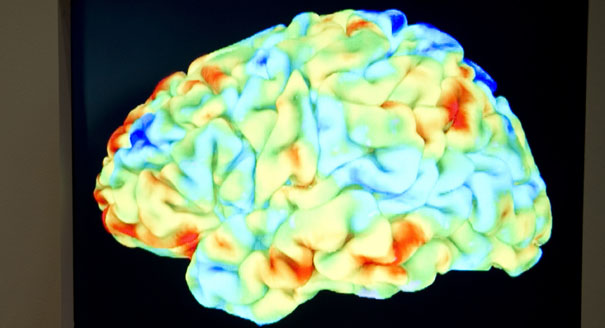
Insights into human decision-making can be used to guide public policy.
Source: Nature
As a student, Nicholas Wright pursued interests in biology and public policy, securing four degrees and a fellowship in the department of government at the London School of Economics (LSE). He now uses his neuroscience training and insights into human decision-making to inform nuclear-security policy as a fellow at the Carnegie Endowment for International Peace in Washington DC.
At the end of my medical degree, I went to a series of lectures by economist Richard Layard from the LSE, who talked about what neuroscience might be able to tell us about economic and social decision-making. I read up on neuroscience and decided to do a master's degree. My research into functional magnetic resonance imaging (fMRI) dispelled the hypothesis that only one area of the brain specializes in reading. The technique surpassed my expectations and proved itself to be a new source of information that could be relevant to public policy.
It wasn't by chance. After my postgraduate medical exams, I did a PhD project to study how risk perception influences decision-making, hoping to apply the concepts to issues of public policy. I worked with the Wellcome Trust Centre for Neuroimaging at UCL and stayed on as a fellow doing fMRI after I finished my PhD.
During a year-long fellowship at the LSE, I built up my contacts, planned events with policy-makers and created a narrative about my experience. Several policy-oriented job opportunities in Washington DC came up, but a position at the Carnegie Endowment for International Peace was most exciting.
There was a lot of great work done in the 1970s on applying decision-making and cognitive psychology to nuclear strategy, but much less had been done recently. The ideas coming out of neuroeconomics hadn't yet been applied to international relations, so there was enormous potential for doing interesting work that could have a positive impact on the world.
In January, a colleague and I published an article called 'The neuroscience guide to negotiations with Iran' in The Atlantic. We combined insights from neuroscience, behaviour and history to better understand Iranian motives in the ongoing nuclear talks. For example, conciliatory gestures are more effective when they're unexpected. Neuroimaging experiments detail how the brain computes the difference between what is expected and what actually happens, and the more surprising the reward or punishment, the more impact it has on decision-making. Last year, Iranian President Hassan Rouhani unexpectedly used social media to engage on political issues, raising hopes for a diplomatic breakthrough. We argued that neuroscience provides a new, important source of evidence relevant to nuclear talks with Iran. Our article was read by US and UK defence policy-makers, and I have been asked to continue providing briefs to the US Department of Defense.
In the world of public policy, there are so many competing priorities that there is a limit to how much science can be used. Winston Churchill once said that scientists “should be on tap, but not on top”. Although science is not the only consideration, I am on tap to provide it.
Former Nonresident Associate, Nuclear Policy Program
Wright was a nonresident associate in the Nuclear Policy Program at the Carnegie Endowment. His research draws on his background in neuroscience to explore political decisionmaking in economics and nuclear security.
Carnegie does not take institutional positions on public policy issues; the views represented herein are those of the author(s) and do not necessarily reflect the views of Carnegie, its staff, or its trustees.

But their "principal to principal" model will only be as effective as the political strength of each leader back home.

Damien Ma

U.S. unpredictability has allowed China to capitalize on its positioning as the “responsible great power”. Paradoxically, the more China wins the perception game, the more likely expectations will rise for Beijing to deliver not just words but to demonstrate with its deeds.

Chong Ja Ian

Hanoi and Beijing have long treated each other as distant cousins rather than comrades in arms. That might be changing as both sides draw closer to hedge against uncertainty and America’s erratic behavior.

Nguyễn Khắc Giang

Across Asia, China is better positioned to withstand energy shocks from the fallout of the Iran war. Its abundant coal capacity can ensure stability in the near term. Yet at the same time, the country’s energy transition away from coal will make it even less vulnerable during the next shock.
Damien Ma

Malaysia’s chairmanship sought to fend off short-term challenges while laying the groundwork for minimizing ASEAN’s longer-term exposure to external stresses.

Elina Noor