

Other
François Godement, Ashley J. Tellis
{
  "authors": [
    "François Godement"
  ],
  "type": "legacyinthemedia",
  "centerAffiliationAll": "dc",
  "centers": [
    "Carnegie Endowment for International Peace"
  ],
  "collections": [],
  "englishNewsletterAll": "asia",
  "nonEnglishNewsletterAll": "",
  "primaryCenter": "Carnegie Endowment for International Peace",
  "programAffiliation": "AP",
  "programs": [
    "Asia"
  ],
  "projects": [],
  "regions": [
    "East Asia",
    "China"
  ],
  "topics": [
    "Political Reform",
    "Economy"
  ]
}
Source: Getty
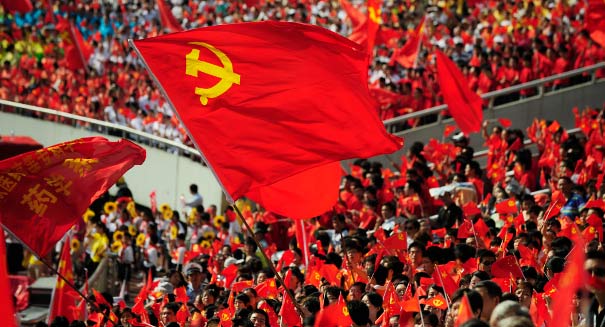
Exponents of reform have been skeptical of Xi’s top-down approach. The question is how many reforms from the Third Plenum will see concrete implementation by the National People’s Congress meeting.
Source: European Council on Foreign Relations and the Asia Centre
The annual meeting of China’s National People’s Congress (NPC) opens on 5 March, and this year, there is far less speculation about the event than there has been in previous years. It is easy to see why expectations are low. Just a few months ago, the party announced a long list of reforms. But, reading the fine print of the 60-point “Decision on Major Issues Concerning Comprehensively Deepening Reforms”, almost 200 reforms were proposed by the Central Committee at the Third Plenum in November 2013. How could the government possibly announce more?
Moreover, Xi Jinping’s mandate at the helm of the Communist Party and the state has asphyxiated the contentious debates of the last few years. And his vigorous anti-corruption campaign has engendered real fear among China’s officials. Right now, it is ensnaring just about every known relative of Zhou Yongkang, a former Standing Committee member who once wielded fearsome authority at the head of China’s domestic security agencies.
But Xi is not omnipotent: environmental pollution has reached unbearable levels in Beijing and the Northern Plains. And the country has just been hit by an extremely audacious act of terrorism, killing 29 people and injuring 109 in Kunming. People in China are talking less about Xi’s long-term goals or orientation than about his actual capacity to implement the reforms put forward in November 2013. How many of the reforms will see some concrete implementation at the NPC meeting?This special issue of China Analysis, previewing the NPC meeting, reflects these concerns. Long-time exponents of reform in China are sceptical of the top-down process favoured by Xi. Major changes since 1978 have always been accomplished with a good measure of bottom-up initiatives, as local actors, firms, and civil society worked to drive change. Some new announcements have already been made since the Plenum, and the implications of these announcements are described in this issue. In particular, the shape of China’s National Security Commission is now clearer. It will not be a Western-style national security council, but instead essentially an inter-agency body under three top leaders who can exercise authority over the party, the legal system, and the economy and coordinate process. The sources on reforming the legal system outline a situation that would be impossible elsewhere: the will to implement the rule of law and autonomous regulation within the economy, even as their application in politics remains very limited.
Other titbits have emerged recently. China is reining in some of its runaway infrastructure investment, including new railway construction and new coal and steel capacities: Hebei province surrounding Beijing produces almost as much steel as Europe and the United States combined, an achievement that must have something to do with the region’s “airpocalypse”. New IPOs have been accelerated, although they still account for only 2 percent of new financing for firms. More private firms have appeared, even though the value of their capital only equals that of China’s SOEs. The abolition of re-education by labour has been confirmed. Shanghai’s new Free Trade Zone, which had disappointed hopeful international investors, has now been provided with currency exchange regulations. There are rumours of other moves such as a share divestiture by Sinopec, China’s largest oil company, after an anti-corruption campaign cut a swathe through China’s energy sector.
Perhaps the most interesting development is not an act of reform at all: it is the unprecedented autonomous move taken by China’s central bank to depreciate the renminbi in late February. The move came as a surprise to the markets, which had come to see the gradual appreciation of China’s currency as a sure-fire process. It is doubtful, of course, whether the central bank could have done this without getting a green light from the political leadership. And the central bank has always “guided” the market, essentially through phone calls to Chinese banks, which invariably listen to what the government tells them. But this is the first time that the central bank has taken the market by surprise in this way.
One possible reason for the move is that if China is to rein in runaway credit via shadow banking, it must close loopholes. In the last three years, the biggest loophole has been borrowing offshore, especially in Hong Kong and other markets trading renminbi, in order to lend money in China and thereby escape credit limits. What better lesson to give the powerful Chinese actors indulging in these practices than to show them that forward betting on the renminbi can turn into a bloodbath? And what better example to set than to use the central bank, for the first time, as an autonomous and unpredictable agent?
The move will have its undesirable international effects – for example, it will feed international currency depreciation. But it does show that the central bank has been given a degree of financial autonomy, and it represents a move against some powerful vested interests. The key question of the next few days is whether the NPC will set in motion any other steps towards the regulation of vested interests.

Former Nonresident Senior Fellow, Asia Program
Godement, an expert on Chinese and East Asian strategic and international affairs, was a nonresident senior fellow in the Asia Program at the Carnegie Endowment for International Peace.
Recent Work
François Godement, Ashley J. Tellis

François Godement, Abigaël Vasselier
Carnegie does not take institutional positions on public policy issues; the views represented herein are those of the author(s) and do not necessarily reflect the views of Carnegie, its staff, or its trustees.

China’s banking crisis in the 2000s was resolved by transferring the costs to households through financial repression—a decision that recapitalized the banks while exacerbating the structural imbalances that continue to shape the Chinese economy today.

Michael Pettis

Chinese biotech companies have been on the receiving end of U.S. economic coercion. Yet their responses have differed significantly because firm and state interests are not uniformly aligned. For Washington, treating all Chinese tech firms the same, irrespective of their actual interests, risks pushing them farther into Beijing’s corner.

Xue Gong

China’s latest energy plan explicitly calls for integrating data centers into the electricity system, particularly connecting them to green energy. It appears Beijing wants to use compute as a source of domestic demand to absorb renewables excess capacity.

Damien Ma

But their "principal to principal" model will only be as effective as the political strength of each leader back home.
Damien Ma

U.S. unpredictability has allowed China to capitalize on its positioning as the “responsible great power”. Paradoxically, the more China wins the perception game, the more likely expectations will rise for Beijing to deliver not just words but to demonstrate with its deeds.

Chong Ja Ian