

Q&A
Dara Massicot, Aaron David Miller, Andrew S. Weiss
{
  "authors": [
    "Andrew S. Weiss"
  ],
  "type": "commentary",
  "centerAffiliationAll": "",
  "centers": [
    "Carnegie Endowment for International Peace",
    "Carnegie Russia Eurasia Center"
  ],
  "collections": [],
  "englishNewsletterAll": "",
  "nonEnglishNewsletterAll": "",
  "primaryCenter": "Carnegie Endowment for International Peace",
  "programAffiliation": "",
  "programs": [],
  "projects": [],
  "regions": [
    "Eastern Europe",
    "Ukraine"
  ],
  "topics": [
    "Political Reform",
    "Security",
    "Civil Society"
  ]
}
Source: Getty
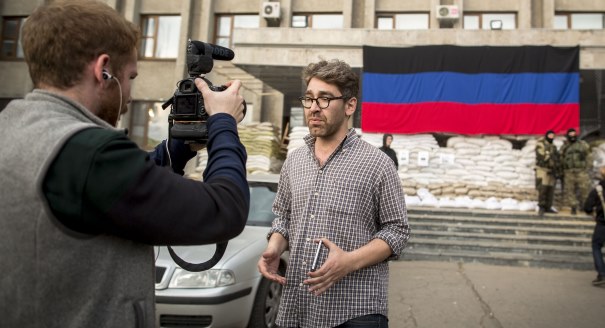
The video bulletins from the conflict zone in Ukraine produced by Simon Ostrovsky demonstrate that this country is a perfect trial bed for new forms of journalism.
It seems fair to divide my perceptions of the situation in Crimea and Eastern Ukraine into two periods—before and after my first exposure to the gripping video bulletins from the conflict zone produced by Vice News reporter Simon Ostrovsky. Entitled “Russian Roulette,” Ostrovsky had completed 28 “dispatches” before he was taken into custody on Tuesday by pro-Russian separatists and the self-styled “people’s mayor” of the town of Sloviansk in Donetsk Oblast’.
Efforts to secure his release are ongoing. But the news in recent days from in and around Sloviansk is deeply disturbing. With a handful of political killings and the detentions of both journalists and pro-Kyiv activists, there are fears that the conflict may be getting out of hand.
Ostrovsky’s style as a journalist and filmmaker is frequently jarring. He puts himself directly into the frame, regularly blurring the distinction between observer and direct participant in the events he is witnessing. In dispatch 26, we see Ostrovsky, decked out awkwardly in flak jacket and a Kevlar helmet, standing in the middle of a provincial police station in Horlivka as pro-Russian militants ransack the place. Suddenly, the portly chief of police, carrying an automatic weapon and dressed for combat, threatens to start shooting the attackers who have trapped him on a stairwell. The camera cuts to Ostrovsky who, we quickly realize, is standing directly next to the police chief on the landing, as the latter tries to talk his way out of the building and to safely. Seconds later, the militants savagely pounce on and attack the police chief, bloodying the same man who was seen throwing a protester off the roof of the police station at the very beginning of the episode. Ostrovsky’s style makes it exceedingly hard to spot the good guys.
Perhaps the most chilling image of Ostrovsky’s recent work is nighttime footage of black-clad Ukrainian special forces personnel taking up positions in alleyways near Luhansk’s occupied city hall. Ostrovsky’s crew encounters these soldiers by accident, and we can see some of them being confronted by representatives of the separatists. The scene ends murkily, without comment, yet leaves the unmistakable impression of an impotent central government, overwhelmed by Russian pressure and unable to control events let alone assert its authority.
This is a new, and in many respects, bleaker version of Ukraine. It certainly is not what one normally encounters in more conventional media outlets. It’s a place where violence seems to erupt unexpectedly, usually in close proximity to the fearless Ostrovsky, or where a 20-something, dreadlocked and bearded Luhansk resident can chuckle when asked how he’d react to his region’s being integrated forcibly back into Russia (“I’d immigrate back to Ukraine”). At root, the viewer’s comfortable frame of reference for the conflict is constantly being challenged by Ostrovsky’s reporting and his seemingly unlimited willingness to put himself in the middle of very dangerous situations. After watching “Russian Roulette,” we know much more about Ukraine yet feel less confident in our understanding.

James Family Chair, Vice President for Studies
Andrew S. Weiss is the James Family Chair and vice president for studies at the Carnegie Endowment for International Peace, where he oversees research on Russia, Ukraine, and Eurasia. His graphic novel biography of Vladimir Putin, Accidental Czar: the Life and Lies of Vladimir Putin, was published by First Second/Macmillan in 2022.
Recent Work

Dara Massicot, Aaron David Miller, Andrew S. Weiss

Frances Z. Brown, Nate Reynolds, Priyal Singh, …
Carnegie does not take institutional positions on public policy issues; the views represented herein are those of the author(s) and do not necessarily reflect the views of Carnegie, its staff, or its trustees.

The Thai-Cambodian conflict highlights the limits to China's peacemaker ambition and the significance of this role on Southeast Asia’s balance of power.

Pongphisoot (Paul) Busbarat

Beijing believes that Washington is overestimating its own leverage and its ability to handle the trade war’s impacts.


Rick Waters, Sheena Chestnut Greitens
Tapping our network of China experts in the region, Carnegie China offers this latest “China Through a Southeast Asian Lens” report to offer preliminary assessments of whether the U.S. effort to reshape the global trading order will lead countries in the region to tilt toward Beijing.
Selina Ho, Khin Khin Kyaw Kyee, Joseph Ching Velasco, …
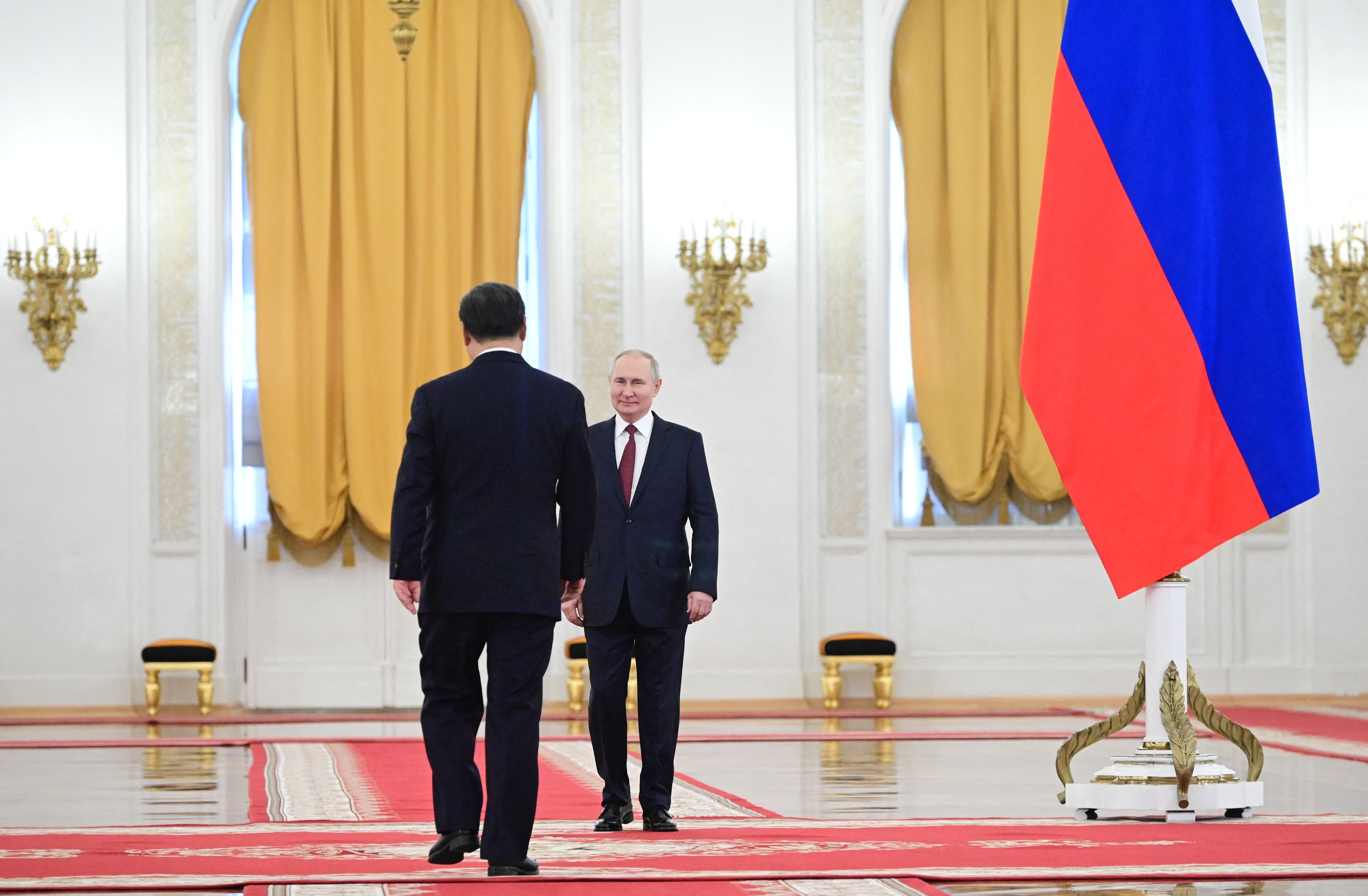
Beijing is trying to navigate the overall situation regarding Ukraine, especially the substance of interactions between Washington and Moscow.
Ellen Nakashima, Zhao Long, Pavlo Klimkin, …
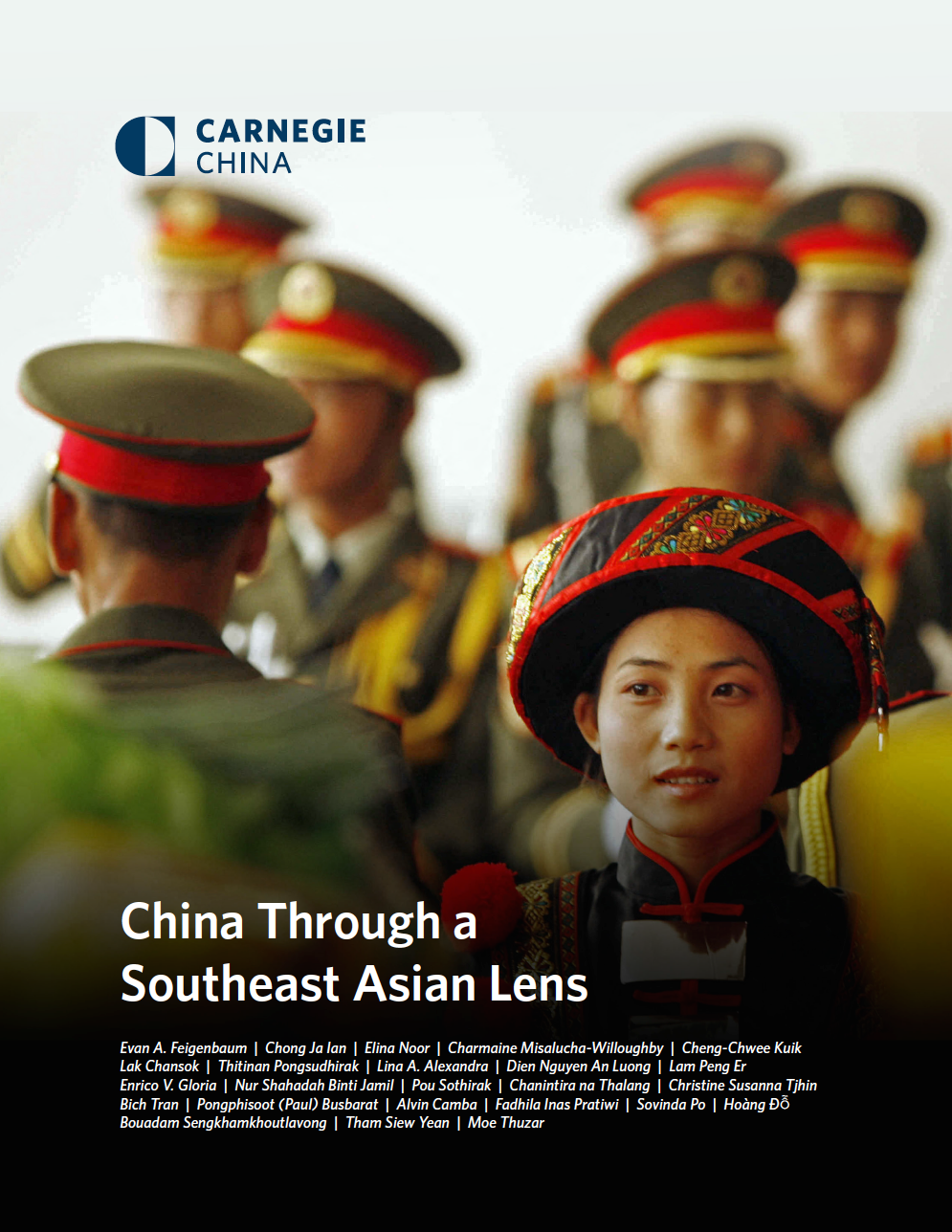
Because strategic, economic, and ideological perceptions of China contain multiple, sometimes contradictory facets in Southeast Asia, receptions of and responses to Beijing diverge across and within state lines.



Evan A. Feigenbaum, Chong Ja Ian, Elina Noor