

Commentary
Thomas de Waal
{
  "authors": [
    "Thomas de Waal"
  ],
  "type": "commentary",
  "centerAffiliationAll": "",
  "centers": [
    "Carnegie Endowment for International Peace",
    "Carnegie Europe",
    "Carnegie Russia Eurasia Center"
  ],
  "collections": [],
  "englishNewsletterAll": "",
  "nonEnglishNewsletterAll": "",
  "primaryCenter": "Carnegie Europe",
  "programAffiliation": "",
  "programs": [],
  "projects": [],
  "regions": [
    "Caucasus",
    "Georgia"
  ],
  "topics": [
    "Political Reform"
  ]
}
Source: Getty
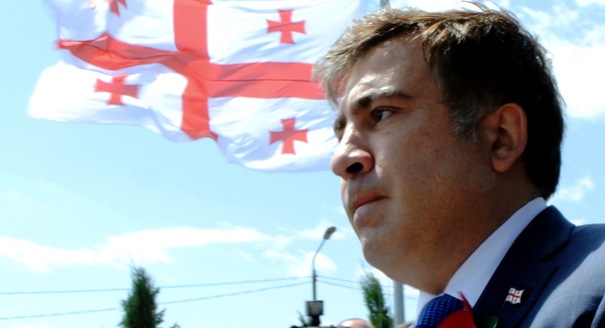
The criminal charges against former Georgian president Mikheil Saakashvili guarantee more recriminations about the recent past rather than discussion of the country’s future.
Depending on who you talk to, the genre of Georgia’s ongoing domestic political drama is a heroic tale of justice, a tragedy or a comic opera. I incline towards the latter view, but the longer the story goes on, the sadder the conclusion may be.
The latest dramatic episode, after months of intrigue, was the filing of criminal charges against former president Mikheil Saakashvili, against the advice of almost all Georgia’s Western friends.
The Prosecutor’s office has come up with a substantial list of charges, mostly centered on the brutal crackdown of the opposition in Tbilisi in November 2007. The allegations are serious and there will be plenty of evidence brought in support of them. But no one in Georgia believes that the Prosecutor’s office in Georgia acts independently, without government advice.
But it’s important to understand that the story looks different in Georgia from Western countries.
To begin with, prosecutions of this kind are popular with a large section of Georgian society. Many people have a feeling of unfinished business from the Saakashvili years. There are around 20,000 legal complaints lodged by Georgian citizens over alleged abuses committed by the previous government, many of them the expropriation of property.
That explains why in the latest opinion poll conducted by the National Democratic Institute in Georgia in April 2014, 59 percent of respondents said that the prosecutions were about “holding government officials accountable” and a much smaller number, 22 per cent, said they were a “desire for political retribution.”
That 22 per cent roughly corresponds to the level of support enjoyed by Saakashvili’s party, the United National Movement, or UNM. And Saakashvili did himself no favors with a rambling commentary on Tuesday, calling the Georgian Dream government and its patron Bidzina Ivanishvili Russian agents, and saying “we will also get rid of this oligarch.”
Remarks like that will only confirm the views of the anti-Saakashvili Georgians that he deserves to be prosecuted.
Some Georgian officials get irritated by the criticism of the arrests, saying that it is “double standards” first to talk about the rule of law and democracy and then insist that some people should be exempt from prosecution. They ask what distinguished Saakashvili from Silvio Berlusconi and Nicolas Sarkozy, targeted by prosecutors in Italy and France in recent times.
Other wiser members of the governing coalition have cautioned against continuing the campaign to crush the UNM. For example, speaker of parliament David Usupashvili recently told his colleagues, “I am irritated by you getting irritated by what these people [UNM parliamentarians] are talking about.” He reminded them of the United National Movement’s low poll ratings and electoral defeats and urged them to focus on the future.
Usupashvili’s words were not heeded. Now we can expect many months of more examination and re-examination of Georgia’s recent past, instead of discussion of its future.

Senior Fellow, Carnegie Europe
Thomas de Waal is a senior fellow at Carnegie Europe, specializing in Eastern Europe and the Caucasus.
Recent Work
Thomas de Waal
Thomas de Waal
Carnegie does not take institutional positions on public policy issues; the views represented herein are those of the author(s) and do not necessarily reflect the views of Carnegie, its staff, or its trustees.
Transactional relationships are stable but can be shallow.



Paul Haenle, Maha Yahya, Benjamin Ho, …
It’s about managing oil prices, bread prices, and strategic partnerships.



Amr Hamzawy, Karim Sadjadpour, Aaron David Miller, …
The murder of George Floyd has underscored the deep inequities that have long plagued American society. In a note to the Carnegie community, Bill Burns reflects on Carnegie’s commitment to build a more just future here at home and around the world, without which peace will remain beyond our grasp.
William J. Burns
While the world hoped this pandemic might lead to more cooperation between these two great powers, American and Chinese leaders instead fell into a blame game and allowed their increasing suspicions to guide their decision-making.
Lyu Jinghua
Biological viruses and computer malware differ in important respects. They have considerable potential to spread widely, invading, disrupting and destroying their targets.
Ariel (Eli) Levite, Lyu Jinghua