

Commentary
But their "principal to principal" model will only be as effective as the political strength of each leader back home.
Damien Ma
{
  "authors": [
    "Maria Snegovaya"
  ],
  "type": "commentary",
  "centerAffiliationAll": "",
  "centers": [
    "Carnegie Endowment for International Peace",
    "Carnegie Russia Eurasia Center"
  ],
  "collections": [],
  "englishNewsletterAll": "",
  "nonEnglishNewsletterAll": "",
  "primaryCenter": "Carnegie Endowment for International Peace",
  "programAffiliation": "",
  "programs": [],
  "projects": [],
  "regions": [
    "Russia"
  ],
  "topics": [
    "Political Reform",
    "Foreign Policy",
    "Civil Society",
    "Religion"
  ]
}
Source: Getty
Russia’s anti-western sentiment runs deeper than just the regime’s manipulation of public opinion. Russia will only be able to move forward and become a successful member of the globalized world by resolving its deeply buried existential crisis.
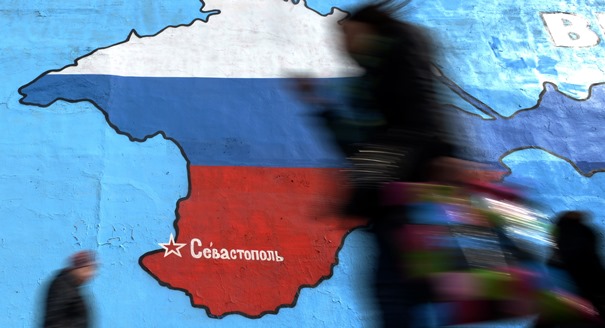
On November 4, Russia celebrates its tenth National Unity Day. Established only in 2005, this holiday is almost as new as the Russian unity that has emerged since the invasion of Crimea in March. Based on Levada Center polls, President Putin’s approval ratings increased from 65 percent in January to 80 percent in March immediately following the Crimean annexation. The ratings reached their near all-time high of 87 percent in early August and have remained at this level until today. In a similar vein, the Levada Center has noted an all-time record in the number of Russians (over 60 percent) who remain assured that their country is “generally moving in the right direction.”
These numbers illustrate a unification of Russian society around issues important to Russia’s development. The problem is that this unity has coalesced around an aggressive, anti-western sentiment evidenced by the militant tone that pervades ordinary people’s conversations and by the polls which show that over 70 percent of respondents see the United States as Russia’s principal enemy (compared with only 25 percent in 2008). This anti-western sentiment is so intense that had the attacks of September 11 happened today, there is a good chance that many Russians would have joined the Palestinians in celebrating the tragedy. In the aftermath of 9/11, the Kremlin immediately voiced strong support for the American War on Terror; a similar reaction would be unlikely today.
These observations reveal the deepening crisis set in motion by the events transpiring in Ukraine; the increasing unification of Russia is also a reflection of its growing separation from the West. Why are today’s Russians defining themselves against the West? Is there something about Russia that makes it more prone to anti-western sentiment?
There are several answers to these questions. First, the anti-western sentiment is hardly unique to Russia. In fact, in today’s world anti-western rhetoric is often used by numerous authoritarian or anti-democratic rulers such as Fidel Castro, Hugo Chavez, Viktor Orban, Christina Kirshner, Robert Mugabe, and others. Western values of freedom and democracy prohibit such leaders from staying in power and incentivize the autocrats to reject “the non-traditional, homosexual, and promiscuous” western morals in exchange for traditional values unique to their own culture (usually implying the lack of leadership turn-over). In addition, developing countries that lag behind the western world may choose an anti-western platform to explain their own underdevelopment. From this perspective, President Putin’s anti-western style is hardly unique, although certain elements of his Soviet upbringing and secret service experience have likely made him more prone to an anti-western worldview.
But the anti-western dimension of Russia’s self-identification also has a deeper layer. The question of Russia’s civilizational belonging was eagerly debated in the nineteenth century between the Westernizers who emphasized Russia’s unity with European civilization and the Slavophiles who advocated a unique path for Russia. Nikolay Danilevsky, one of the most famous Slavophiles, pointed out that Russia’s national identity has historically been shaped in opposition to its traditional military enemies—the Europeans, rather than the Asians. The specific roots of this phenomenon may be linked to Catholic proselytism that was historically perceived by the Russians as a threat to their Eastern Orthodox identity.
It appears that little has changed since Danilevsky’s times. One of the most popular Russian Orthodox saints, Alexander Nevsky, continues to be praised for defending Russia’s identity from the Catholic German and Swedish invaders (which explains why his image was popularized by the Soviets during WWII). Even the very National Unity Day on November 4 is celebrated in memory of the Russian popular uprising that expelled the Polish–Lithuanian invaders from Moscow back in 1612. Given the resilience of this anti-western tradition, it is hardly a surprise that it keeps reemerging when circumstances call for national unity.
Russia’s anti-western sentiment runs deeper than just the regime’s manipulation of public opinion. The historical element does not indicate that Russians are not European or that they will always define themselves in opposition to the West. But it does indicate that Russia’s self-identification is characterized by unresolved issues that were exposed (rather than created) by President Putin’s actions in Ukraine. Russia will only be able to move forward and become a successful member of the globalized world by resolving its deeply buried existential crisis. The price we will have to pay for that is another matter entirely.
Maria Snegovaya holds a Candidate Degree in Economics, a former Visitng Fellow at Davis Center for Russian and Eurasian Studies at Harvard University, and is currently a doctoral candidate in Columbia's Department of Political Science and a columnist at Vedomosti business daily.
Maria Snegovaya
Carnegie does not take institutional positions on public policy issues; the views represented herein are those of the author(s) and do not necessarily reflect the views of Carnegie, its staff, or its trustees.

But their "principal to principal" model will only be as effective as the political strength of each leader back home.

Damien Ma

U.S. unpredictability has allowed China to capitalize on its positioning as the “responsible great power”. Paradoxically, the more China wins the perception game, the more likely expectations will rise for Beijing to deliver not just words but to demonstrate with its deeds.

Chong Ja Ian

Hanoi and Beijing have long treated each other as distant cousins rather than comrades in arms. That might be changing as both sides draw closer to hedge against uncertainty and America’s erratic behavior.

Nguyễn Khắc Giang

Across Asia, China is better positioned to withstand energy shocks from the fallout of the Iran war. Its abundant coal capacity can ensure stability in the near term. Yet at the same time, the country’s energy transition away from coal will make it even less vulnerable during the next shock.
Damien Ma

Malaysia’s chairmanship sought to fend off short-term challenges while laying the groundwork for minimizing ASEAN’s longer-term exposure to external stresses.

Elina Noor