

Commentary
- +1
Paul Haenle, Xue Gong, Ngeow Chow Bing, …
{
  "authors": [
    "Paul Haenle"
  ],
  "type": "legacyinthemedia",
  "centerAffiliationAll": "",
  "centers": [
    "Carnegie Endowment for International Peace",
    "Carnegie China"
  ],
  "collections": [
    "U.S.-China Relations",
    "China’s Foreign Relations"
  ],
  "englishNewsletterAll": "",
  "nonEnglishNewsletterAll": "",
  "primaryCenter": "Carnegie China",
  "programAffiliation": "",
  "programs": [],
  "projects": [],
  "regions": [
    "East Asia",
    "China"
  ],
  "topics": [
    "Economy",
    "Foreign Policy"
  ]
}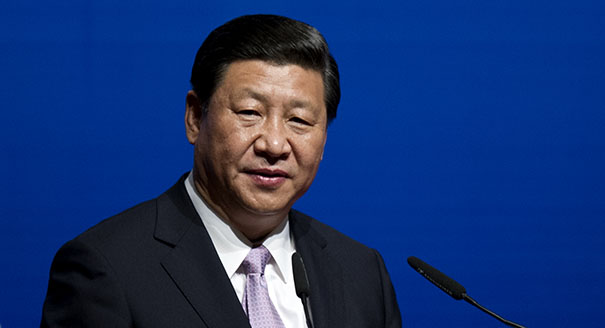
Source: Getty
To allay neighboring countries’ misgivings about Beijing’s growing assertiveness, China must match its verbal commitment to harmony and win-win collaboration with concrete actions.
Source: Insight
In his first two years in power, Xi Jinping has made two distinct shifts in China’s foreign policy in order to adapt the country’s diplomatic efforts to its new domestic and regional realities. The Chinese president has reordered the country’s priorities, placing regional diplomacy ahead of great power or developing country diplomacy, and taken a more proactive approach when it comes to diplomatic work. Yet, while Xi has developed bold and ambitious objectives to match the country’s growing economic clout, expanding overseas interests, and rising domestic and international expectations, his efforts to foster a stable peripheral environment that is more receptive to China’s continued rise have developed a sort of frustrated rhythm.
Xi’s heightened focus on improving relations with China’s neighbors is not only driven by geopolitics; Xi sees a more welcoming external environment as necessary to achieving the Chinese dream and China’s great rejuvenation. Thus, Xi has embarked on charm offensives in the autumn months of 2013 and 2014 in order to demonstrate the benefits of China’s economic growth available to the region. During multi-stop visits to Central and Southeast Asia in September and October 2013, Xi launched the 21st Century Silk Road and Maritime Silk Road projects intended to connect the economies of Asia, Africa and Europe and bring development and investment to China’s sensitive border regions. One year later, in October 2014, he unveiled a $40 billion Silk Road Fund and an Asian Infrastructure Investment Bank to finance infrastructure along these vast land and sea corridors and help China orchestrate a shift from absorbing huge amounts of foreign investment over the past three decades to exporting Chinese capital to the region.
Throughout his regional outreach efforts, Xi has attempted to highlight that China’s contributions to the Asia-Pacific region go beyond economic influence and power. The Silk Road land and sea routes, for example, have been promoted concurrently as opportunities to enhance cultural and people to people exchanges and advance efforts to reform the global governance system. At the Shanghai Cooperation Organization meeting in September 2013 and the Conference on Interaction and Confidence Building in Asia (CICA) in May 2014, Xi emphasized the importance of China’s role in building new regional security architectures to ensure common security and a “peaceful, stable and cooperative new Asia.” And at the annual APEC and East Asia summits, Xi made reassuring statements about handling territorial disputes in a peaceful manner and proposed building inclusive regional trade architectures. Ultimately, Xi aims to unite China’s neighborhood in what he has called a “community of common destiny” within which all can feel secure and prosper under China’s leadership.Each year following his round of regional diplomacy, Xi has convened an important Central Committee work conference to assess China’s diplomatic work. In his speeches in 2013 and 2014, Xi pointed to failures of China’s foreign policy efforts that not only damaged China’s interests, but also enhanced the risk of unintentional conflict at its borders. He has followed these critiques with policy guidance to improve China’s diplomatic performance to better fit China’s needs and circumstances.
In 2013, Xi suggested that Beijing’s more aggressive use of military and economic might had caused backlash and hedging behavior among China’s neighbors. In an attempt to mollify regional concerns, he outlined a new approach that emphasized the political, cultural, and security aspects of China’s diplomacy intended to further demonstrate China’s sincerity and goodwill toward its neighbors. The following year, Xi acknowledged in a speech to the Australian parliament following the G20 Summit in November that anxieties remained over how China will use its growing power and influence. At the Central Conference on Work Relating to Foreign Affairs in Beijing one week later, Xi said the country should more “creatively” pursue its diplomacy, implying that Chinese diplomats should make better use of their soft-power policy instruments. In pursuit of China’s interests, Xi suggested China work to contribute more to public goods, advance multilateral diplomacy, and reform the global governance system. A new “diplomacy with Chinese characteristics,” Xi said, would ensure common security, value friendship, and pursue win-win cooperation.
Yet despite Xi’s repeated efforts, greater confidence in a benign and even beneficial Chinese leadership role remains elusive. In 2013, the announcement of the East China Sea air defense identification zone (ADIZ) and its refusal to participate in the Philippines’ international arbitration over disputed claims in the South China Sea rattled the region. In late 2014, China’s freezing of financing for existing energy projects in Vietnam and the Philippines and its reclamation work in the disputed Spratly Islands has led neighbors to be less and less assured that China will uphold the growing consensus of governing principles that they claim to support. While Asia-Pacific nations want China to continue to prosper and feel secure, they continue to be nervous that China will use its economic heft to push sovereignty claims and expand its influence at the detriment of other’s security and prosperity.
Noting the apparent contradictions in China’s foreign policy strategies, some say the Chinese believe that they can both win friends and territory, by following two disaggregated tracks: one that embarks on charm offensives using economic, trade, and development assistance; and one that employs military and law enforcement means to push hard on territorial claims. In this view, a rising China believes it can assert strongly its claims even if it causes frictions because ultimately, China’s economic lure will force countries to relent.
This approach may work in the short term, but in the long run, it will foster rivalries, enhance strategic competition, and grow instabilities that will be damaging for both China and the region. Indeed, instances of the failure of China’s dual-track approach until this point abound. In 2014, following the most serious military standoff between Chinese and Indian border forces in 25 years, Japan and India agreed to build military cooperation between their air forces and strengthen cooperation on maritime security and anti-piracy operations. Shortly after China’s state-owned CNOOC moved its deep sea oil rig and nearly 80 Chinese vessels, unprovoked, to waters near the disputed Paracel Islands off Vietnam’s coast, the U.S. announced in October 2014 it would begin allowing weapon sales to Vietnam for maritime defense purposes, ending its decades-long ban with its former foe. As China sets its sights on greater influence and presence in Central Asia via its 21st Century Silk Road, it should expect adverse reactions from Russia, as its traditional sphere of influence is encroached upon.
An alternative approach that Xi should consider if he is serious about addressing regional narratives of anxiety and suspicion will require that China’s leaders abide by their own purported principles of win-win cooperation, equal treatment, and rule of law, while they continue to be introspective and sensitive to regional concerns. As the balance of power in the Asia-Pacific region shifts, China’s sheer size and bid for greater influence will make advancing stable and cooperative relations with other Asia-Pacific players, including the United States, intrinsically more difficult. China, Xi noted in Canberra this year, “is like a big man in the crowd. Other people will undoubtedly watch how the big man walks and moves, and be concerned about whether the big man will bump into them, block their way or seize their territory.” Successfully allaying these fears will require that China’s leaders match their actions to their words.

Former Maurice R. Greenberg Director’s Chair, Carnegie China
Paul Haenle held the Maurice R. Greenberg Director’s Chair at the Carnegie Endowment for International Peace and is a visiting senior research fellow at the East Asian Institute, National University of Singapore. He served as the White House China director on the National Security Council staffs of former presidents George W. Bush and Barack Obama.
Recent Work


Paul Haenle, Xue Gong, Ngeow Chow Bing, …

Paul Haenle, Chong Ja Ian
Carnegie does not take institutional positions on public policy issues; the views represented herein are those of the author(s) and do not necessarily reflect the views of Carnegie, its staff, or its trustees.

China’s political future will be shaped between now and next October. As the Communist Party enters its intense “campaign season” to prepare for a major political transition in 2027, reading Beijing's actions and responses may become more difficult as domestic politics weigh on its behavior more than usual.

Damien Ma

China has showcased its engineering prowess with small modular reactor demonstration projects. But turning these technological achievements into commercial success will be a greater challenge.

Tong Zhao

The Plaza Accord was not an externally imposed punishment of Japan but part of a broader restructuring that Japanese economists and policymakers themselves recognized was necessary. Its effects were undermined, however, when Tokyo responded to the resulting slowdown with policies that exacerbated investment, credit expansion, and the very imbalances the adjustment was intended to resolve.

Michael Pettis

The nuclear relationship between China and the United States is increasingly shaped by widening perception gaps rather than deliberate strategic design.
Tong Zhao
China’s banking crisis in the 2000s was resolved by transferring the costs to households through financial repression—a decision that recapitalized the banks while exacerbating the structural imbalances that continue to shape the Chinese economy today.
Michael Pettis