

Q&A
Dara Massicot, Aaron David Miller, Andrew S. Weiss
{
  "authors": [
    "Andrew S. Weiss"
  ],
  "type": "legacyinthemedia",
  "centerAffiliationAll": "dc",
  "centers": [
    "Carnegie Endowment for International Peace",
    "Carnegie Russia Eurasia Center"
  ],
  "collections": [],
  "englishNewsletterAll": "ctw",
  "nonEnglishNewsletterAll": "",
  "primaryCenter": "Carnegie Endowment for International Peace",
  "programAffiliation": "russia",
  "programs": [
    "Russia and Eurasia"
  ],
  "projects": [],
  "regions": [
    "North America",
    "United States",
    "Russia",
    "Eastern Europe",
    "Ukraine"
  ],
  "topics": [
    "Security",
    "Foreign Policy"
  ]
}
Source: Getty
As unsavory as it sounds, Obama may need to press for a diplomatic solution with Putin.
Source: Politico
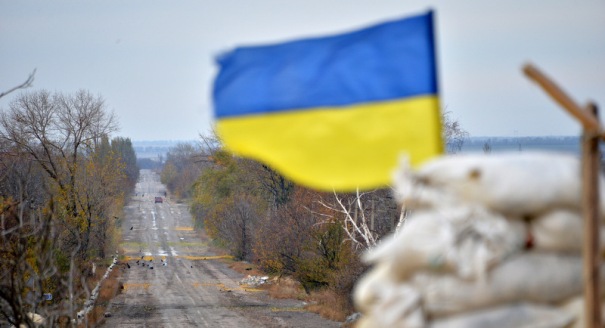
In his State of the Union address, President Obama appeared eager to declare victory in Ukraine, saying the united front against Vladimir Putin had worked and that “Russia is isolated, with its economy in tatters.” The ever-touchy Russian president appeared to respond a few days later, through his separatist proxies, with a dramatic surge in violence in south-eastern Ukraine and last Saturday’s deadly artillery attack on the strategic port city of Mariupol, which killed at least 30 people.
Thus far, Obama seems to be sticking to his administration’s customary response, emphasizing that sanctions are the primary tool to force Putin to reverse course and that the West is not prepared to confront Russia militarily. “We will continue to take the approach that we have taken in the past, which is to ratchet up the pressure on Russia," he said at a news conference in New Delhi on Sunday.
The question is whether this approach is enough to prevent the full unraveling of the cease-fire and shield the fragile Ukrainian state from what George Soros has aptly described as Putin’s true intention: to “destroy the new Ukraine before it can establish itself … while maintaining deniability.” The immediate violence around Mariupol and elsewhere in the Donbas may pause, but the pattern is clear—Russia will back the separatists in order to disrupt Ukraine and keep the West off-balance. Barring any changes, this is what we can expect for the long term.There aren’t many credible options for averting this outcome. But perhaps the least unpalatable of an array of unsavory options is for Obama to take another look at a serious diplomatic effort with the Europeans to end the conflict once and for all. While there are new hints that Secretary of State John Kerry is eager to throw himself into the crisis, such moves are unlikely to pay off unless Obama personally gets involved. The president’s clear reluctance to engage in direct dialogue with Putin has been a curious feature for U.S. policy, given his readiness to engage with the leaders of longtime adversaries such as Iran and Cuba without pre-conditions. The Europeans lack credibility on two items important to Putin: ensuring recognition of Russia's global role and stirring Russian anxieties about possible direct military support to Ukraine.
Yet in other respects this may be what passes for an optimal moment in this crisis. In December a series of shocks battered the Russian economy, compounding the damage from the sanctions program and giving rise to hopes that the West’s strategy was working. Obama’s State of the Union confidence was unsurprising against the backdrop of a 50 percent drop in oil prices since June and a dramatic Russian currency crisis. But now, rather than simply asserting that Putin has won only a pyrrhic victory in Ukraine, Obama should use his position of strength to push for a longer-term settlement.
Obama may have his own reasons for not letting the dramatic rupture in U.S.-Russian relations spiral out of control. For several months, the White House has quietly tried to work with the Russians on a handful of issues of paramount importance to Obama’s foreign policy agenda. That cherry-picking approach has dampened the administration’s willingness to apply more pressure on Putin, say, by providing lethal military assistance to the Ukrainians. The fear has been that the Russians might retaliate by escalating the fighting inside Ukraine or by withholding cooperation in areas where their cooperation is a must-have such as the Iran nuclear negotiation, the fight against ISIL, and an IMF/EU/U.S. emergency financial package for Kyiv.
Obviously, any new outreach by Obama and other Western leaders to Putin is fraught with risk, given his dreadful track record on Ukraine, constant distortions, and endless stream of broken promises. It may very well not pay any dividends in the near-term. And the content of a deal may look surprisingly familiar to those who negotiated the now-shattered cease-fire in Minsk last year. But, given how many levers Putin has at his disposal to make mischief inside Ukraine, there should be no illusions that the current approach is sustainable or that post-Maidan Ukraine can survive a lurch back into war.
To understand why, it’s worth reviewing how we got here.
Last summer the separatists were rapidly losing ground to Kyiv, leading Moscow in late August to escalate its involvement and make clear that it is prepared to escalate indefinitely. Unfortunately, Ukraine cannot win that fight. The original cease-fire hammered out in Minsk by Ukrainian, Russian, and Swiss negotiators came in the wake of a dramatic Ukrainian military defeat at the hands of the separatists and regular Russian army units who crossed the border in significant numbers. At the time, Obama and NATO leaders meeting in Wales threw their support behind the Minsk agreement both because it was clear that Moscow was not prepared to let Kyiv crush the self-proclaimed People’s Republics of Donetsk and Luhansk and because NATO was not prepared to intervene to help Ukraine.
Without saying so publicly, the United States and EU seemed to accept that a frozen conflict in the Donbas was the least bad option on offer, and nurtured hopes that the fighting would subside during the harsh Ukrainian winter. Just as importantly, they wanted to buy time for Western sanctions against Moscow to bite and for the Ukrainian leadership to focus on much-delayed domestic reforms. In the weeks that followed, the Ukrainians dutifully implemented their obligations under Minsk while the Russians and the rebels dragged their feet or brazenly violated the agreement. Apart from accusing Moscow and the separatists of bad faith, most Western leaders seemed content to turn their attention to more pressing problems elsewhere.
But the West’s position of strength is not as strong as it appears. The reformist government in Ukraine is simply too fragile to survive a protracted, full-scale confrontation with Moscow. For all its current difficulties, Putin’s Russia is not going to be brought to its knees by the existing array of sanctions and diplomatic pressure. Yet Western officials are still implicitly assuming, at best, that Putin one day will cry uncle or, at worst, that the Ukraine crisis can be left to simmer on the back burner.
Which brings us to the agonizing, yet under-appreciated, policy dilemmas facing the Obama administration. Up to now, U.S. officials have been operating under very clear instructions not to break ranks with the EU on Ukraine. On one level that makes perfect sense. Transatlantic unity on sanctions and other issues has been one of Obama’s main diplomatic accomplishments. Driving wedges in the Western camp remains one of Putin’s most important goals. But on another level so long as this directive remains in place it will be very hard for the United States to pursue the kind of steps that might get Putin’s attention.
Next Thursday’s emergency meeting of EU foreign ministers in Brussels is a case in point. Several senior EU diplomats told the Wall Street Journal over the weekend that “there were no concrete ideas on the table yet for fresh Russia sanctions and the discussion of options was only starting.” Even though one EU foreign minister compared the Mariupol bombing to the Sarajevo marketplace attack in August 1995 that triggered NATO airstrikes against the Bosnian Serbs, there will be zero appetite around the table to use force in Ukraine. Expanding sanctions is also likely to be problematic. German Foreign Minister Frank-Walter Steinmeier went so far as to claim that so long as the separatists don’t advance on Mariupol, "Nobody is desperately ambitious to impose sanctions.” ,
The EU might entertain new incremental steps done alongside the United States. For example, it could expand the list of individuals subject to asset freezes and travel bans. Or it could tighten the existing financing restrictions for certain Russian state-owned banks and companies. Other state-heavy sectors like mining might be added to these financing restrictions. If, in the end, there is a real push by the EU and U.S. to do more, we might see a move to further restrict access to Western banking services and additional types of energy technology such as LNG, with the U.S. bearing the brunt of the latter. But far-reaching steps such as removing Russia’s access to the SWIFT international payment system, which reportedly is being pushed by British Prime Minister David Cameron, are almost certainly off the table.
If the cease-fire in eastern Ukraine collapses, Obama will face even more unpalatable choices. The most likely course of events is that the fighting in eastern Ukraine could go on for quite some time in fits and starts yet at significant cost to innocent civilians. The cause of Ukrainian reform will take a back-seat to the war effort, even though this is not financially viable over the long term. U.S. military assistance might prolong the agony and raise the costs for Moscow but would not fundamentally reverse the course on the battlefield. (Russian authorities have seemed extremely sensitive over Russian battlefield casualties in Ukraine, but it seems unlikely that, by itself, this sensitivity will lead to changes in Putin's behavior.) The new GOP-controlled Senate may take up new sanctions measures that challenge the executive branch’s lead, undermine U.S.-EU coordination, and risk Russian retaliation.
Barack Obama has spent most of the Ukraine crisis attempting to prevent it from dominating his foreign policy agenda. Unfortunately, the development of a durable U.S. policy to constrain Putin’s efforts to resurrect Moscow’s power and influence at the expense of its post-Soviet neighbors’ independence, sovereignty, and territorial integrity is still in its infancy. Yet clearly Obama is now eager to be seen as a president who left office with an activist agenda in foreign affairs. Unless Obama wants to leave behind a bloody quagmire in eastern Europe as part of his legacy, he should figure out a way to begin talks with Vladimir Putin.

James Family Chair, Vice President for Studies
Andrew S. Weiss is the James Family Chair and vice president for studies at the Carnegie Endowment for International Peace, where he oversees research on Russia, Ukraine, and Eurasia. His graphic novel biography of Vladimir Putin, Accidental Czar: the Life and Lies of Vladimir Putin, was published by First Second/Macmillan in 2022.
Recent Work


Dara Massicot, Aaron David Miller, Andrew S. Weiss

Frances Z. Brown, Nate Reynolds, Priyal Singh, …
Carnegie does not take institutional positions on public policy issues; the views represented herein are those of the author(s) and do not necessarily reflect the views of Carnegie, its staff, or its trustees.

But their "principal to principal" model will only be as effective as the political strength of each leader back home.

Damien Ma

U.S. unpredictability has allowed China to capitalize on its positioning as the “responsible great power”. Paradoxically, the more China wins the perception game, the more likely expectations will rise for Beijing to deliver not just words but to demonstrate with its deeds.

Chong Ja Ian

Hanoi and Beijing have long treated each other as distant cousins rather than comrades in arms. That might be changing as both sides draw closer to hedge against uncertainty and America’s erratic behavior.

Nguyễn Khắc Giang

Across Asia, China is better positioned to withstand energy shocks from the fallout of the Iran war. Its abundant coal capacity can ensure stability in the near term. Yet at the same time, the country’s energy transition away from coal will make it even less vulnerable during the next shock.
Damien Ma

Malaysia’s chairmanship sought to fend off short-term challenges while laying the groundwork for minimizing ASEAN’s longer-term exposure to external stresses.

Elina Noor