

Commentary
Yezid Sayigh
{
  "authors": [
    "Yezid Sayigh"
  ],
  "type": "legacyinthemedia",
  "centerAffiliationAll": "dc",
  "centers": [
    "Carnegie Endowment for International Peace",
    "Malcolm H. Kerr Carnegie Middle East Center"
  ],
  "collections": [],
  "englishNewsletterAll": "menaTransitions",
  "nonEnglishNewsletterAll": "",
  "primaryCenter": "Malcolm H. Kerr Carnegie Middle East Center",
  "programAffiliation": "MEP",
  "programs": [
    "Middle East"
  ],
  "projects": [],
  "regions": [
    "Levant",
    "Syria",
    "Middle East"
  ],
  "topics": [
    "Political Reform",
    "Security",
    "Foreign Policy"
  ]
}
Source: Getty
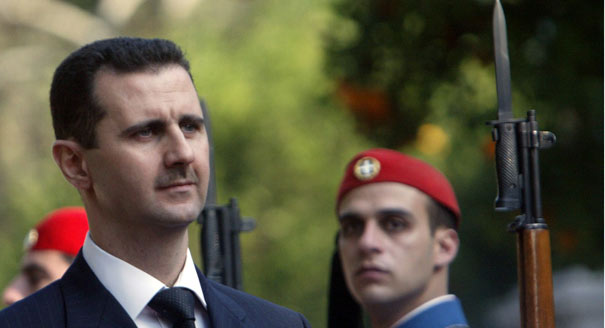
The Assad regime’s belief that, by hanging tough, it will compel the United States both to accept its terms and make its regional allies follow suit is a high-risk gamble.
Source: Al-Hayat
Syrian President Bashar al-Assad is “doing politics.” He authorized official participation in talks with an unrepresentative sample of opposition figures in Moscow in late January, describing this in a much-publicized interview with the American journal Foreign Affairs on January 20 as preparation for a conference to negotiate a political solution to the conflict. Assad also reiterated Syrian willingness to engage with the proposal by United Nations Special Envoy Staffan de Mistura for an “Aleppo freeze,” saying that he was waiting for de Mistura’s team to submit a detailed plan or schedule for discussion. And after nearly a year’s hiatus, Assad has given interviews to three foreign media outlets in the space of six weeks.
In private, some regime loyalists claim a “new moment” has arrived of regime readiness for meaningful engagement with its Syrian and external interlocutors. But it is merely buying time. The Assad regime has set its eyes on a different goal: securing the restoration of direct political communications with the U.S. and at least tacit U.S. acceptance of the regime’s de facto control over Syria, without making substantive concessions in return. The regime’s calculation is simple: it anticipates that progress in the U.S.-led military campaign against ISIS in Iraq will weaken the organization in northeast Syria, and that the U.S. will then need a local partner to prevent ISIS from regrouping in its Syrian provinces in order to make a comeback in Iraq, as it did 2013-2014.In the regime’s view, it is the U.S.-led coalition’s only viable partner in northeast Syria. The disarray of the former Free Syrian Army means it will not revive there, and the Kurdish PYD will not extend beyond its autonomous zone in al-Hasakeh. The regime is working to reinforce its standing further. Having started to rebuild ties with local clans in Deir ez-Zor last summer, it is now doing the same in al-Hasakeh, and may follow in Raqqah province next. The recent breakdown of the modus vivendi between regime and PYD forces in al-Hasakeh likely reflects a regime attempt to improve its strategic position and buttress its claim to be the only power that can secure the border area with Iraq.
With the U.S. Central Command planning to retake the northern Iraqi stronghold of ISIS in Mosul by Summer 2015, if not earlier, the Assad regime may not have long to wait. Consequently, it sees talk of political dialogue with the Syrian opposition and of an Aleppo freeze as a temporary gambit, which it hopes will soon be overtaken by a more far-reaching understanding with the U.S. that hinges on complementary action against ISIS. In the meantime, the president and other regime officials are making their view known that any Syrian-Syrian dialogue must be “internal”—held under the regime’s umbrella, with interlocutors it approves—and that any cessation of violence—whether general or partial—must be accompanied by the reassertion of the authority of the central state commanded by Assad.
This explains the lack of regime response to the document approved by a wide spectrum of the opposition in Cairo in late January, which conspicuously refrained from requiring Assad’s departure from power as either a pre-condition of a political settlement or its end-goal. As importantly, the opposition gathering endorsed key tenets of the regime’s own discourse: combating terrorism, the state’s monopoly on the means of violence, and the unity and territorial integrity of Syria. But the regime has chosen to ignore the Cairo initiative altogether, and to highlight the Moscow talks despite their lack of substance. And in discussing the Aleppo freeze, Assad has reiterated the expectation that this will be a repeat of the ceasefire brokered by the UN in Homs in early 2014, which brought most rebel areas in the city under government control, and which the opposition regards as an unacceptable model for Aleppo.
The regime apparently expects the U.S. to ultimately acquiesce in these terms for an internal settlement of the Syrian conflict. Assad signalled this expectation by stating in his Foreign Affairs interview that it is time for the U.S. to seek formal “permission” to continue the Coalition air campaign against ISIS in Syria. On the U.S. side, the change of heart towards the Moscow talks, from initial coolness to public welcome, and ongoing consultation with Russia to produce a new statement by the Organization for Prevention of Chemical Weapons regarding Syria’s remaining research and development facilities, suggest an effort to devise a new diplomatic framework jointly with Russia that would allow the U.S. a face-saving means to accommodate Assad’s survival more formally. Difficult as this might seem at present, significant progress against ISIS would enable the U.S., along with Russia, to cast a deal on Syria in different light.
But this does not let the Assad regime as far off the hook as it hopes. Its belief that it can wrest formal political re-engagement from the U.S. without making a credible commitment to any of the key terms for a more lasting internal political settlement—broadly as set out in the “Geneva-1” communiqué of June 2012—is unconvincing. The U.S. will continue to demand a settlement that goes beyond the current status quo, and will not simply recognize the de facto “outcome” of the conflict as fully legitimate politically. A critical gap remains between what the U.S. seeks—and would press its key regional partners, Saudi Arabia, Qatar, and Turkey, to accept—and what the regime is willing to cede—very little indeed.
More likely is that the U.S. will abandon the effort to unseat Assad, without recognizing his legitimacy or resuming direct political contacts. This may be enough for his regime to survive, but with ever-dwindling resources. Already, the concentration of business deals in the hands of ruling family has sparked the flight of many of the businessmen whose continued stake in Syria had previously been a crucial mainstay for the regime. Coming at a time when the regime desperately needs income, and has even granted the private sector the right to import oil to compensate for the inadequacy of Iranian supplies, this reflects complete unwillingness to change how it operates.
The regime’s belief that, by hanging tough, it will compel the U.S. both to accept its terms and make its regional allies follow suit is a high-risk gamble. The regime will survive, but in a Syria continually crippled by the massive loss of its labor force, infrastructure and industry, and economic opportunity, and under permanent bilateral sanctions.
This article was originally published in Arabic by Al-Hayat.

Senior Fellow, Malcolm H. Kerr Carnegie Middle East Center
Yezid Sayigh is a senior fellow at the Malcolm H. Kerr Carnegie Middle East Center in Beirut, where he leads the program on Civil-Military Relations in Arab States (CMRAS). His work focuses on the comparative political and economic roles of Arab armed forces, the impact of war on states and societies, the politics of postconflict reconstruction and security sector transformation in Arab transitions, and authoritarian resurgence.
Recent Work
Yezid Sayigh
Yezid Sayigh
Carnegie does not take institutional positions on public policy issues; the views represented herein are those of the author(s) and do not necessarily reflect the views of Carnegie, its staff, or its trustees.

Malaysia’s chairmanship sought to fend off short-term challenges while laying the groundwork for minimizing ASEAN’s longer-term exposure to external stresses.

Elina Noor
For Malaysia, the conjunction that works is “and” not “or” when it comes to the United States and China.
Elina Noor
In July 2025, Vietnam and China held their first joint army drill, a modest but symbolic move reflecting Hanoi’s strategic hedging amid U.S.–China rivalry.

Nguyễn Khắc Giang
The Thai-Cambodian conflict highlights the limits to China's peacemaker ambition and the significance of this role on Southeast Asia’s balance of power.
Pongphisoot (Paul) Busbarat
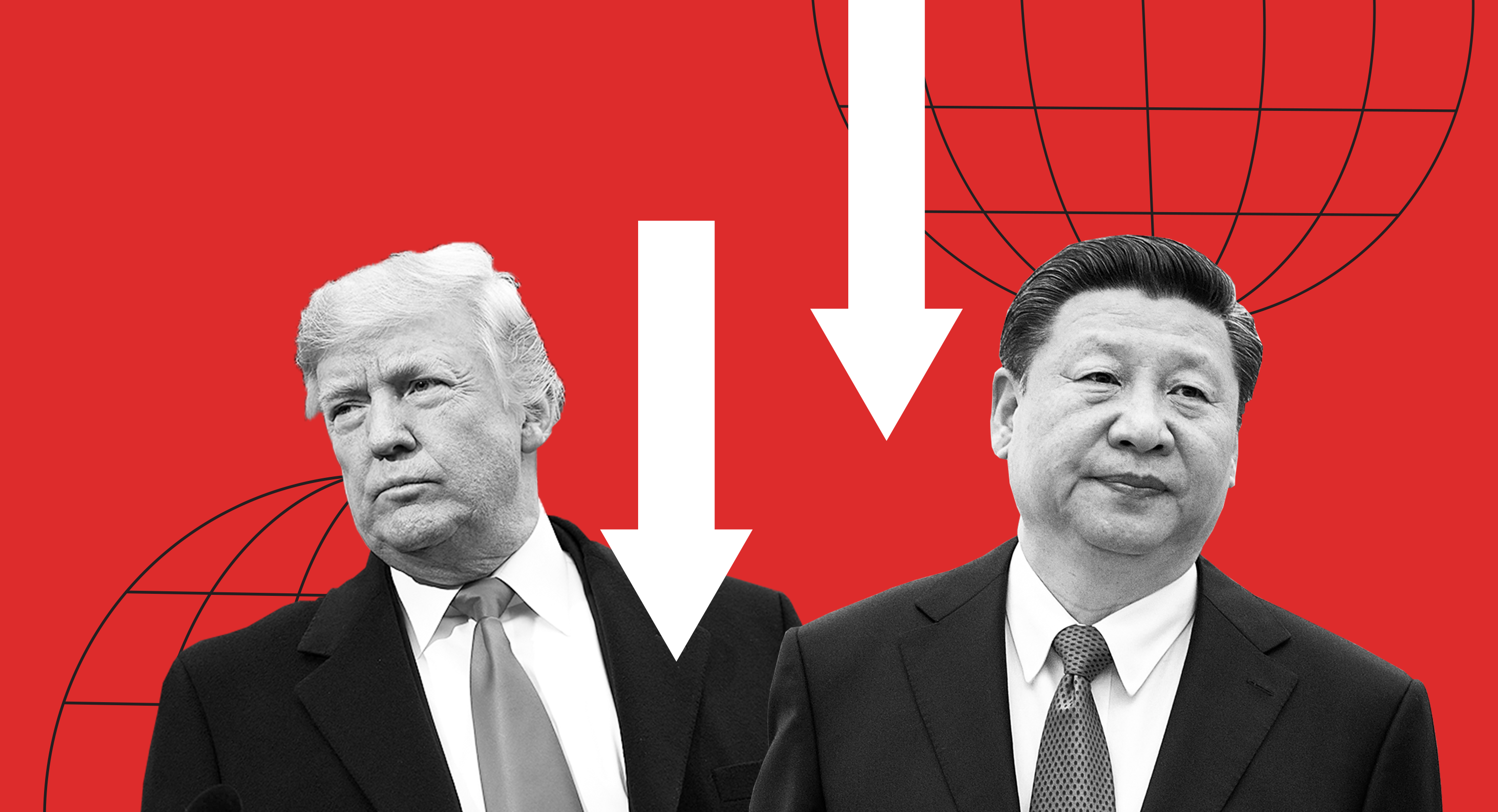
Beijing believes that Washington is overestimating its own leverage and its ability to handle the trade war’s impacts.

Rick Waters, Sheena Chestnut Greitens