

Article
C. Raja Mohan, Darshana M. Baruah
{
  "authors": [
    "C. Raja Mohan"
  ],
  "type": "legacyinthemedia",
  "centerAffiliationAll": "dc",
  "centers": [
    "Carnegie Endowment for International Peace",
    "Carnegie India"
  ],
  "collections": [],
  "englishNewsletterAll": "ctw",
  "nonEnglishNewsletterAll": "",
  "primaryCenter": "Carnegie India",
  "programAffiliation": "SAP",
  "programs": [
    "South Asia"
  ],
  "projects": [],
  "regions": [
    "Asia",
    "South Asia",
    "Pakistan",
    "India",
    "East Asia",
    "China",
    "Southeast Asia",
    "Indonesia"
  ],
  "topics": [
    "Foreign Policy"
  ]
}
Source: Getty
If Chinese President Xi Jinping’s two-day visit to Pakistan was about celebrating Beijing’s friendship, his presence at Bandung, Indonesia is likely to see an assertion of the Chinese claim to leadership in Asia.
Source: Indian Express
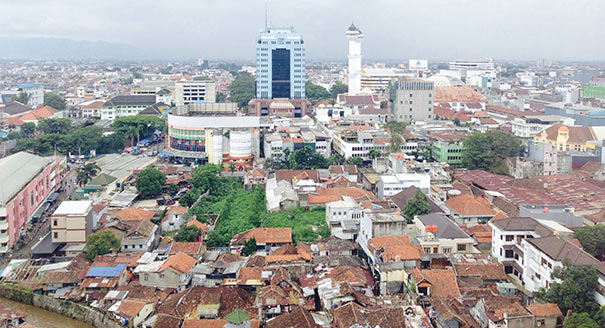
If Chinese President Xi Jinping’s two-day visit to Pakistan was about celebrating Beijing’s all-weather friendship, his presence at Bandung, Indonesia this week is likely to see a definitive assertion of the Chinese claim to leadership in Asia. From Pakistan, Xi heads to Indonesia to commemorate the 60th anniversary of the Bandung conference of Asian and African nations.
At Bandung in April 1955, China’s prime minister, Zhou Enlai, made an enormous impression on Asia that was deeply suspicious of the new communist rulers in Beijing. Zhou, who set out to win new friends in the region, certainly succeeded with Pakistan. Bandung was also where the Hindi-Chini Bhai-Bhai began to fade, as Zhou ran rings around Prime Minister Jawaharlal Nehru, who was viewed as overbearing and condescending by the Chinese leader.
The personality clash was only part of the problem. Nehru presumed he was speaking for the whole of Asia and denounced the US-led military blocs that many Asian nations had joined voluntarily. Zhou, in contrast, refused to talk down to the rest of Asia and focused on probing the weaknesses of American alliances in the region, including that between the US and Pakistan. Zhou told the Bandung conference that communist China posed no threat to the region and was eager to develop good relations with its Asian neighbours.Pakistan seized the moment at Bandung to lay the foundation for a practical partnership with Beijing in two very productive meetings between Zhou and Pakistan’s PM, Mohammad Ali Bogra.
Bogra assured Zhou that Pakistan’s membership of US alliances — the Southeast Asia Treaty Organisation (Seato) and the Central Treaty Organisation (Cento) was about securing its interests vis-a-vis India, and not directed against China. Addressing the political committee of the Bandung conference, Zhou said he had reached an understanding with Pakistan on matters of “collective peace and cooperation”. He also said Bogra had assured him that Pakistan would not support any aggressive American action against Beijing.
As Sino-Pak relations entered a positive phase, New Delhi and Beijing began to drift apart at Bandung. Trouble broke out in Tibet soon after and culminated in the 1962 war between India and China. The unresolved political and territorial contradictions between India and China could no longer be obfuscated with the rhetoric of Asian solidarity. By the early 1960s, Indian diplomats had to work hard to scuttle the second Afro-Asian summit that China and Pakistan sought to convene in 1964.
China has come a long way in Asia since 1955. At Bandung, Zhou was the charming underdog. Xi will arrive in Bandung 60 years later as the top dog of Asia — the continent’s largest economy and biggest military power. But Xi shares an important objective with Zhou: to undermine the US alliances in Asia and prevent the emergence of any regional coalition against China.
Xi has begun to appropriate the anti-colonial rhetoric inherited from Bandung and turn it into an appealing new framework for the construction of a China-centred Asian order. Under Xi, China has promised to invest billions of dollars to accelerate economic growth in the region, under his Silk Road initiative. He has established the Asian Infrastructure Investment Bank and has also called for a comprehensive free trade agreement across the Asia-Pacific. Xi’s main political slogan is “Asia for Asians”. He makes no attempt to hide the implication that outside powers like America have no business meddling in the region. At Bandung, Xi is likely to make the case that Asian nations must develop a “community of common destiny” under Chinese leadership.
But as in Bandung 60 years ago, there is little consensus in Asia on how to build a new regional order. Prickly nationalism and persistent territorial disputes are making Asia into a geopolitical tinderbox. China’s growing power has made it an attractive economic partner as well as the prospective political hegemon. Many of its frightened neighbours, including communist Vietnam, are seeking closer military ties with America and Japan.
Over the decades, Bandung has acquired an ideological resonance in Delhi that has little connection to reality. In fact, Bandung marked the end of Nehru’s hopes for leading Asia. India soon turned its back on Asia to focus on the non-aligned movement. It took nearly another four decades before India returned to Asia with its “Look East” policy of the early 1990s. Prime Minister Narendra Modi has promised to inject a new momentum into India’s Asian relations with an “Act East” policy.
External Affairs Minister Sushma Swaraj, who will represent India at Bandung this week, will hopefully cut the ringing rhetoric and focus, like Zhou did 60 years ago, on understanding the multiple contradictions that are unfolding today in Asia. Swaraj also needs to convince her regional interlocutors that the Modi government can bridge the continuing gap between India’s promise and performance in Asia.
This article was originally published in the Indian Express.
Former Nonresident Senior Fellow, Carnegie India
A leading analyst of India’s foreign policy, Mohan is also an expert on South Asian security, great-power relations in Asia, and arms control.
Recent Work

C. Raja Mohan, Darshana M. Baruah


Alexander Gabuev, Paul Haenle, C. Raja Mohan, …
Carnegie does not take institutional positions on public policy issues; the views represented herein are those of the author(s) and do not necessarily reflect the views of Carnegie, its staff, or its trustees.

China’s banking crisis in the 2000s was resolved by transferring the costs to households through financial repression—a decision that recapitalized the banks while exacerbating the structural imbalances that continue to shape the Chinese economy today.

Michael Pettis

Chinese biotech companies have been on the receiving end of U.S. economic coercion. Yet their responses have differed significantly because firm and state interests are not uniformly aligned. For Washington, treating all Chinese tech firms the same, irrespective of their actual interests, risks pushing them farther into Beijing’s corner.

Xue Gong

China’s latest energy plan explicitly calls for integrating data centers into the electricity system, particularly connecting them to green energy. It appears Beijing wants to use compute as a source of domestic demand to absorb renewables excess capacity.

Damien Ma

But their "principal to principal" model will only be as effective as the political strength of each leader back home.
Damien Ma

U.S. unpredictability has allowed China to capitalize on its positioning as the “responsible great power”. Paradoxically, the more China wins the perception game, the more likely expectations will rise for Beijing to deliver not just words but to demonstrate with its deeds.

Chong Ja Ian