

Q&A
- +1
Sheena Chestnut Greitens, Oriana Skylar Mastro, Yukon Huang, …
{
  "authors": [
    "Yukon Huang"
  ],
  "type": "legacyinthemedia",
  "centerAffiliationAll": "dc",
  "centers": [
    "Carnegie Endowment for International Peace",
    "Carnegie China"
  ],
  "collections": [],
  "englishNewsletterAll": "asia",
  "nonEnglishNewsletterAll": "",
  "primaryCenter": "Carnegie China",
  "programAffiliation": "AP",
  "programs": [
    "Asia"
  ],
  "projects": [],
  "regions": [
    "East Asia",
    "China"
  ],
  "topics": [
    "Global Governance",
    "Foreign Policy"
  ]
}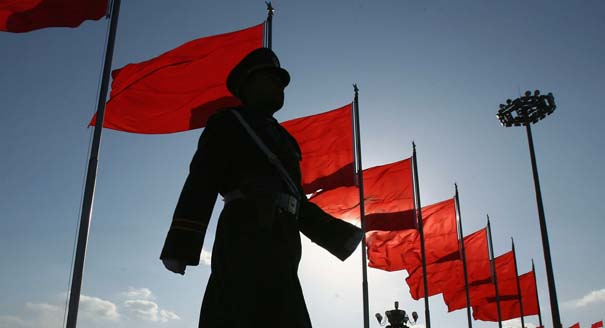
Source: Getty
Few now believe Beijing will be a passive rule-taker. Already it is becoming more assertive in challenging the existing regime.
Source: Wall Street Journal
Markets continue to fret over how much further China’s economy will fall. On the foreign policy front, China’s more aggressive posture has leaders across the world on edge. These twin worries mean that Beijing is becoming a more normal economy but an abnormal great power.
In the economic context, normal means that China’s double-digit growth rates are moderating to something more typical of a middle-income country. With the increasing dominance of the private sector, it is no longer immune to market forces and ever-rising debt ratios.
Part of the cost of becoming a more normal economy is increased vulnerability to global economic cycles and the Keynesian risk of lack of demand. Corporate profits are being squeezed by years of double-digit wage increases and high real interest rates.Increasing efficiency needs to displace increasing capacity as the priority since Beijing can no longer count on ratcheting up activity with massive state-led investments. Nor can it ensure stability by controlling interest and exchange rates as bands are widened or eliminated.
Internationalizing the yuan may convey prestige, but it will also restrict macro policy options as cross-border capital flows are liberalized. In a normal economy, the state’s role is not to manage everything but to establish market-friendly regulatory institutions. Beijing still has much to learn about the running of such institutions.
Meanwhile, President Xi Jinping has broken with the more passive foreign-policy characteristic of past leaders’ collective decision making. This signals the advent of a more assertive China.
Yet Beijing’s ability to exercise influence on the global stage is limited. China’s experience in dealing with sensitive issues lags well behind its economic achievements, placing it at a disadvantage in negotiating with other major powers.
China will be an abnormal great power compared with the historic rise of Europe, the U.S. and Japan. Unlike the others, whose ascendancy represented a broadly continuous yet lengthy process, China is unique in being a returning great power—one that accounted for 30% of global production two centuries ago but saw its share fall to less than 5% by 1950. Even today, after three decades of double-digit growth, its share is only half of what it once was.
China’s ability to make it to high income levels is not a foregone conclusion. None of the others had China’s handicap of becoming old before it becomes rich. China may be the world’s second-largest economy, but it is still relatively poor, with a per capita income ranking around 90th internationally.
With a proud history to live up to and domestic problems to overcome, tensions have arisen as Beijing attempts to balance its internal struggles with an evolving international order. To the outside world, China is seen as more threatening with its demonstrative acts in the East and South China Seas.
Years ago, Washington’s self-serving hope was that China would become a “responsible global stakeholder.” Few now believe that China will be a passive rule-taker in a system that was largely established by the West and has shown little willingness to accommodate its rise. It is more likely to be a rule challenger, maneuvering through grey areas and reshaping the balance of power with respect to its expanded core interests within the Asian region.
China’s formerly reactive approach was to allay apprehensions so that others would not constrain China’s potential to develop. The concept of “peaceful development” is no longer tenable in a world where America’s Asian pivot is viewed by the Chinese as a containment strategy. The rhetoric currently used in Washington to secure support for the Trans-Pacific Partnership and its earlier campaign against the Asian Infrastructure Investment Bank only solidify such sentiments.
That China has been willing to act more forcefully does not make it any different from other great powers. China may be dissatisfied with the global status quo, but it will push for change in a manner that does not destabilize a system that it has benefited from.
But China does differ from the other major powers in distinctive ways. Unlike other great powers, it is not clearly aligned with any one group or set of issues. Beijing’s choice of partners, structure of alliance and intentions varies depending on the issue at hand and the governance structures available.
First, China sees itself as a developing country with little in common with the political liberalism of the West. Second, it is an emerging power that shares concerns with the other BRICS countries in pushing for more influence. Third, China’s position at the United Nations and G-20 gives it a stake in the existing global power structures with its expectations of responsible behavior. Finally, it is seen as potentially part of a G-2, although realistically it will be more active as a regional power.
This is a world of overlapping, shifting and often issue-specific partnerships. China’s aim is to reform the system, not to oust it. Mr. Xi’s “Asia for Asians” and Silk Road initiatives are more about finding pragmatic solutions rather than establishing a comprehensive strategy.
This process creates the political space for China to maneuver. But as a regional power that feels constrained by the U.S. pivot, a more confident China with expanded core interests will continue to generate tensions and uncertainties that define it as an abnormal great power.
This article was originally published by the Wall Street Journal.

Senior Fellow, Asia Program
Huang is a senior fellow in the Carnegie Asia Program where his research focuses on China’s economy and its regional and global impact.
Recent Work


Sheena Chestnut Greitens, Oriana Skylar Mastro, Yukon Huang, …


Yukon Huang, Isaac B. Kardon, Matt Sheehan
Carnegie does not take institutional positions on public policy issues; the views represented herein are those of the author(s) and do not necessarily reflect the views of Carnegie, its staff, or its trustees.

The Plaza Accord was not an externally imposed punishment of Japan but part of a broader restructuring that Japanese economists and policymakers themselves recognized was necessary. Its effects were undermined, however, when Tokyo responded to the resulting slowdown with policies that exacerbated investment, credit expansion, and the very imbalances the adjustment was intended to resolve.

Michael Pettis

The nuclear relationship between China and the United States is increasingly shaped by widening perception gaps rather than deliberate strategic design.

Tong Zhao
China’s banking crisis in the 2000s was resolved by transferring the costs to households through financial repression—a decision that recapitalized the banks while exacerbating the structural imbalances that continue to shape the Chinese economy today.
Michael Pettis

Chinese biotech companies have been on the receiving end of U.S. economic coercion. Yet their responses have differed significantly because firm and state interests are not uniformly aligned. For Washington, treating all Chinese tech firms the same, irrespective of their actual interests, risks pushing them farther into Beijing’s corner.

Xue Gong

China’s latest energy plan explicitly calls for integrating data centers into the electricity system, particularly connecting them to green energy. It appears Beijing wants to use compute as a source of domestic demand to absorb renewables excess capacity.

Damien Ma