

Q&A
Suzanne Maloney, Aaron David Miller, Karim Sadjadpour
{
  "authors": [
    "Karim Sadjadpour"
  ],
  "type": "legacyinthemedia",
  "centerAffiliationAll": "dc",
  "centers": [
    "Carnegie Endowment for International Peace",
    "Malcolm H. Kerr Carnegie Middle East Center"
  ],
  "collections": [
    "Iranian Proliferation"
  ],
  "englishNewsletterAll": "menaTransitions",
  "nonEnglishNewsletterAll": "",
  "primaryCenter": "Carnegie Endowment for International Peace",
  "programAffiliation": "MEP",
  "programs": [
    "Middle East"
  ],
  "projects": [],
  "regions": [
    "Middle East",
    "Iran",
    "Syria",
    "Saudi Arabia",
    "Gulf",
    "Levant"
  ],
  "topics": [
    "Political Reform",
    "Foreign Policy",
    "Nuclear Policy"
  ]
}
Source: Getty
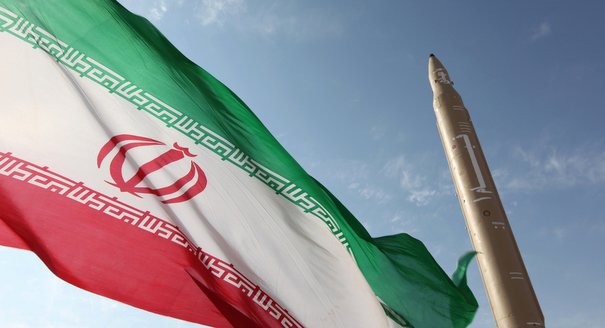
With a nuclear deal agreed upon, the discussion has shifted to its potential impact on Iran’s regional policies.
Source: NPR’s Morning Edition
RENEE MONTAGNE, HOST:
And for more now on the Iran nuclear deal, we're joined by Karim Sadjadpour, who's senior associate at the Carnegie Endowment.
Welcome.
KARIM SADJADPOUR: Great to be with you.MONTAGNE: And we just heard a couple of things about a possible arms race in the Sunni-Arab world, then we heard from our Syrian activist, worried about what the deal might mean for people like him who are under siege from his Iranian-backed government. How do you expect this agreement to affect Iran's role in the region?
SADJADPOUR: Well, I think you have to put the deal in three boxes. There's the nonproliferation box. There's the Iran domestic box. And then there is the regional box. And I think the regional box is probably the most concerning out of all three of them in that Iran's regional policies have been very consistent over four decades. It's been opposition to U.S. influence, opposition to Israel's existence and rivalry with Saudi Arabia. So it's unlikely that Iran's existing policies are going to change, and as a result of this deal, they'll be getting a major cash windfall. So I understand the concern of folks in Syria and Sunni-Arabs in Iraq and in the Gulf who say that, you know, Iran is now going to be getting billions of dollars to double down on forces like Bashar Assad, Hezbollah and Shia militias in Iraq.
MONTAGNE: Well, just briefly, might they not have spent that money anyway, even before the billions?
SADJADPOUR: Well, certainly they have been spending this money over time, but they've been cash-strapped as a result of the sanctions and the drop in oil prices. And there's now a concern that, you know, Assad has been on the ropes the last month and maybe he's going to be getting a major cash injection.
MONTAGNE: Well, as you read the Iranian media and social media, do you get the idea that there's a sense there that this is a dawning of a new era?
SADJADPOUR: You know I think that people in Iran are a little bit confused and that they've been waiting for this moment for so long, and they thought it had happened before. And there was an outpouring of emotion in the streets. People were dancing. And this is a very young population, vast majority were born after the revolution. And they're desperate to emerge from political and economic isolation. As I say, they want to be like South Korea, not North Korea. But I think at the same time, there is a recognition that the country's top leadership, mainly the supreme leader, has been firmly entrenched. His views are pretty firmly entrenched, and the country is not going to change overnight.
MONTAGNE: What about this whole question of fighting ISIS, which can be expanded to, you know, the question of greater U.S.-Iranian cooperation beyond the nuclear deal?
SADJADPOUR: Well, that's absolutely right in that people see these horrific images on the television screen of the behavior of ISIS. And I think there's a sense both in Washington and Tehran that the greatest threat to the region is now radical Sunni Islam, whether that's, you know, ISIS or its predecessor, al-Qaida. So I think from a popular perspective in Iran, people do see the United States as a potential ally. The challenge really is whether the regime in Iran will kind of shift course and start pursuing a path of strategic cooperation with the United States in the region. In the past, there have been moments of tactical cooperation against the common folk, whether that was the Taliban or al-Qaida. It never turned into something enduring and that remains to be seen whether it can happen this time.
MONTAGNE: Well, very briefly, what about Iran's human rights issues, for instance, like the American, the Washington Post reporter Jason Rezaian, who's in custody?
SADJADPOUR: There's four Americans who are in custody, including Jason Rezaian, and we'll see if this deal expedites their release. And looking at the kind of the broader Iranian public, there is a concern that the regime may actually clamp down internally to show their population that external flexibility doesn't mean internal weakness.
MONTAGNE: Thank you very much.
SADJADPOUR: Anytime, Renee. Thank you.
MONTAGNE: Karim Sadjadpour is with the Carnegie Endowment.

Senior Fellow, Middle East Program
Karim Sadjadpour is a senior fellow at the Carnegie Endowment for International Peace, where he focuses on Iran and U.S. foreign policy toward the Middle East.
Recent Work


Suzanne Maloney, Aaron David Miller, Karim Sadjadpour

Aaron David Miller, Karim Sadjadpour, Robin Wright
Carnegie does not take institutional positions on public policy issues; the views represented herein are those of the author(s) and do not necessarily reflect the views of Carnegie, its staff, or its trustees.

The nuclear relationship between China and the United States is increasingly shaped by widening perception gaps rather than deliberate strategic design.

Tong Zhao

But their "principal to principal" model will only be as effective as the political strength of each leader back home.

Damien Ma

U.S. unpredictability has allowed China to capitalize on its positioning as the “responsible great power”. Paradoxically, the more China wins the perception game, the more likely expectations will rise for Beijing to deliver not just words but to demonstrate with its deeds.

Chong Ja Ian

Hanoi and Beijing have long treated each other as distant cousins rather than comrades in arms. That might be changing as both sides draw closer to hedge against uncertainty and America’s erratic behavior.

Nguyễn Khắc Giang

Across Asia, China is better positioned to withstand energy shocks from the fallout of the Iran war. Its abundant coal capacity can ensure stability in the near term. Yet at the same time, the country’s energy transition away from coal will make it even less vulnerable during the next shock.
Damien Ma