

Report
- +3
James M. Acton, Alexey Arbatov, Vladimir Dvorkin, …
{
  "authors": [
    "Petr Topychkanov"
  ],
  "type": "legacyinthemedia",
  "centerAffiliationAll": "",
  "centers": [
    "Carnegie Endowment for International Peace",
    "Carnegie Russia Eurasia Center"
  ],
  "collections": [],
  "englishNewsletterAll": "",
  "nonEnglishNewsletterAll": "",
  "primaryCenter": "Carnegie Russia Eurasia Center",
  "programAffiliation": "",
  "programs": [],
  "projects": [],
  "regions": [
    "North America",
    "United States",
    "South Asia",
    "India",
    "East Asia",
    "China",
    "Russia",
    "Western Europe"
  ],
  "topics": [
    "Economy",
    "Global Governance",
    "Foreign Policy"
  ]
}
Source: Getty
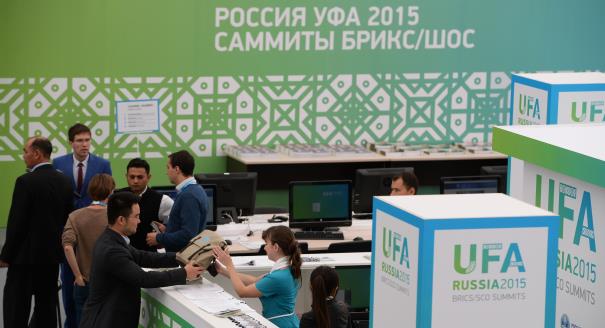
The BRICS and the West are neither rivals nor partners. The BRICS isn’t challenging the West, but the West’s own growing weaknesses are empowering the BRICS.
Source: Russia Direct
The BRICS and the West have neither a rival nor partner relationship. There is no basis for such perceptions between the BRICS and the West. The BRICS is not an alliance. It's not a military bloc. The members of this group don't have any intention to transform it into something formalized.
They are not interested in any confrontation with the West, because all of them except Russia have close ties with Western countries. Even Russia, which has problematic relations with many Western countries because of Crimea, is still connected to them via economic, political and cultural links.The West doesn’t have any reason to see the BRICS as something challenging it. There is only one reason to worry [for the West] – its own growing weaknesses. BRICS was created in response to changes in the world order and global economy.
The space for such an initiative was cleared by Western institutions, which turned out to be unable to play the role that they used to play after the collapse of the Soviet Union. The need for the growth and development of Brazil, China, India, Russia, and South Africa can’t be satisfied with the sole help of the West. These countries’ growth demands injections from many sources.
The BRICS’ economic demands dictate the political agenda for its member states. The group’s creation reflected their understanding the world as polycentric and free of dominance of one center over others.
This understanding is basic for the BRICS. From this point of view, the West is accepted by the BRICS as one of the other centers in international affairs. Those politicians in Western countries who want to secure the West’s superiority over other centers of the world may oppose the BRICS as a manifestation of the world order change.
In short, the more active role of the BRICS is becoming possible because of the growing demands of its member-states and inability of Western institutions to satisfy them.

Former Fellow, Nonproliferation Program, Moscow Center
Topychkanov was a fellow in the Carnegie Moscow Center’s Nonproliferation Program.
Recent Work


James M. Acton, Alexey Arbatov, Vladimir Dvorkin, …
Petr Topychkanov
Carnegie does not take institutional positions on public policy issues; the views represented herein are those of the author(s) and do not necessarily reflect the views of Carnegie, its staff, or its trustees.

China’s political future will be shaped between now and next October. As the Communist Party enters its intense “campaign season” to prepare for a major political transition in 2027, reading Beijing's actions and responses may become more difficult as domestic politics weigh on its behavior more than usual.

Damien Ma

China has showcased its engineering prowess with small modular reactor demonstration projects. But turning these technological achievements into commercial success will be a greater challenge.

Tong Zhao

The Plaza Accord was not an externally imposed punishment of Japan but part of a broader restructuring that Japanese economists and policymakers themselves recognized was necessary. Its effects were undermined, however, when Tokyo responded to the resulting slowdown with policies that exacerbated investment, credit expansion, and the very imbalances the adjustment was intended to resolve.

Michael Pettis

The nuclear relationship between China and the United States is increasingly shaped by widening perception gaps rather than deliberate strategic design.
Tong Zhao
China’s banking crisis in the 2000s was resolved by transferring the costs to households through financial repression—a decision that recapitalized the banks while exacerbating the structural imbalances that continue to shape the Chinese economy today.
Michael Pettis