

Article
C. Raja Mohan, Darshana M. Baruah
{
  "authors": [
    "C. Raja Mohan"
  ],
  "type": "legacyinthemedia",
  "centerAffiliationAll": "dc",
  "centers": [
    "Carnegie Endowment for International Peace",
    "Carnegie India"
  ],
  "collections": [],
  "englishNewsletterAll": "ctw",
  "nonEnglishNewsletterAll": "",
  "primaryCenter": "Carnegie India",
  "programAffiliation": "SAP",
  "programs": [
    "South Asia"
  ],
  "projects": [],
  "regions": [
    "United States",
    "South Asia",
    "Pakistan",
    "India"
  ],
  "topics": [
    "Foreign Policy",
    "Security",
    "Military",
    "Nuclear Policy"
  ]
}
Source: Getty
India needs to think with its head rather than its gut to exploit opportunities in the U.S.-Pakistan nuclear negotiations.
Source: Indian Express
The centre of gravity of India’s foreign policy seems to rest in Pakistan. Notwithstanding the legacy of expansive internationalism and an enduring ambition to become a great power, India seems easily rattled by Pakistan. India has not been able to overcome this psychological vulnerability, despite the growing strategic separation between India and Pakistan. India’s economy is now more than seven times larger than Pakistan’s. New Delhi spends six times more than Rawalpindi on defence. This, however, has made no difference to Delhi’s political discourse on Pakistan.
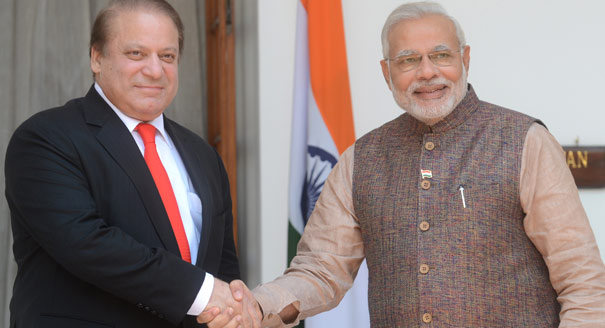
It gets a lot worse when it comes to Pakistan’s relations with America. Beijing’s all-weather alliance with Rawalpindi has certainly done more damage to Delhi than the episodic American embrace of Pakistan. But it is America that gets India’s goat on Pakistan.Delhi’s policy of objecting to the US-Pakistan relationship goes back to 1954, when Jawaharlal Nehru himself made a big deal out of the first military pact between America and Pakistan. That tradition will be on full display this week as President Barack Obama receives Pakistan’s Prime Minister Nawaz Sharif.
Washington is well aware that PM Nawaz Sharif is not really in charge of Pakistan’s national security policy. America’s real talks are with the Pakistan army. Some suggest that Nawaz’s trip this week to Washington is just the prelude to a more important visit by the chief of army staff, General Raheel Sharif, to the US next month.
Three issues of considerable interest to India — nuclear weapons, terrorism and Afghanistan — are now in play between the US and Pakistan. On all three, Delhi thinks America is about to reward Pakistan’s bad behaviour — its record as the nuclear Walmart on the black market, its support to terrorist groups in India, and its destabilisation of Afghanistan. Delhi may have all the evidence in favour of its argument. But international politics is neither a morality play or a Bollywood formula film where the bad guys always lose.
India must recognise that Pakistan’s location at the crossroads between the subcontinent, the Arabian Sea, the Persian Gulf, Central Asia and China has given Rawalpindi some unique geopolitical advantages.
The US need for accessing Pakistan — whether in ousting the Russian occupation in the 1980s or stabilising the post-Taliban regime in the 2000s — was seen as so critical that Washington was willing to pay a high price for Rawalpindi’s support.
Like Afghanistan, nuclear weapons are a gift that keeps giving to Pakistan. America’s unreasonable fears that Pakistan’s nuclear weapons might fall into the hands of terrorists or lead to an atomic war in South Asia have compelled Washington to pardon Rawalpindi’s multiple transgressions. Pakistan is “too nuclear to fail”, from the perspective of American arms controllers.
Quite a bit of the Indian criticism of the current US approach to Pakistan, however, comes from those who vehemently opposed Washington’s historic civil nuclear initiative with Delhi in July 2005. Delhi needs to avoid this kind of nihilism that prevents India from seizing moments of opportunity with America or intervening more effectively in the US-Pak relationship. Knee-jerk denunciation of America’s proposed nuclear accommodation with Pakistan is no substitute for a considered response.
Three challenges present themselves to Indian diplomacy in dealing with the US-Pak nuclear talks. One is to game the unfolding negotiations between Washington and Rawalpindi. The current terms of discussion may not necessarily be the ones around which the US and Pakistan might eventually construct an agreement. Pakistan would certainly want to bring in a range of other issues — regional arms control with India, Kashmir, and Delhi’s presence in Afghanistan. Rather than oppose the entire deal, Delhi must try and shape the outcomes.
Two, India knows the problem in Pakistan is not related to the size and character of its atomic arsenal. It’s Rawalpindi’s deliberate promotion of terrorism under the shadow of nuclear weapons and its dominance over the nation’s security policy towards Afghanistan and India. Getting this argument across in Washington has always been difficult, but Delhi must keep trying. It needs to inject issues relating to terrorism and democracy into the US debate on Pakistan.
Three, Delhi must find ways to turn the current debate between the US and Pakistan to its advantage. India broke from the mindless opposition to anything the US does with Pakistan to good effect at least once in the past.
In March 2005, when the Bush administration sought to resume arms sales to Pakistan, Delhi resisted the temptation of objecting loudly. Instead, it negotiated some benefits for itself — an expansive framework for defence cooperation and the historic civil nuclear initiative — within weeks after Washington announced renewed arms sales to Pakistan.
If Delhi thinks with its head rather than the gut, it might have interesting opportunities to exploit in the US-Pak nuclear negotiations.
Former Nonresident Senior Fellow, Carnegie India
A leading analyst of India’s foreign policy, Mohan is also an expert on South Asian security, great-power relations in Asia, and arms control.
Recent Work

C. Raja Mohan, Darshana M. Baruah


Alexander Gabuev, Paul Haenle, C. Raja Mohan, …
Carnegie does not take institutional positions on public policy issues; the views represented herein are those of the author(s) and do not necessarily reflect the views of Carnegie, its staff, or its trustees.
China has showcased its engineering prowess with small modular reactor demonstration projects. But turning these technological achievements into commercial success will be a greater challenge.

Tong Zhao
The nuclear relationship between China and the United States is increasingly shaped by widening perception gaps rather than deliberate strategic design.
Tong Zhao
But their "principal to principal" model will only be as effective as the political strength of each leader back home.

Damien Ma
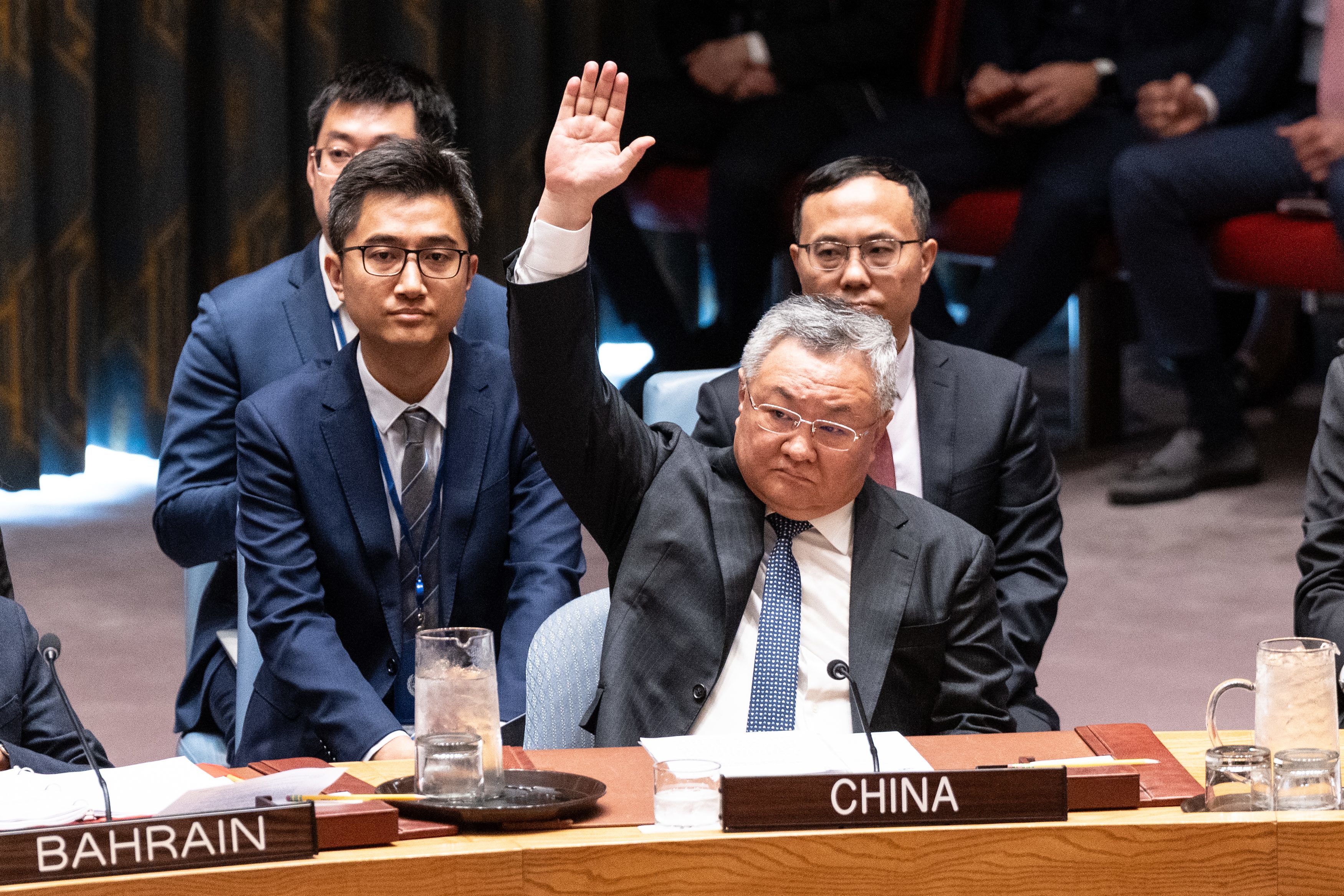
U.S. unpredictability has allowed China to capitalize on its positioning as the “responsible great power”. Paradoxically, the more China wins the perception game, the more likely expectations will rise for Beijing to deliver not just words but to demonstrate with its deeds.

Chong Ja Ian
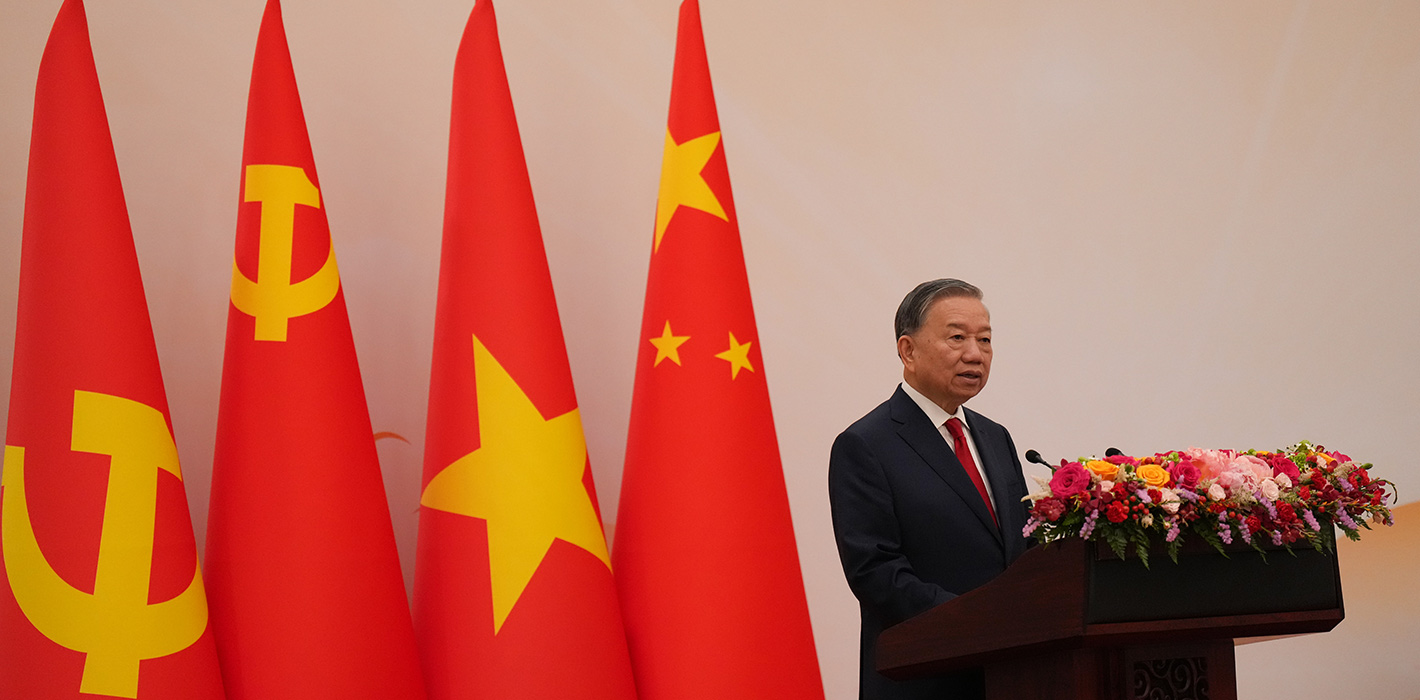
Hanoi and Beijing have long treated each other as distant cousins rather than comrades in arms. That might be changing as both sides draw closer to hedge against uncertainty and America’s erratic behavior.

Nguyễn Khắc Giang