

Commentary
Judy Dempsey
{
  "authors": [
    "Judy Dempsey"
  ],
  "type": "legacyinthemedia",
  "centerAffiliationAll": "dc",
  "centers": [
    "Carnegie Endowment for International Peace",
    "Carnegie Europe"
  ],
  "collections": [
    "Turkey’s Transformation"
  ],
  "englishNewsletterAll": "ctw",
  "nonEnglishNewsletterAll": "",
  "primaryCenter": "Carnegie Europe",
  "programAffiliation": "EP",
  "programs": [
    "Europe"
  ],
  "projects": [],
  "regions": [
    "Middle East",
    "Europe",
    "Türkiye",
    "Iran"
  ],
  "topics": []
}
Source: Getty
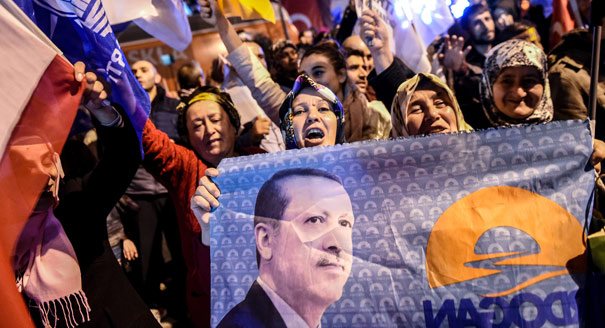
Pollsters did not predict the scale of the AKP’s victory in Turkey’s November parliamentary election. But was the contest’s real winner the country’s president?
Source: Deutsche Welle
A clear victory for Turkish President Recep Tayyip Erdoğan’s Justice and Development Party (AKP) in the November parliamentary election was not what the pollsters had predicted. In a climate of insecurity, have Turkish voters indirectly given more power to the president?
Speaking to Deutsche Welle’s Quadriga, Judy Dempsey was asked to comment on the outcome of the Turkish election and the future of the country. She was joined by Alan Posener, political author at Die Welt, and Dilek Kurban, research fellow at the Hertie School of Governance.
This broadcast was originally aired on Deutsche Welle’s Quadriga.

Nonresident Senior Fellow, Carnegie Europe
Judy Dempsey is a nonresident senior fellow at Carnegie Europe
Recent Work
Judy Dempsey
Judy Dempsey
Carnegie does not take institutional positions on public policy issues; the views represented herein are those of the author(s) and do not necessarily reflect the views of Carnegie, its staff, or its trustees.
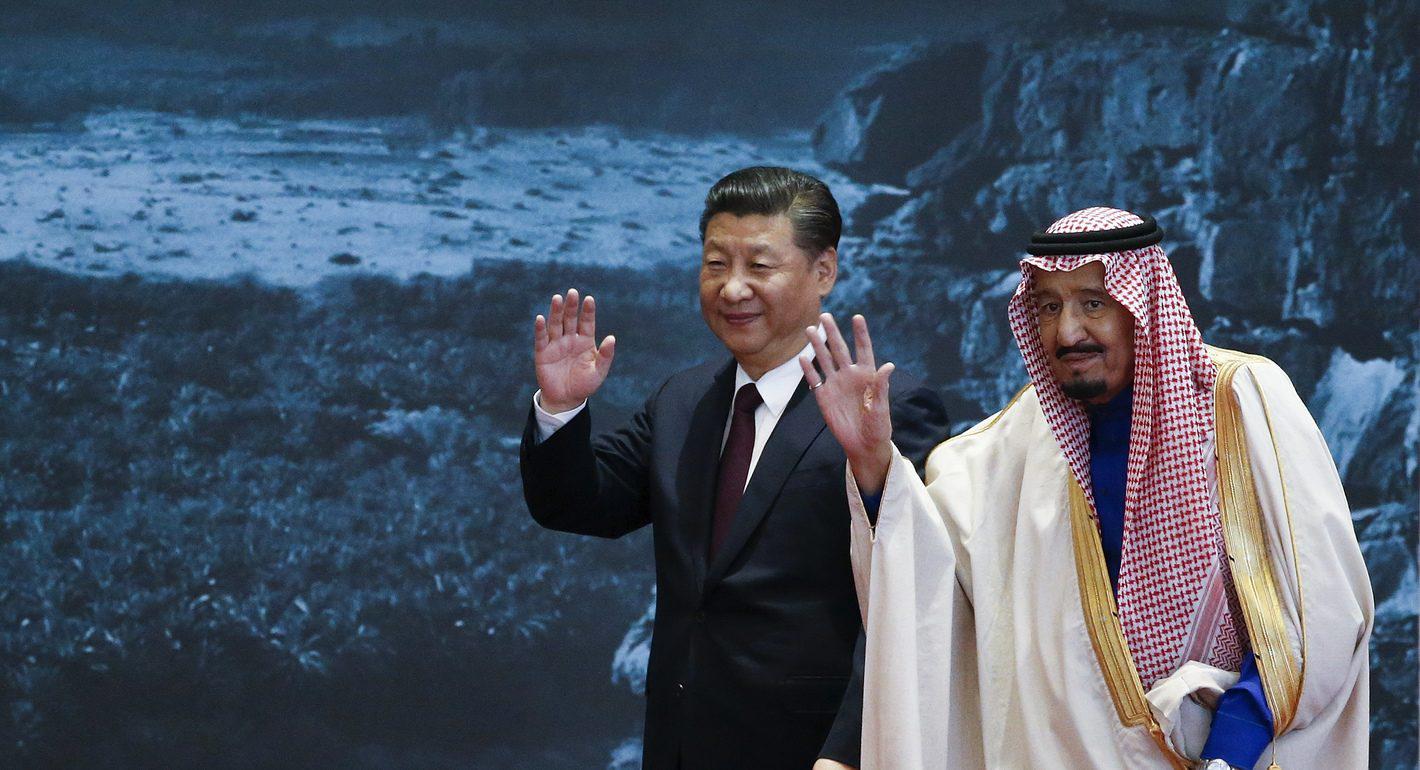
The advantage that China has over other global powers, especially America, is that its foreign policy is closely aligned with those of many of the Middle Eastern countries.


Jin Liangxiang, Maha Yahya, Hesham Alghannam
“It’s not so clear how we’re going to get out of this.”

Paul Haenle, Philippe Le Corre

It’s about managing oil prices, bread prices, and strategic partnerships.



Amr Hamzawy, Karim Sadjadpour, Aaron David Miller, …

With the potential of enabling not only significant economic growth but also the innovation of critical technologies in various fields, both the United States and China view 5G as one of the key influencing factors in the “great power competition.”
Lyu Jinghua
Two experts, one Chinese one American, weigh in on the TikTok and WeChat ban. This high-stakes contest reflects a wider technological decoupling that could splinter the internet

Jon Bateman, Lyu Jinghua