

Research
- +10
Rosa Balfour, Frances Z. Brown, Yasmine Farouk, …
{
  "authors": [
    "Moisés Naím"
  ],
  "type": "legacyinthemedia",
  "centerAffiliationAll": "",
  "centers": [
    "Carnegie Endowment for International Peace"
  ],
  "collections": [],
  "englishNewsletterAll": "",
  "nonEnglishNewsletterAll": "",
  "primaryCenter": "Carnegie Endowment for International Peace",
  "programAffiliation": "",
  "programs": [],
  "projects": [
    "Carnegie Oil Initiative"
  ],
  "regions": [
    "North America",
    "United States",
    "South America",
    "Middle East",
    "North Africa",
    "Russia"
  ],
  "topics": [
    "Economy",
    "Trade",
    "Climate Change",
    "Foreign Policy"
  ]
}
Source: Getty
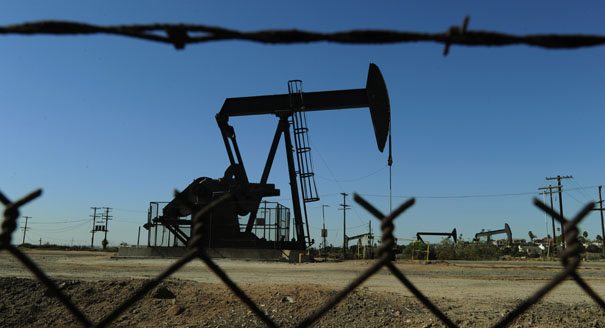
The oil price crash has implications for the global economy, geopolitics, and efforts to limit carbon emissions.
Source: NPR’s Diane Rehm Show
Oil prices have plunged more than 70 percent over the past two years. U.S. stockpiles of crude are at record levels and a slowing global economy is keeping demand for oil low. A proposal by a few members of OPEC to freeze production has gone nowhere and many economists say it wouldn’t significantly alter the oil glut. Several states dependent on oil revenue are facing strained budgets and job losses as the price crash continues. And a number of U.S. companies are at high risk of defaulting on loans, raising the specter of another financial crisis.
Carnegie’s Moisés Naím, guest host Indira Lakshmanan, and other experts discuss the oil price crash and what it could mean for the global economy, geopolitics, and efforts to limit carbon emissions.
This broadcast originally appeared on NPR’s Diane Rehm Show.

Distinguished Fellow
Moisés Naím is a distinguished fellow at the Carnegie Endowment for International Peace, a best-selling author, and an internationally syndicated columnist.
Recent Work



Rosa Balfour, Frances Z. Brown, Yasmine Farouk, …
Moisés Naím
Carnegie does not take institutional positions on public policy issues; the views represented herein are those of the author(s) and do not necessarily reflect the views of Carnegie, its staff, or its trustees.

But their "principal to principal" model will only be as effective as the political strength of each leader back home.

Damien Ma

U.S. unpredictability has allowed China to capitalize on its positioning as the “responsible great power”. Paradoxically, the more China wins the perception game, the more likely expectations will rise for Beijing to deliver not just words but to demonstrate with its deeds.

Chong Ja Ian

Hanoi and Beijing have long treated each other as distant cousins rather than comrades in arms. That might be changing as both sides draw closer to hedge against uncertainty and America’s erratic behavior.

Nguyễn Khắc Giang

Across Asia, China is better positioned to withstand energy shocks from the fallout of the Iran war. Its abundant coal capacity can ensure stability in the near term. Yet at the same time, the country’s energy transition away from coal will make it even less vulnerable during the next shock.
Damien Ma

In the latest Five-Year Plan, the Chinese president cements the shift to an innovation-driven economy over a consumption-driven one.
Damien Ma