

Other
Michael D. Swaine
{
  "authors": [
    "Michael D. Swaine"
  ],
  "type": "questionAnswer",
  "centerAffiliationAll": "dc",
  "centers": [
    "Carnegie Endowment for International Peace",
    "Carnegie China"
  ],
  "collections": [],
  "englishNewsletterAll": "asia",
  "nonEnglishNewsletterAll": "",
  "primaryCenter": "Carnegie China",
  "programAffiliation": "AP",
  "programs": [
    "Asia"
  ],
  "projects": [],
  "regions": [
    "North America",
    "United States",
    "East Asia",
    "China"
  ],
  "topics": [
    "Security",
    "Military",
    "Foreign Policy"
  ]
}
Source: Getty
Perception issues in the U.S.-China relationship are reflected in views on the Western Pacific.
With the American Voices Initiative, the Institute for China-America Studies (ICAS) has undertaken a series of interviews with American experts on the US-China relationship. These interviews will be produced periodically and will introduce U.S. and Chinese audiences to a range of American views on security, economics, and global governance issues. The program works to identify areas in the China-U.S. relationship in need of more mutual understanding and seeks to introduce innovative ideas for promoting cooperative relations between the two nations.
The ICAS American Voices Initiative interviewed Michael Swaine of the Carnegie Endowment for International Peace. Dr. Swaine discusses stability in the Western Pacific and perception issues in the U.S.-China relationship with ICAS's Alek Chance.
This interview originally appeared through the Institute for China-America Studies.

Former Senior Fellow, Asia Program
Swaine was a senior fellow at the Carnegie Endowment for International Peace and one of the most prominent American analysts in Chinese security studies.
Recent Work
Michael D. Swaine
Michael D. Swaine
Carnegie does not take institutional positions on public policy issues; the views represented herein are those of the author(s) and do not necessarily reflect the views of Carnegie, its staff, or its trustees.

The Plaza Accord was not an externally imposed punishment of Japan but part of a broader restructuring that Japanese economists and policymakers themselves recognized was necessary. Its effects were undermined, however, when Tokyo responded to the resulting slowdown with policies that exacerbated investment, credit expansion, and the very imbalances the adjustment was intended to resolve.

Michael Pettis

The nuclear relationship between China and the United States is increasingly shaped by widening perception gaps rather than deliberate strategic design.

Tong Zhao
China’s banking crisis in the 2000s was resolved by transferring the costs to households through financial repression—a decision that recapitalized the banks while exacerbating the structural imbalances that continue to shape the Chinese economy today.
Michael Pettis

Chinese biotech companies have been on the receiving end of U.S. economic coercion. Yet their responses have differed significantly because firm and state interests are not uniformly aligned. For Washington, treating all Chinese tech firms the same, irrespective of their actual interests, risks pushing them farther into Beijing’s corner.

Xue Gong
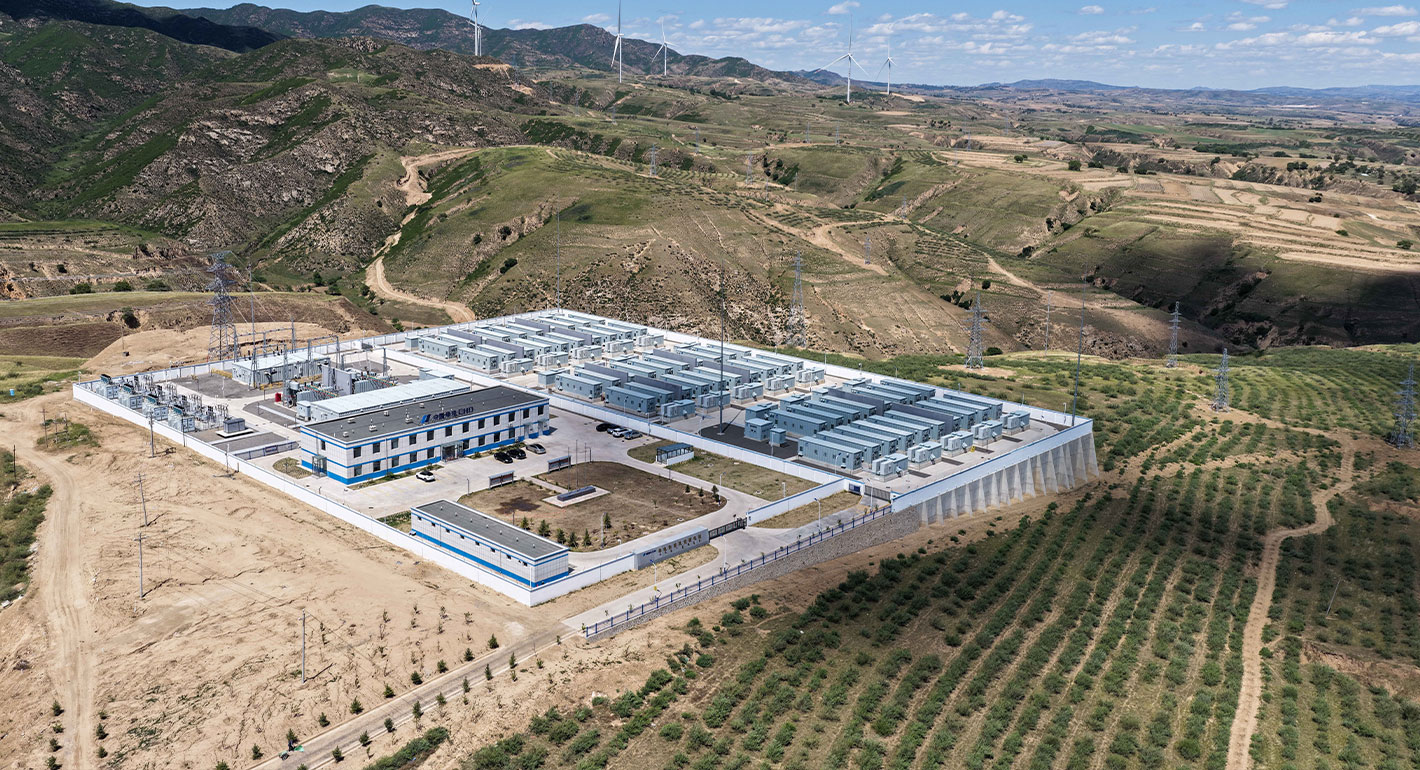
China’s latest energy plan explicitly calls for integrating data centers into the electricity system, particularly connecting them to green energy. It appears Beijing wants to use compute as a source of domestic demand to absorb renewables excess capacity.

Damien Ma