

Paper
Douglas H. Paal
{
  "authors": [
    "Douglas H. Paal"
  ],
  "type": "other",
  "centerAffiliationAll": "dc",
  "centers": [
    "Carnegie Endowment for International Peace",
    "Carnegie China"
  ],
  "collections": [
    "China’s Foreign Relations",
    "U.S.-China Relations"
  ],
  "englishNewsletterAll": "asia",
  "nonEnglishNewsletterAll": "",
  "primaryCenter": "Carnegie Endowment for International Peace",
  "programAffiliation": "AP",
  "programs": [
    "Asia"
  ],
  "projects": [],
  "regions": [
    "North America",
    "United States",
    "East Asia",
    "China"
  ],
  "topics": [
    "Foreign Policy"
  ]
}
Source: Getty
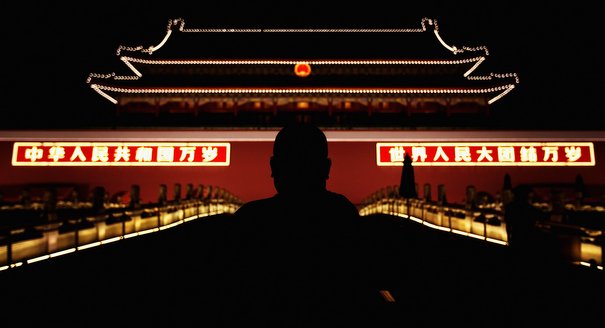
Moving forward, China by default will gain a greater Asian role.
Source: International Economy
First it was the 2008 global financial crisis. Then the Arab Spring. Then Brexit. International conventional wisdom always seems unaware of the big changes about to unfold. There are in the present few facts about the future. Ten years ago, for example, who would have predicted surprise developments such as negative interest rates, the potential breakup of the European Union, the Donald Trump/Bernie Sanders effect, drones, the use of driverless cars, the rise of ISIS, the myriad uses of artificial intelligence and big data, U.S. energy independence, the emergence of the Zika virus, or the rate at which robots are taking away jobs. TIE asked more than fifty top thinkers to look ahead ten years at what outside-the-box developments could shock the world.
The United States is demonstrating a strong trend toward diminished global and regional leadership. This is being accelerated by the dissolution of familiar sources of political and institutional stability in key corners of the world, often unwittingly abetted by U.S. decisions.
In Asia, this means a much greater role for China, by default, in the affairs of its neighbors, well before China has cultivated the habits of mind and behavior appropriate to that role and well before its neighbors will be ready to accept it. Messianic terrorism is not in the Asian cards, but localized conflicts, mass migrations, and social and economic instability are. These could feed off the still-strong cultural differences among Asian nations and the region’s traditional resistance to integrative institutions.
This will be sad and completely unnecessary, as Asians still and long will welcome an intelligently executed U.S. balancing function against the influence of China. It will be due to the failure of the American political class to reshape itself, rejuvenate the economy, prioritize defense spending, and organize and implement an effective grand strategy for the new era. Of course, Americans still have the option of pulling together to prevent all this from happening.
This article was originally published in the International Economy.

Distinguished Fellow, Asia Program
Paal previously served as vice chairman of JPMorgan Chase International and as unofficial U.S. representative to Taiwan as director of the American Institute in Taiwan.
Recent Work
Douglas H. Paal

Douglas H. Paal, Tong Zhao, Chen Qi, …
Carnegie does not take institutional positions on public policy issues; the views represented herein are those of the author(s) and do not necessarily reflect the views of Carnegie, its staff, or its trustees.

China’s banking crisis in the 2000s was resolved by transferring the costs to households through financial repression—a decision that recapitalized the banks while exacerbating the structural imbalances that continue to shape the Chinese economy today.

Michael Pettis

Chinese biotech companies have been on the receiving end of U.S. economic coercion. Yet their responses have differed significantly because firm and state interests are not uniformly aligned. For Washington, treating all Chinese tech firms the same, irrespective of their actual interests, risks pushing them farther into Beijing’s corner.

Xue Gong

China’s latest energy plan explicitly calls for integrating data centers into the electricity system, particularly connecting them to green energy. It appears Beijing wants to use compute as a source of domestic demand to absorb renewables excess capacity.

Damien Ma

But their "principal to principal" model will only be as effective as the political strength of each leader back home.
Damien Ma

U.S. unpredictability has allowed China to capitalize on its positioning as the “responsible great power”. Paradoxically, the more China wins the perception game, the more likely expectations will rise for Beijing to deliver not just words but to demonstrate with its deeds.

Chong Ja Ian