

Paper
Douglas H. Paal
{
  "authors": [
    "Douglas H. Paal"
  ],
  "type": "legacyinthemedia",
  "centerAffiliationAll": "dc",
  "centers": [
    "Carnegie Endowment for International Peace",
    "Carnegie China"
  ],
  "collections": [
    "China’s Foreign Relations",
    "U.S.-China Relations"
  ],
  "englishNewsletterAll": "asia",
  "nonEnglishNewsletterAll": "",
  "primaryCenter": "Carnegie China",
  "programAffiliation": "AP",
  "programs": [
    "Asia"
  ],
  "projects": [],
  "regions": [
    "North America",
    "United States"
  ],
  "topics": [
    "Political Reform",
    "Foreign Policy"
  ]
}
Source: Getty
With time and the need to accumulate achievements, policy issues will depend less on personalities, though the president’s personality will remain important, than on working with enduring realities.
Source: South China Morning Post
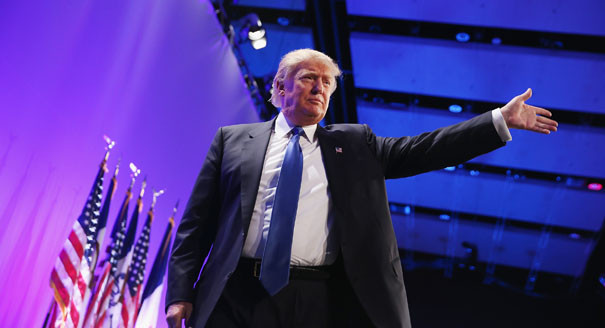
There are different things to observe about every new administration, and none more different than about the self-proclaimed disruptive Trump team. It may be the most change-minded new US government since Franklin Roosevelt upended years of Republican rule in the midst of the Great Depression in 1933. In some ways, it also mirrors Ronald Reagan’s takeover in 1981. Naturally, the media focus will be on the discontinuities – what’s new. But there are continuities as well. So to add a little spice to your observations, I would like to note some of these.
First, every new team that ousts the opposition party enters office on a campaign-induced emotional high. Energy levels are frenetic, a continuation of the excitement on the campaign trail. Those who were on the campaign plane are trusted; others, not so much. The wild-eyed enthusiasm of the incomers can be infectious, and it can be scary. Governing will immediately prove less fun than campaigning.
Second, they are riding into office on a pendulum that is swinging as far from the policies of the previous administration as possible. They find it hard to acknowledge positive contributions by their immediate predecessors and see a need for change in every dimension of government. Barack Obama was weak, Donald Trump is strong. Obama hated Vladimir Putin, so try the other way, seemingly regardless of what Putin has been doing. Obama accommodated Xi Jinping (習近平) to get climate change agreements, so ignore the agreements and make new demands on Xi.
Third, you need help to govern. Trump has a big advantage. Voter adversity to Hillary Clinton and Obama’s record has given Republicans the broadest grip on government since 1928: the White House, both Houses of Congress, soon a conservative majority on the Supreme Court, and 33 (out of 50) governors. So Trump stands a good prospect to enact a sweeping legislative agenda.
But Trump’s agenda has to tally with that of the congressional leadership. They need each other, and Congress is collectively less a radical departure from normal than is Trump. We see it in the selection of Mike Pence, a former congressman and governor as vice-president. The same is true for the new White House Chief of Staff Reince Priebus, former head of the Republican National Committee, who does the deals with Congress.
Remember, Trump was not even a Republican until recently. Compromise may have been a dirty word to Republicans before now, but it will be required in the near future if the initial electoral momentum is to be exploited effectively to create a legacy. By the way, that momentum does not last.
Fourth, campaigns receive support from sometimes warring or competing constituencies, yet they all expect to be rewarded. In Reagan’s early days, he had what seemed to be three chiefs of staff, Ed Meese, Michael Deaver and James Baker. It took a while, but Baker emerged as the winner. Trump has designated four policy bosses with purview over the priority campaign topic of trade, and it will take time to sort out who of the four speaks most authoritatively. As with Baker, I would bet on the most experienced and knowledgeable eventually to emerge on top.
Fifth, now more than ever, the mainstream media took sides in the election and seem to be refusing to accept Trump’s win. This has made Trump’s opponents at The New York Times, Washington Post and CNN outside the circle of those given leaks and inside accounts. If you rely on them to understand what’s happening behind the scenes, you’ll probably be misinformed. Privilege of insight seems to have been given to The Wall Street Journal and Fox News.
This has contributed to a mass of misinformation and gossip about subcabinet-level appointments, where much of the necessary work of government will be done. Here, the unreported story is of the arrival of key Capitol Hill staff members from relevant committees. While you read of potential office holders, long out of government with compromised records, succeeding or failing, jobs are being filled with relatively young, experienced professionals who will be durable. The establishment Republicans who sided with Clinton may have to chill outside for a while, but there are many able people to do the job.
Finally, all the above features of a transition of presidents are followed by another feature – the transition of policy. With time and the need to accumulate achievements, issues will depend less on personalities, though the president’s personality will remain important, than on working with enduring realities. China and Russia are not going away. Global warming has not been reversed. Crises must be dealt with, alliances and friendships reinforced. Doing deals is not a one-time thing for presidents.
If Trump’s recipe of less regulation and taxation, infrastructure construction, and military modernisation takes hold through legislation, America’s renewed economic energy should give his presidency a boost.
His tweeting seems unlikely to end, but observers are likely to be accustomed to it and Trump will have more to boast about than criticise.
This article originally appeared in the South China Morning Post.

Distinguished Fellow, Asia Program
Paal previously served as vice chairman of JPMorgan Chase International and as unofficial U.S. representative to Taiwan as director of the American Institute in Taiwan.
Recent Work
Douglas H. Paal

Douglas H. Paal, Tong Zhao, Chen Qi, …
Carnegie does not take institutional positions on public policy issues; the views represented herein are those of the author(s) and do not necessarily reflect the views of Carnegie, its staff, or its trustees.

The nuclear relationship between China and the United States is increasingly shaped by widening perception gaps rather than deliberate strategic design.
Tong Zhao

But their "principal to principal" model will only be as effective as the political strength of each leader back home.

Damien Ma

U.S. unpredictability has allowed China to capitalize on its positioning as the “responsible great power”. Paradoxically, the more China wins the perception game, the more likely expectations will rise for Beijing to deliver not just words but to demonstrate with its deeds.

Chong Ja Ian

Hanoi and Beijing have long treated each other as distant cousins rather than comrades in arms. That might be changing as both sides draw closer to hedge against uncertainty and America’s erratic behavior.

Nguyễn Khắc Giang

Across Asia, China is better positioned to withstand energy shocks from the fallout of the Iran war. Its abundant coal capacity can ensure stability in the near term. Yet at the same time, the country’s energy transition away from coal will make it even less vulnerable during the next shock.
Damien Ma