

Paper
Renée DiResta, Rachel Kleinfeld, Margot Treadwell
{
  "authors": [
    "Rachel Kleinfeld"
  ],
  "type": "legacyinthemedia",
  "centerAffiliationAll": "dc",
  "centers": [
    "Carnegie Endowment for International Peace"
  ],
  "collections": [],
  "englishNewsletterAll": "democracy",
  "nonEnglishNewsletterAll": "",
  "primaryCenter": "Carnegie Endowment for International Peace",
  "programAffiliation": "DCG",
  "programs": [
    "Democracy, Conflict, and Governance"
  ],
  "projects": [],
  "regions": [
    "North America",
    "United States"
  ],
  "topics": [
    "Political Reform",
    "Democracy",
    "Security"
  ]
}
Source: Getty
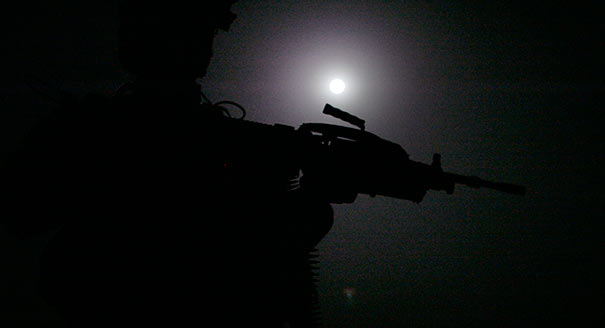
The United States is already being ruled under a state of emergency. It began under President George W. Bush and continued under President Obama. President Trump just has to ice the cake.
Source: Just Security
As Trump reissues his “lock her up” talk against Hillary Clinton and assaults the Justice Department, FBI, and media, the Brennan Center recently had a prescient meeting about what to do if President Trump uses some pretext to launch a state of emergency. The room was full of lawyers from past administrations and Congress who had dealt with just this sort of legal issue.
Perhaps because they were too close to the problem, no one stated the obvious. The United States is already being ruled under a state of emergency. It began under President George W. Bush and continued under President Obama. President Trump just has to ice the cake.
When people think of emergency rule, they usually picture Hitler’s declaration in Germany after the Reichstag fire or Colombia, which spent 37 out of 40 years in a state of emergency from 1952 to 1992. But Colombia got a new constitution in 1991, as did Germany after World War II. Their experience with severe emergency actually created a strong public reaction against the experience that helps to safeguard these countries.
But these are exceptions. Kim Lane Scheppele, a law professor at Princeton, has looked at a series of emergency cases compiled by the International Commission of Jurists from around the world, and compiled an “emergency script” that gets trotted out nearly every time, with remarkable stability in the actions and their order in various countries. Emergencies aren’t usually declared at the outset with a capital E – instead, they walk across the line slowly.
In the early stages of emergency, she explains, legislatures and publics pay attention – no one wants to let democracy erode too much. But then, they get used to things. What was exceptional becomes normal. It gets normalized in ordinary law, which sets a new benchmark.
For example, the U.S. Congress was careful to insert a five year sunset clause into the Patriot Act. Five years later, Congress removed the clause and made fourteen of the sixteen clauses permanent.
Sheppele explains that the slow creep starts when the Executive branch slowly centralizes power. Gradually, the courts are marginalized. But this is often not abrupt, and the main actor isn’t always clear: over time, legislatures and courts both take themselves out of the loop and choose to opt out of the most political decisions, rather than being pushed by the Executive.
Consider that for sixteen years after 9/11, the Authorization for the Use of Military Force against Terrorists (AUMF) passed in the immediate aftermath of the attacks continued to be used to send troops and drone attacks to the Philippines, Georgia, Yemen, Kenya, Iraq, Somalia, and many other countries.
Or consider the rubberstamp surveillance oversight from the FISA and Article III courts, the first of which last year denied 8 out of 1485 applications and changed a number of others, while the latter denied just two wiretap requests out of 3170.
Militarization comes next, in that the military starts to perform jobs formerly done by civilians. Under President Obama, our nation’s cyber security was placed under military control, so that civilian sites had no governmental watchdog or protection, while all effort focused on protecting the .mil and other security domains. Trump’s placement of military brass in what are normally high-level, civilian positions is more public, but possibly less dangerous.
Other actions follow, such as reducing the openness of government to free information flow. That encompasses the secret renditions and detentions under George W. Bush. But it also implicates President Obama’s record denial of FOIA requests).
Banning assembly is another common tactic. Consider the bevy of anti-protest bills being considered by 18 states that make it harder to protest, create harsher penalties for arrested protestors, and in two cases, remove liability from drivers who accidentally hit protestors.
Procedural shortcuts such as governing through executive orders are another step. Here, the US numbers are interesting – executive orders and Presidential memoranda were used the MOST, by a long shot, when partisanship in Congress was at its lowest point in the middle of the century. Recently, Obama issued fewer than George W. Bush who issued fewer than Clinton who issued fewer than Reagan. So we still have a number of steps left to walk down this emergency script.
It would be good to reverse direction, now. Thurgood Marshall wrote in 1989, “History teaches that grave threats to liberty often come in times of urgency, when constitutional rights seem too extravagant to endure.” But it is the years after the urgency, when the slow creep of a new normal gets institutionalized, that a new political order crystalizes.

Senior Fellow, Democracy, Conflict, and Governance Program
Rachel Kleinfeld is a senior fellow in Carnegie’s Democracy, Conflict, and Governance Program, where she focuses on issues of rule of law, security, and governance in democracies experiencing polarization, violence, and other governance problems.
Recent Work
Renée DiResta, Rachel Kleinfeld, Margot Treadwell
Political Violence Researchers, Rachel Kleinfeld, ed., Dalya Berkowitz, ed.
Carnegie does not take institutional positions on public policy issues; the views represented herein are those of the author(s) and do not necessarily reflect the views of Carnegie, its staff, or its trustees.

The nuclear relationship between China and the United States is increasingly shaped by widening perception gaps rather than deliberate strategic design.

Tong Zhao

But their "principal to principal" model will only be as effective as the political strength of each leader back home.

Damien Ma

U.S. unpredictability has allowed China to capitalize on its positioning as the “responsible great power”. Paradoxically, the more China wins the perception game, the more likely expectations will rise for Beijing to deliver not just words but to demonstrate with its deeds.

Chong Ja Ian

For Malaysia, the conjunction that works is “and” not “or” when it comes to the United States and China.

Elina Noor
Regulation, not embargo, allows Beijing to shape how other countries and firms adapt to its terms.
Alvin Camba