

Commentary
- +8
Sophia Besch, Eric Ciaramella, Steve Feldstein, …
{
  "authors": [
    "Steve Feldstein"
  ],
  "type": "legacyinthemedia",
  "centerAffiliationAll": "dc",
  "centers": [
    "Carnegie Endowment for International Peace"
  ],
  "collections": [],
  "englishNewsletterAll": "democracy",
  "nonEnglishNewsletterAll": "",
  "primaryCenter": "Carnegie Endowment for International Peace",
  "programAffiliation": "DCG",
  "programs": [
    "Democracy, Conflict, and Governance"
  ],
  "projects": [],
  "regions": [
    "North America",
    "United States"
  ],
  "topics": [
    "Democracy",
    "Foreign Policy"
  ]
}
Source: Getty
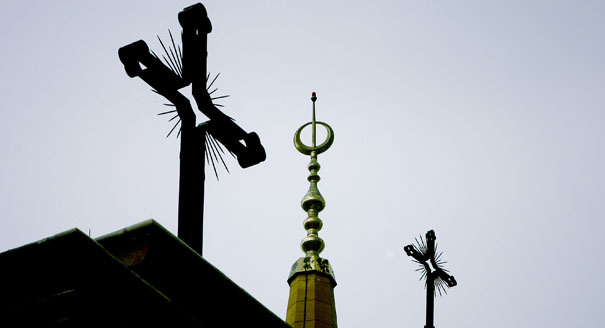
Kansas Governor Sam Brownback’s uncompromising social conservatism may threaten the continued success of U.S. religious diplomacy.
Source: World Politics Review
Religious freedom occupies a complicated place in the halls of U.S. diplomacy. Congress imposed the Office of International Religious Freedom on the State Department in 1998 due to concerns that the Clinton administration was failing to adequately address the plight of religious communities around the world, specifically Christian communities. Because of constitutional restrictions, the U.S. ambassador-at-large for international religious freedom must walk a fine line between being a forceful advocate for religious groups, while being careful not to support one particular religion over any others.
In late July, President Donald Trump selected Kansas Gov. Sam Brownback, a staunch social conservative, to be the new ambassador for international religious freedom. In accepting the nomination, Brownback tweeted: “Religious freedom is the first freedom. The choice of what you do with your own soul. I am honored to serve such an important cause.”
The selection of Brownback is a troubling one. He has been front and center in America’s culture wars, his tenure as Kansas governor defined by one controversy after another. Brownback signed a religious freedom bill that critics maintained would permit discrimination against LGBT students and other minority groups at public universities. He slashed education funding so severely that the Kansas Supreme Court ruled that public education spending was “unconstitutionally low.” He made Kansas the first state to withdraw from a federal refugee program, citing unfounded “security risks.” Unsurprisingly, Brownback ranks as one of the least popular governors in the country, with a disapproval rating hovering around 66 percent.
He may now have an off-ramp in the State Department. But the ambassador for international religious freedom is an exceedingly complex and difficult job; its mandate is expansive but the actual authority is limited. When Congress first established the position in 1998, diplomats viewed it with some skepticism. They quietly carped that it would merely duplicate the regular work of regional bureaus and country ambassadors.
Over time, though, the Office of International Religious Freedom has gained credibility and proven its worth. It has enabled the development of longer-term knowledge, expertise and relationships on key issues and with leading religious figures who are critical to U.S. interests. The religious dimension to diplomacy is vital, but it is also an area that has traditionally been misunderstood and underutilized at the State Department.
Take the influential role the Vatican plays in foreign policy. Pope Francis has been involved in everything from brokering negotiations to help ease the political crisis in the Democratic Republic of Congo to maintaining a backdoor channel with Iran and Russia to address the persecution of minority religious communities caught in Syria’s war. In fact, the Vatican helped initiate one of the Obama administration’s signature diplomatic breakthroughs: the opening to Cuba. These types of relationships do not develop accidentally. Having a credible religious freedom ambassador in place has helped pave the way for these partnerships.
The ambassador also serves as an early trip-wire, spotlighting issues that otherwise may escape the attention of overextended policymakers, such as the plight of Iraq’s Yazidi community in 2014. As the Islamic State swept through Iraq that summer, the Yazidi minority found itself caught in the crosshairs of extremists who considered them “infidels” to be converted, enslaved or killed.
Amid the broader chaos of Iraq, U.S. policymakers were initially slow to recognize the urgency of the crisis, as some 50,000 Yazidis fled their villages in the Nineveh plains of northern Iraqi and headed to nearby Mount Sinjar to seek refuge. David Saperstein, the U.S. ambassador for religious freedom at the time, played an integral role in making the case both within and outside the Obama administration for a military intervention, arguing that the Yazidis faced imminent genocide at the hands of the Islamic State. When the U.S. subsequently launched air strikes against the Islamic State, it bought crucial time for Kurdish forces to safely evacuate the majority of the Yazidis.
In other words, the religious freedom office matters quite a bit when it comes to advancing U.S. diplomatic interests and protecting persecuted communities around the world. This is a serious office that demands a credible leader.
There is more to Brownback’s record than the slash-and burn-policies he backed as governor of Kansas. Before he became governor, he was known for being a go-to senator willing to take a stand on tough human rights issues. He was a leading proponent of intervening in Darfur to stop the genocide. He introduced the Congo Conflict Minerals Act in 2009, requiring conflict-free mineral certification. And he was one of the original sponsors of the International Religious Freedom Act that established the ambassadorship. He was willing to work with and listen to a variety of viewpoints to achieve progress on issues he cared about.
Which Brownback would emerge as ambassador—the uncompromising conservative firebrand, or a moral advocate for human rights? If he’s confirmed, three big questions could determine Brownback’s success in the job.
First, will Brownback focus primarily on protecting the rights of Christians, or does he intend to stand up for all beliefs—even the rights of atheists—when these groups face discrimination or harassment? As the State Department affirms, the ambassador-at-large is responsible for promoting “freedom of religion and conscience throughout the world as a fundamental human right” for all beliefs, not just for one particular faith. The credibility of the role depends on maintaining an unbiased perspective. If foreign governments believe the ambassador is only interested in defending Christians, it will devalue the entire enterprise.
Second, can Brownback reconcile his social conservative ideology with the requirements of the job? He has signed legislation in Kansas that upholds specific religious beliefs over other freedoms. He has sponsored efforts that have opened the door to discriminatory policies against the LGBT community and others. He has also demonstrated a marked distaste for compromise, seeking out and inflaming confrontation on multiple issues. In contrast, the ambassadorial role demands flexibility and the ability to listen to other viewpoints and find common ground. Will Brownback shift from being a moralizing proselytizer of Christian values to serving as an independent advocate and defender of religious freedom worldwide?
Third, how does Brownback intend to promote human rights under a secretary of state who appears reluctant to support such values in U.S. foreign policy? As Rex Tillerson explicitly stated in his department-wide address in May, “I think it is really important that all of us understand the difference between policy and values.” More recently, reports have surfaced that the State Department removed “just” and “democratic world” from its list of foreign policy objectives. In the face of such hesitance by senior leadership, does Brownback have the political capital to convince foreign governments that values still matter in the Trump administration?
When Congress passed the International Religious Freedom Act, it sent a clear signal that the U.S. was committed to fighting discrimination and prejudice worldwide. Honoring that legacy is part of the job of the ambassador-at-large, which is too important to U.S. interests to wither away. But religious freedom cannot operate in a vacuum; it is part of the State Department’s broader human rights agenda. That’s why a nominee for assistant secretary to lead the State Department’s Bureau of Democracy, Human Rights and Labor should be forthcoming, too. If there is no internal leadership on human rights, then these collective efforts will falter.

Director and Senior Fellow, Democracy, Conflict, and Governance Program
Steve Feldstein is a senior fellow and director of the Democracy, Conflict, and Governance Program at the Carnegie Endowment for International Peace. His research focuses on technology, national security, the global context for democracy, and U.S. foreign policy.
Recent Work
Sophia Besch, Eric Ciaramella, Steve Feldstein, …
Steve Feldstein
Carnegie does not take institutional positions on public policy issues; the views represented herein are those of the author(s) and do not necessarily reflect the views of Carnegie, its staff, or its trustees.

But their "principal to principal" model will only be as effective as the political strength of each leader back home.

Damien Ma

U.S. unpredictability has allowed China to capitalize on its positioning as the “responsible great power”. Paradoxically, the more China wins the perception game, the more likely expectations will rise for Beijing to deliver not just words but to demonstrate with its deeds.

Chong Ja Ian

Hanoi and Beijing have long treated each other as distant cousins rather than comrades in arms. That might be changing as both sides draw closer to hedge against uncertainty and America’s erratic behavior.

Nguyễn Khắc Giang

Across Asia, China is better positioned to withstand energy shocks from the fallout of the Iran war. Its abundant coal capacity can ensure stability in the near term. Yet at the same time, the country’s energy transition away from coal will make it even less vulnerable during the next shock.
Damien Ma

Malaysia’s chairmanship sought to fend off short-term challenges while laying the groundwork for minimizing ASEAN’s longer-term exposure to external stresses.

Elina Noor