

Commentary
Mikhail Korostikov
{
  "authors": [
    "Mikhail Korostikov"
  ],
  "type": "commentary",
  "centerAffiliationAll": "",
  "centers": [
    "Carnegie Endowment for International Peace",
    "Carnegie Russia Eurasia Center"
  ],
  "collections": [],
  "englishNewsletterAll": "",
  "nonEnglishNewsletterAll": "",
  "primaryCenter": "Carnegie Russia Eurasia Center",
  "programAffiliation": "",
  "programs": [],
  "projects": [],
  "regions": [
    "Russia"
  ],
  "topics": [
    "Foreign Policy",
    "Economy"
  ]
}
Source: Getty
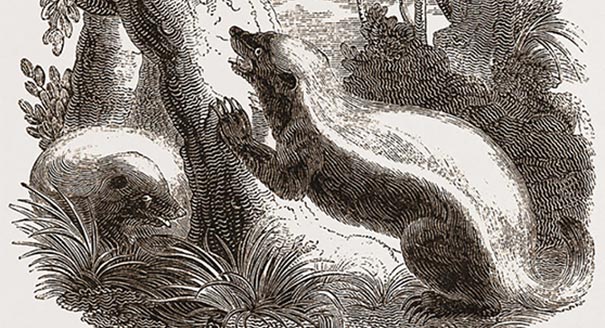
It claws and gnashes well above its weight. It can't kill a lion or an alligator, but it won't run away from them either. The honey badger is Russia in 2017.
Source: BuzzFeed
Critics often claim that Russian foreign policy lacks strategic calculation or even concrete plans for the next decade. But over the past three years, Russia has actually developed a comprehensive foreign policy strategy — it just doesn’t look like what the critics expect.
In fact, it looks more like something you might have seen roaming through a viral video at some point from 2011 onward: the honey badger. Honey badger don’t give a shit, the video told us, as it gnashed its way through anything that got in its way. Moscow's foreign policy could be termed the Honey Badger Doctrine.
The highly intelligent and ferocious honey badger claws and bites far above its weight. Unlike other animals its size, the honey badger can attack beasts which, at first glance, should pose an enormous threat — lions, tigers, and even alligators. While it cannot kill these much larger predators, it can usually repel them from its territory. The honey badger also has a wonderful memory: It remembers those who have offended it and takes revenge.
It’s not difficult to see how the Kremlin’s foreign policy resembles this animal. Russia faces no credible threat of invasion from any of its neighbors. But the Russian elite fears other forms of subjugation: economic control or the imposition of a puppet government. As a result, Russia aims to demonstrate to the West that, despite its limited capabilities, it is not to be trifled with.
Specifically, the Kremlin is pursuing five basic goals. The first is to show that Russia is an international super heavyweight, in the same league as the United States and the European Union. Moscow can form its own trade bloc (the Eurasian Union), start a conflict (Ukraine), and become a key player in an existing conflict (Syria). Like a honey badger, it is not afraid to confront serious opponents.
That aggressive posture belies a less impressive reality. The Russian government budget — $233 billion in 2016 — is significantly lower than the American budget of $3.3 trillion, and absurdly small compared to the EU budget of 6.4 trillion euros. The Russian military budget is similarly dwarfed. In 2016, the United States allocated $611 billion for the armed forces, according to the Stockholm International Peace Research Institute. In 2015, the EU nations allocated €199 billion, according to the European Defense Agency. By contrast, Russia spent only $69 billion. But to the Kremlin, financial indicators mean nothing. Thanks to an advanced weapons industry, Russia’s political and military capabilities are much higher than its economic potential.
Russia’s second objective is to demonstrate that it can make life difficult for its opponents. The Kremlin has frustrated Western plans to remove Syria’s Bashar al-Assad from power and resolve the Ukrainian conflict in Kiev’s favor. It has also funded fringe political parties in Europe. Such parties have little shot at coming to power, but their marginal successes worry traditional politicians. The Kremlin’s message here is simple: If you cross us, there will be consequences.
Moscow’s third task is to start creating a Russian agenda in international relations. After long facing accusations of passivity, Moscow has now clearly gone on the offensive. Whether real or perceived, the Kremlin’s interference in a dozen countries’ political processes has seized media narratives in Europe and North America. The practical results of this interference are minimal, but hysterical Western politicians have effectively cast the Kremlin as virtually all-powerful.
Fourth, Russia wants to appear capable of advanced information and cyberwarfare. Compared to Western television channels, RT’s budget is laughable: $323 million versus the BBC’s $6.6 billion in revenue for 2015–2016. Analysts emphasize that RT reaches, at most, a paltry 2% of the audience in any EU nation. Yet Western governments and international organizations are now creating endless “commissions against disinformation.”
In cyberspace, Russia reportedly hacked the US elections, the German Parliament, and Denmark’s Defense Ministry. Its hackers also supposedly helped the Brexit campaign. The hacking groups Cozy Bear and Fancy Bear, allegedly administered by Russian intelligence agencies, have become household names. Clearly, Russia’s limited expenditures have a huge effect.
Finally, Moscow’s fifth task is to show that it is completely invulnerable to blowback from its citizens. The Kremlin has demonstrated that Western sanctions will have no effect on its actions. All the costs will be passed on to a politically passive population, and blacklisted officials will continue to live like Middle Eastern royalty.
The Honey Badger Doctrine has its own goals. First, Moscow wants to convince its competitors that the benefits of attacking its vital interests do not outweigh the potential damage. Russia never forgets, doesn’t forgive, and is ready to launch a counterattack. Secondly, Russia wants to demonstrate that attempts to influence its internal politics —particularly through “sponsoring democracy”— are completely useless. The only way forward is to negotiate with the elite, recognize Russia’s interests, and try to establish constructive relations.
As a foreign policy, the Honey Badger Doctrine is quite effective. While extremely modest by international standards, it produces a powerful and lasting effect. Moreover, Western media turn minor stories — Russian trolls purchasing Facebook ads or US politicians meeting with the Russian ambassador — into veritable James Bond thrillers that ultimately help Russia.
As a result, the Russian political class is gradually getting what it always wanted: recognition as a highly dangerous opponent. It is easy to threaten war with Saddam Hussein or Muammar Gaddafi. But it’s much more difficult to turn those threats on Russia, an enormous and militarily advanced state with a leadership ready to “defend national interests” down to the last Russian.
That’s not to say there aren’t downsides to the Honey Badger Doctrine. It is, after all, a strategy of survival, not development. It does nothing to attract investment, improve the business climate, or create a positive image of the country. Russia needs economic cooperation with the West to modernize. But that would mean losing total autonomy, which the elite understand as “sovereignty.” That is unacceptable for Russia.
Additionally, the Honey Badger Doctrine won’t work forever. Over time, opponents will learn to recognize and even predict Moscow’s moves. Western intelligence agencies will get used to identifying trolls and hackers. Political actors accused of ties with Moscow will leave the stage.
Finally, the West’s institutional memory works against Moscow. Faced with a Russian honey badger, NATO generals will rebuild bunkers, dust off Cold War game plans, and exhale with relief. Their priorities will shift from other pressing national security issues to “counteracting Russia Today” and defending Poland from Russian tanks.
In this regard, the Honey Badger Doctrine is completely capable of extracting a superficial respect from Russia’s international partners. But it can only bring prosperity to the country if enacted as part of a broader strategy. Moscow must now transform the fear it has sown in the West into true respect, not a desire to simply isolate Russia.

Sinologist
Recent Work
Mikhail Korostikov
Mikhail Korostikov
Carnegie does not take institutional positions on public policy issues; the views represented herein are those of the author(s) and do not necessarily reflect the views of Carnegie, its staff, or its trustees.

China’s banking crisis in the 2000s was resolved by transferring the costs to households through financial repression—a decision that recapitalized the banks while exacerbating the structural imbalances that continue to shape the Chinese economy today.

Michael Pettis

But their "principal to principal" model will only be as effective as the political strength of each leader back home.

Damien Ma

U.S. unpredictability has allowed China to capitalize on its positioning as the “responsible great power”. Paradoxically, the more China wins the perception game, the more likely expectations will rise for Beijing to deliver not just words but to demonstrate with its deeds.

Chong Ja Ian

Hanoi and Beijing have long treated each other as distant cousins rather than comrades in arms. That might be changing as both sides draw closer to hedge against uncertainty and America’s erratic behavior.

Nguyễn Khắc Giang

Across Asia, China is better positioned to withstand energy shocks from the fallout of the Iran war. Its abundant coal capacity can ensure stability in the near term. Yet at the same time, the country’s energy transition away from coal will make it even less vulnerable during the next shock.
Damien Ma