

Commentary
Michael Pettis
{
  "authors": [
    "Michael Pettis"
  ],
  "type": "legacyinthemedia",
  "centerAffiliationAll": "dc",
  "centers": [
    "Carnegie Endowment for International Peace"
  ],
  "collections": [],
  "englishNewsletterAll": "asia",
  "nonEnglishNewsletterAll": "",
  "primaryCenter": "Carnegie Endowment for International Peace",
  "programAffiliation": "AP",
  "programs": [
    "Asia"
  ],
  "projects": [],
  "regions": [
    "North America",
    "United States",
    "East Asia",
    "China"
  ],
  "topics": [
    "Economy",
    "Trade"
  ]
}
Source: Getty
The United States has to address its role in absorbing global capital if it wants to resolve trade deficits.
Source: Bloomberg
Donald Trump's administration this week announced new tariffs on solar panels and washing machines. It has hinted at more to come. The rationale for these measures is that they'll reduce American trade deficits—in particular, the widening deficit with China—and thus benefit the U.S. economy. Rather than take Washington’s assumptions at face value, however, we must consider how protectionism affects capital flows.
Policy makers largely ignore the indirect impact of trade intervention on capital. But what happens to capital is ultimately what will determine how these measures affect the economy.
Consider the case with China. If protectionist measures did in fact cause China's trade surplus with the U.S. to drop, there are broadly three ways it could happen. Chinese investment flows to the U.S. could remain unchanged. They could drop. Or they could rise.
In the first case, America's trade deficit with the world would remain unchanged as a portion of its deficit with China would simply shift to other countries. This may seem counter-intuitive, but if Chinese exporters sent as much capital to the U.S. as before, the resulting effects on the economy—on the dollar, interest rates, lending standards and so on—would keep the deficit as high as ever, with no change in U.S. debt or unemployment.
In the second case, if protectionist measures disrupted China's capital exports, its capital deficit and trade surplus would then decline, as would the U.S. capital surplus and trade deficit. This would result in a reduction in America's overall trade deficit, underpinned either by lower debt or lower unemployment.
In the third case, finally, protectionist actions might result in increased Chinese capital exports to the U.S. In that event, even as China’s trade surplus with the U.S. fell, America's deficit with other countries would rise by even more, increasing its overall trade deficit, underpinned this time either by rising debt or rising unemployment.
Much of the debate over Trump's trade policy seems to miss the point that the economic effects of any trade measure depend on how it affects capital. This is because policy makers assume that capital flows simply respond to changes in trade. Although this was true for most of modern history, it no longer is—and hasn't been for more than five decades.
For centuries, capital flows were quite small and consisted mainly of trade finance, with the capital account adjusting automatically to changes in the trade account. That made predicting the consequences of protectionist measures easy: They would reduce the bilateral trade deficit and thus the overall deficit.
But it no longer works that way. Global capital flows are now huge and driven mainly by the independent decisions of millions of investors in the U.S. and abroad. Because the capital and trade accounts must still balance to zero, however, the direct impact of intervention is usually subsumed under the indirect effects on capital flows.
So what are the consequences for current policy?
Protectionist measures may indeed directly affect bilateral trade. But if America's capital inflows rise, so must its overall trade deficit. This is because higher inflows will cause adjustments in the economy—potentially including lower credit card rates, a stronger dollar, weaker lending standards, higher unemployment and surging asset markets—that cumulatively cause savings to drop and force the overall deficit to rise, even as the deficit with China falls.
Why might protectionist measures increase capital inflows into the U.S.? If they increased financial and economic uncertainty in China, they could cause Chinese capital flight to increase sharply. By raising American growth prospects, they could also boost capital inflows into the U.S.
What's important to recognize is that the deep trade imbalances afflicting the U.S. in recent years mainly reflect the impunity with which other countries exploit access to its capital account. Capital markets in the U.S. are deep, flexible and completely open, making it easy for countries that aim to run trade surpluses to park their excess savings there.
As a result, the U.S. is forced to absorb roughly half the world's excess savings. Even though American businesses are sated with cheap capital, and sit on hoards of unused cash, money is still pouring into the U.S. and forcing its capital account into surplus. It thus has no choice but to run a trade deficit.
Rather than intervene directly, only to undermine global trade and worsen these imbalances, Washington must address the role the U.S. plays in absorbing global capital. This is the only way to resolve American trade deficits.

Nonresident Senior Fellow, Carnegie China
Michael Pettis is a nonresident senior fellow at the Carnegie Endowment for International Peace. An expert on China’s economy, Pettis is professor of finance at Peking University’s Guanghua School of Management, where he specializes in Chinese financial markets.
Recent Work
Michael Pettis
Michael Pettis
Carnegie does not take institutional positions on public policy issues; the views represented herein are those of the author(s) and do not necessarily reflect the views of Carnegie, its staff, or its trustees.

The Plaza Accord was not an externally imposed punishment of Japan but part of a broader restructuring that Japanese economists and policymakers themselves recognized was necessary. Its effects were undermined, however, when Tokyo responded to the resulting slowdown with policies that exacerbated investment, credit expansion, and the very imbalances the adjustment was intended to resolve.
Michael Pettis

The nuclear relationship between China and the United States is increasingly shaped by widening perception gaps rather than deliberate strategic design.

Tong Zhao
China’s banking crisis in the 2000s was resolved by transferring the costs to households through financial repression—a decision that recapitalized the banks while exacerbating the structural imbalances that continue to shape the Chinese economy today.
Michael Pettis

Chinese biotech companies have been on the receiving end of U.S. economic coercion. Yet their responses have differed significantly because firm and state interests are not uniformly aligned. For Washington, treating all Chinese tech firms the same, irrespective of their actual interests, risks pushing them farther into Beijing’s corner.

Xue Gong
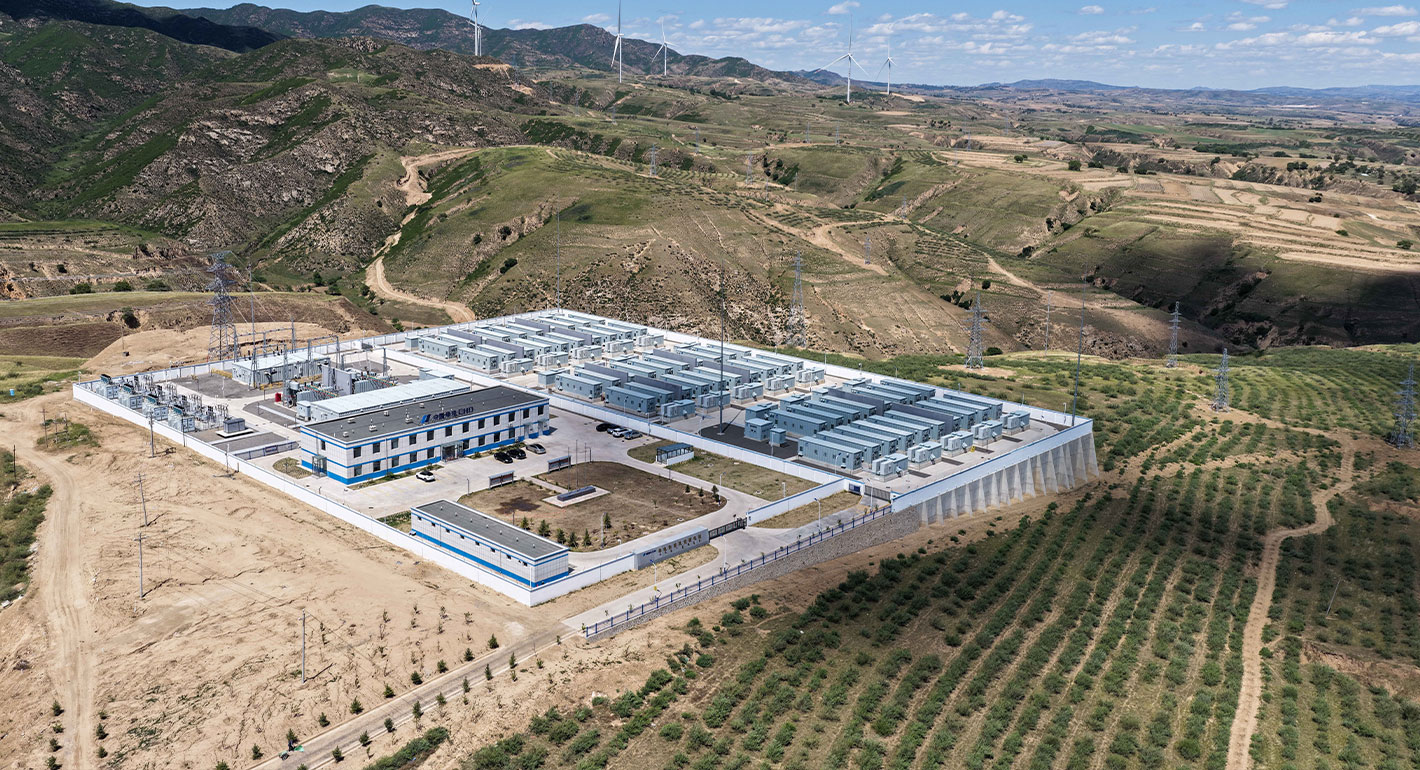
China’s latest energy plan explicitly calls for integrating data centers into the electricity system, particularly connecting them to green energy. It appears Beijing wants to use compute as a source of domestic demand to absorb renewables excess capacity.

Damien Ma