

Commentary
Dmitri Trenin
{
  "authors": [
    "Dmitri Trenin"
  ],
  "type": "legacyinthemedia",
  "centerAffiliationAll": "",
  "centers": [
    "Carnegie Endowment for International Peace",
    "Carnegie Russia Eurasia Center"
  ],
  "collections": [],
  "englishNewsletterAll": "",
  "nonEnglishNewsletterAll": "",
  "primaryCenter": "Carnegie Russia Eurasia Center",
  "programAffiliation": "",
  "programs": [],
  "projects": [],
  "regions": [
    "North America",
    "United States",
    "East Asia",
    "China",
    "Russia",
    "North Korea"
  ],
  "topics": [
    "Foreign Policy"
  ]
}
Source: Getty
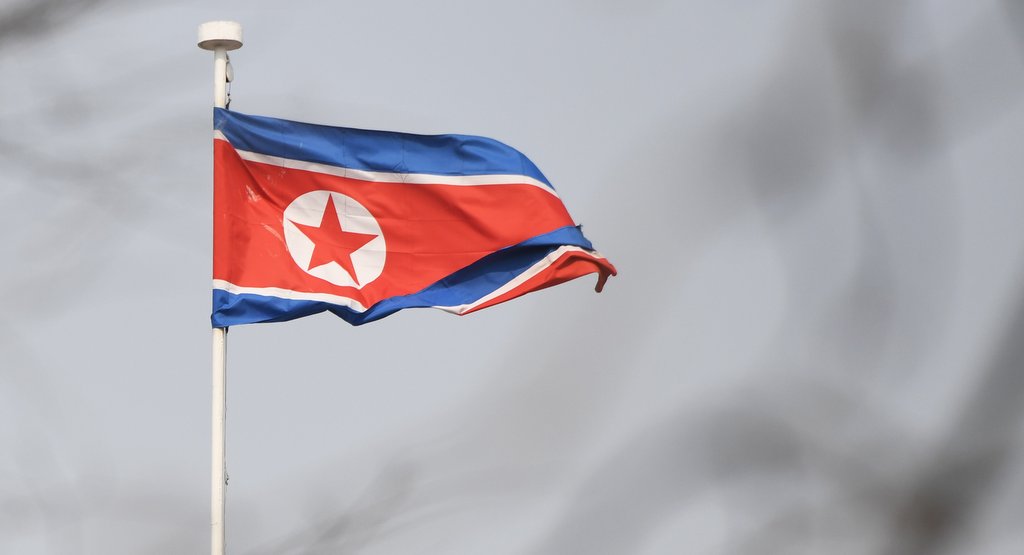
With US-Russian relations already confrontational and Sino-US relations becoming visibly more tense, the context for major power interaction on the North Korean nuclear issue has substantially changed from what it was only five years ago.
Source: Global Times
With Donald Trump's acceptance of Kim Jong-un's offer of a summit meeting in May, all eyes are on Washington and Pyongyang. The two leaders' meeting if it takes place can be an inflection point in the Korean nuclear saga, the choice being between charting a path to some kind of a negotiated arrangement — or sliding back to high tension, even war. However, the US and North Korea are not the only actors in this drama. Only recently, Americans expected China to deliver North Korea to them and urged Russia to support harsher sanctions against North Korea at the UN Security Council, while US allies South Korea and Japan sided with Washington to take a hard line toward Pyongyang. Much of this has now changed, but the wider international context still matters ahead of the proposed Trump-Kim summit, and will matter even more after it is over.
The international setting for dealing with the North Korean nuclear issue is a three-tier framework, each tier consisting of two players. At the core of the issue is the relationship between the two main antagonists: North Korea and the US. In the final analysis, decisions of principle will have to be taken by these two. Next come China and South Korea. The former has the most leverage on the North as its largest trading partner, whose hardening of position last fall resulted for the first time in real pressure being applied on Pyongyang. South Korea is key for both material incentives and disincentives provided to the North. The last pair is Russia and Japan. Tokyo is the main US ally in the region, and Moscow occupies a pivotal position as both a UN Security Council permanent member and a direct neighbor of North Korea, and has demonstrated its resolve to resist those US policies which it sees as damaging to its own interests or international stability and security.
Seoul and Tokyo, of course, closely coordinate their actions with Washington. Beijing and Moscow coordinate between the two of them. Recently, they came up with a joint initiative for easing tensions on the Peninsula, and now they welcome the inter-Korean and the US-North Korea summits. China and Russia oppose Pyongyang-driven nuclear proliferation in Northeast Asia, as it threatens war on their doorstep: the front door for Beijing and the back door for Moscow. They also blame the US for its share of provocations. The US has rejected the Sino-Russian peace initiative and, moreover, has now officially designated China and Russia as adversaries. Influential figures in the US foreign and defense policy establishment go even further and view North Korea as a relatively minor issue. To them, the real problem for the US in Asia is called China.
With US-Russian relations already confrontational and Sino-US relations becoming visibly more tense, the context for major power interaction on the North Korean nuclear issue has substantially changed from what it was only five years ago. A degree of major power collaboration is essential for averting the danger of war on the Korean Peninsula. Few if any observers expect a smooth and speedy resolution of the problem as a result of the Trump-Kim get-together. Kim Jong-un of course has uttered the word "denuclearization," but North Korea's nuclear capabilities and its missile fleet remain the only real guarantee of the country's security. To Kim, his reference to "denuclearization" is akin to the 50-year-old solemn pledge of the established nuclear powers, including the US and Russia, under the 1968 Non-Proliferation Treaty, to eventually give up their nuclear weapons.
For the US, accepting North Korea as only a third country after Russia and China, that can practice effective nuclear deterrence against the US, remains unacceptable. Americans will continue pushing Pyongyang toward complete, verifiable and irreversible nuclear disarmament, while the North Koreans will be seeking to trade individual subcritical concessions on their part for the easing of sanctions — while gaining time to perfect their technology even without testing, and waiting to see the back of Donald Trump and to engage with a more predictable, less gung-ho US president who would not threaten war so bluntly — and so credibly.
It is there that the role of Russia and China will be crucial. Will they earnestly pursue the stated goal of a nuclear-free Korean Peninsula or would they bow to the realities and tacitly accept Pyongyang's nuclear missiles — as the world, including the US, has accepted those of India and Pakistan? If it is the latter, will they seek a modicum of stability in Northeast Asia based on limiting some North Korean weapons programs and a degree of transparency by Pyongyang and a reciprocal measure of restraint exercised by the US? To this author, that looks the best option available.
Such a view, however, will hardly be widely shared in the US. What will Beijing and Moscow do if Washington rejects anything that falls short of North Korea dismantling its arsenal of deterrence and reverts to the policy of military threats against Pyongyang? Trump, who has quickly embraced Kim's offer of direct talks, may also change gears abruptly, preparing to strike. To the embattled US president, whose strategy is living through the day, any distraction from his domestic woes — be it peace or war — can look like a much-needed respite. Vladimir Putin and Xi Jinping have a big issue on their hands and they cannot simply sit back and relax, hoping that Trump and Kim will make up.
Former Director, Carnegie Moscow Center
Trenin was director of the Carnegie Moscow Center from 2008 to early 2022.
Recent Work
Dmitri Trenin
Dmitri Trenin
Carnegie does not take institutional positions on public policy issues; the views represented herein are those of the author(s) and do not necessarily reflect the views of Carnegie, its staff, or its trustees.

China’s political future will be shaped between now and next October. As the Communist Party enters its intense “campaign season” to prepare for a major political transition in 2027, reading Beijing's actions and responses may become more difficult as domestic politics weigh on its behavior more than usual.

Damien Ma
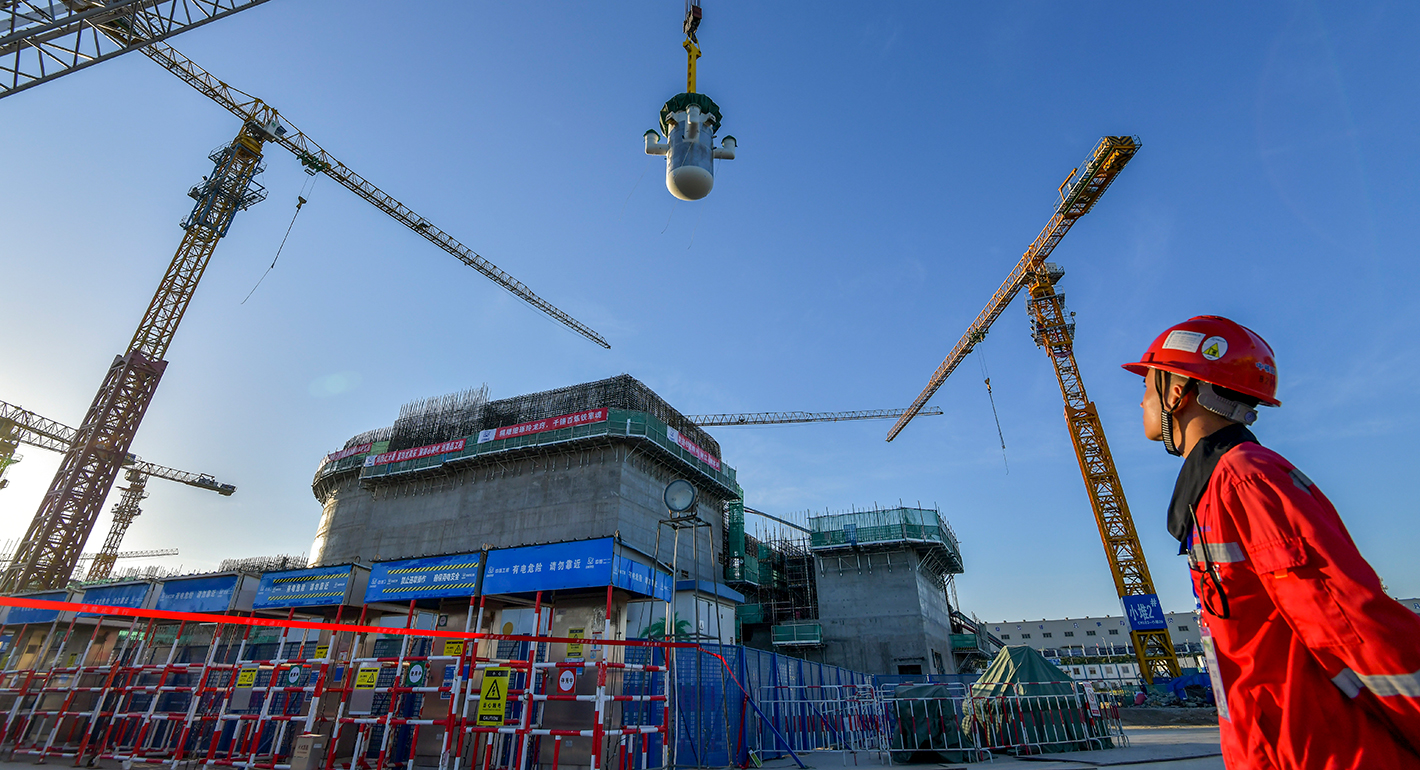
China has showcased its engineering prowess with small modular reactor demonstration projects. But turning these technological achievements into commercial success will be a greater challenge.

Tong Zhao

The Plaza Accord was not an externally imposed punishment of Japan but part of a broader restructuring that Japanese economists and policymakers themselves recognized was necessary. Its effects were undermined, however, when Tokyo responded to the resulting slowdown with policies that exacerbated investment, credit expansion, and the very imbalances the adjustment was intended to resolve.

Michael Pettis

The nuclear relationship between China and the United States is increasingly shaped by widening perception gaps rather than deliberate strategic design.
Tong Zhao
China’s banking crisis in the 2000s was resolved by transferring the costs to households through financial repression—a decision that recapitalized the banks while exacerbating the structural imbalances that continue to shape the Chinese economy today.
Michael Pettis