

Commentary
Katherine Charlet, Danielle Citron
{
  "authors": [
    "Katherine Charlet"
  ],
  "type": "legacyinthemedia",
  "centerAffiliationAll": "dc",
  "centers": [
    "Carnegie Endowment for International Peace"
  ],
  "collections": [],
  "englishNewsletterAll": "ctw",
  "nonEnglishNewsletterAll": "",
  "primaryCenter": "Carnegie Endowment for International Peace",
  "programAffiliation": "TIA",
  "programs": [
    "Technology and International Affairs"
  ],
  "projects": [],
  "regions": [
    "North America",
    "United States",
    "Russia",
    "Iran"
  ],
  "topics": [
    "Security",
    "Foreign Policy",
    "Technology"
  ]
}
Source: Getty
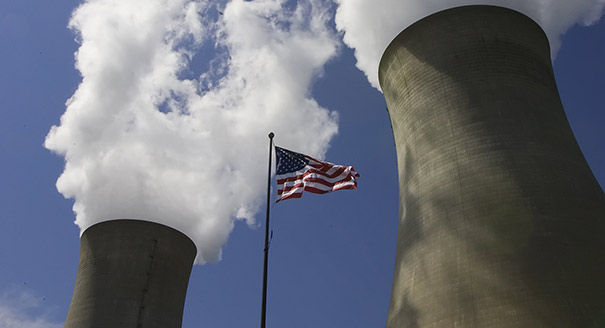
One genuine piece of news behind the U.S. sanctions against Russian individuals and organizations is the attribution to Russia of a hacking campaign that has targeted critical U.S. infrastructure.
Source: Axios
One genuine piece of news behind the U.S. sanctions against Russian individuals and organizations is the attribution to Russia of a cyberhacking campaign that has targeted critical U.S. infrastructure.
The details: Per the Treasury Department’s statement, “Since at least March 2016, Russian government cyber actors have also targeted … the energy, nuclear, commercial facilities, water, aviation and critical manufacturing sectors.”
The Department of Homeland Security has previously reported on cyber intrusions into critical infrastructure but has only identified an “Advanced Persistent Threat” without pointing the finger at a suspected culprit. In a move surely coordinated with Treasury’s announcement, the DHS updated its alert to note the Russian attribution and describe a “multi-stage campaign” into energy sector networks that included collection of “information pertaining to Industrial Control Systems.”
Why it matters: This attribution reinforces the need to secure critical infrastructure and continues a series of actions that have picked up steam since Homeland Security Advisor Tom Bossert told an audience last June that the U.S. government would “call out bad behavior and impose costs on our adversaries.” These include removal of Kaspersky from U.S. government systems, special counsel indictments,naming-and-shaming of Russia for the NotPetya attacks and this week’s sanctions and attribution.
What's next: These moves aren’t yet enough to stop Russia’s bad behavior. But it’s hard to imagine matters ending here.
Former Director, Technology and International Affairs Program
Katherine Charlet was the inaugural director of Carnegie’s Technology and International Affairs Program.
Recent Work
Katherine Charlet, Danielle Citron
Charlotte Stanton, Vivien Lung, Nancy (Hanzhuo) Zhang, …
Carnegie does not take institutional positions on public policy issues; the views represented herein are those of the author(s) and do not necessarily reflect the views of Carnegie, its staff, or its trustees.

The nuclear relationship between China and the United States is increasingly shaped by widening perception gaps rather than deliberate strategic design.

Tong Zhao

Chinese biotech companies have been on the receiving end of U.S. economic coercion. Yet their responses have differed significantly because firm and state interests are not uniformly aligned. For Washington, treating all Chinese tech firms the same, irrespective of their actual interests, risks pushing them farther into Beijing’s corner.

Xue Gong

China’s latest energy plan explicitly calls for integrating data centers into the electricity system, particularly connecting them to green energy. It appears Beijing wants to use compute as a source of domestic demand to absorb renewables excess capacity.

Damien Ma

But their "principal to principal" model will only be as effective as the political strength of each leader back home.
Damien Ma

U.S. unpredictability has allowed China to capitalize on its positioning as the “responsible great power”. Paradoxically, the more China wins the perception game, the more likely expectations will rise for Beijing to deliver not just words but to demonstrate with its deeds.

Chong Ja Ian