

Other
- +5
Frances Z. Brown, Zainab Usman, Erin Jones, …
{
  "authors": [
    "Aqil Shah"
  ],
  "type": "other",
  "centerAffiliationAll": "dc",
  "centers": [
    "Carnegie Endowment for International Peace"
  ],
  "collections": [],
  "englishNewsletterAll": "ctw",
  "nonEnglishNewsletterAll": "",
  "primaryCenter": "Carnegie Endowment for International Peace",
  "programAffiliation": "SAP",
  "programs": [
    "South Asia"
  ],
  "projects": [],
  "regions": [
    "South Asia",
    "Pakistan"
  ],
  "topics": [
    "Democracy",
    "Security",
    "Military",
    "Foreign Policy",
    "Civil Society",
    "Religion"
  ]
}
Source: Getty
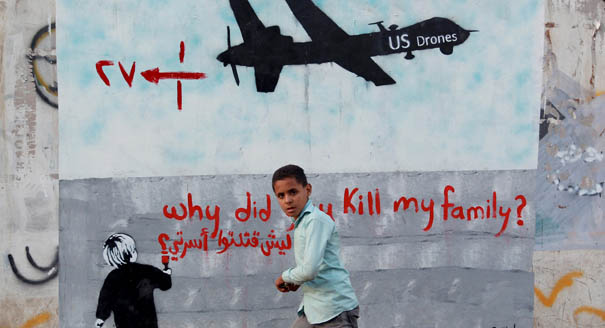
New interview and survey data from Pakistan provide little or no evidence to support the claim that U.S. drone strikes generate blowback and contribute to the radicalization of local populations.
Source: International Security
Many analysts argue that U.S. drone strikes generate blowback: by killing innocent civilians, such strikes radicalize Muslim populations at the local, national, and even transnational levels. This claim, however, is based primarily on anecdotal evidence, unreliable media reports, and advocacy-driven research by human rights groups. Interview and survey data from Pakistan, where, since 2004, the U.S. Central Intelligence Agency has launched more than 430 drone strikes, show little or no evidence that drone strikes have a significant impact on militant Islamist recruitment either locally or nationally. Rather, the data reveal the importance of factors such as political and economic grievances, the Pakistani state's selective counterterrorism policies, its indiscriminate repression of the local population, and forced recruitment of youth by militant groups.
Similarly, trial testimony and accounts of terrorists convicted in the United States, as well as the social science scholarship on Muslim radicalization in the United States and Europe, provide scant evidence that drone strikes are the main cause of militant Islamism. Instead, factors that matter include a transnational Islamic identity's appeal to young immigrants with conflicted identities, state immigration and integration policies that marginalize Muslim communities, the influence of peers and social networks, and online exposure to violent jihadist ideologies within the overall context of U.S. military interventions in Muslim countries.
This article was originally published in International Security.

Former Visiting Scholar, South Asia Program
Aqil Shah was a visiting scholar in the South Asia Program at the Carnegie Endowment for International Peace.
Recent Work


Frances Z. Brown, Zainab Usman, Erin Jones, …
Aqil Shah
Carnegie does not take institutional positions on public policy issues; the views represented herein are those of the author(s) and do not necessarily reflect the views of Carnegie, its staff, or its trustees.

But their "principal to principal" model will only be as effective as the political strength of each leader back home.

Damien Ma

U.S. unpredictability has allowed China to capitalize on its positioning as the “responsible great power”. Paradoxically, the more China wins the perception game, the more likely expectations will rise for Beijing to deliver not just words but to demonstrate with its deeds.

Chong Ja Ian

Hanoi and Beijing have long treated each other as distant cousins rather than comrades in arms. That might be changing as both sides draw closer to hedge against uncertainty and America’s erratic behavior.

Nguyễn Khắc Giang

Across Asia, China is better positioned to withstand energy shocks from the fallout of the Iran war. Its abundant coal capacity can ensure stability in the near term. Yet at the same time, the country’s energy transition away from coal will make it even less vulnerable during the next shock.
Damien Ma

Malaysia’s chairmanship sought to fend off short-term challenges while laying the groundwork for minimizing ASEAN’s longer-term exposure to external stresses.

Elina Noor