

Q&A
Darshana M. Baruah, Satyendra Prasad, Denghua Zhang
{
  "authors": [
    "Darshana M. Baruah"
  ],
  "type": "other",
  "centerAffiliationAll": "",
  "centers": [
    "Carnegie Endowment for International Peace",
    "Carnegie India"
  ],
  "collections": [],
  "englishNewsletterAll": "",
  "nonEnglishNewsletterAll": "",
  "primaryCenter": "Carnegie India",
  "programAffiliation": "",
  "programs": [],
  "projects": [],
  "regions": [
    "South Asia",
    "India",
    "Indo-Pacific"
  ],
  "topics": [
    "Foreign Policy"
  ]
}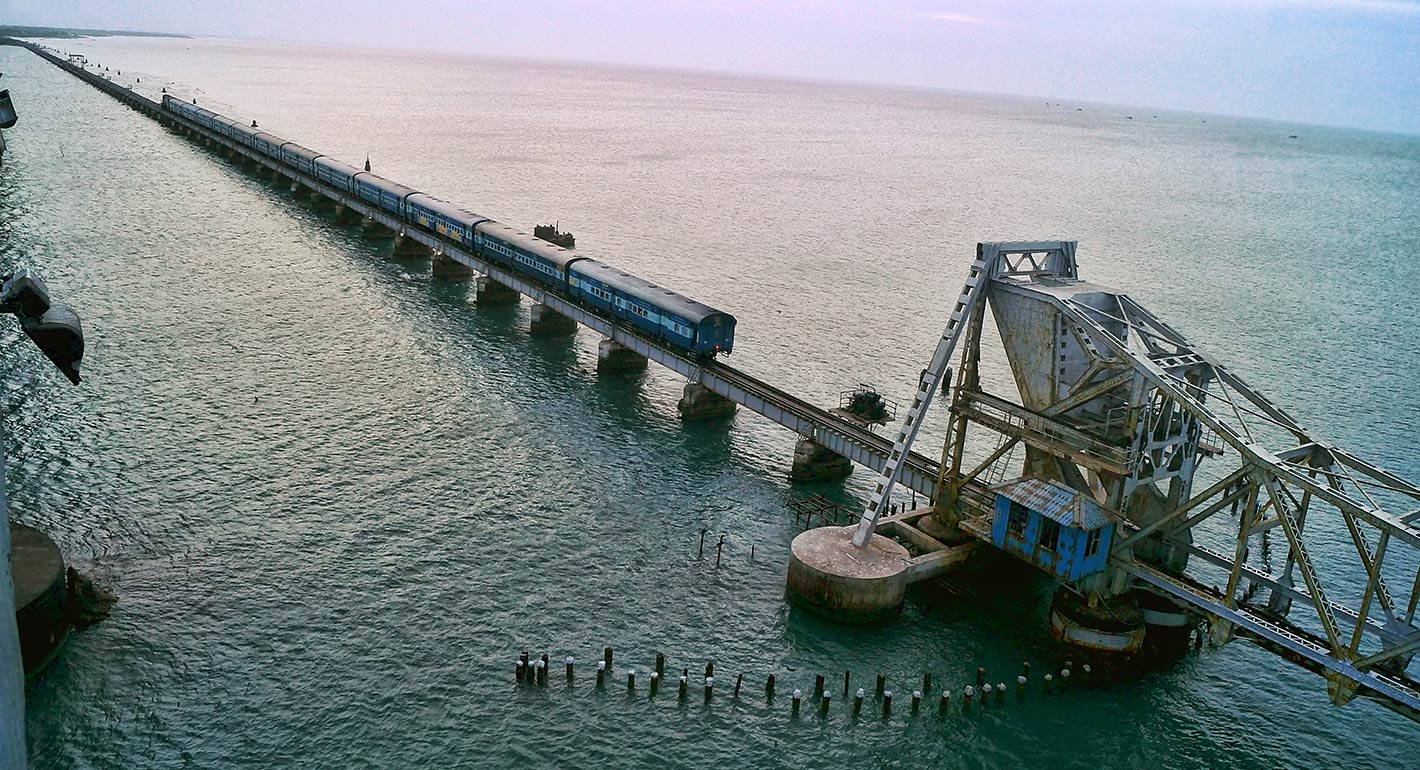
Source: Getty
India's geographic location in the Indian Ocean naturally renders the Indian Navy as one of the key players in the region, and an important partner for the Indian Ocean community to keep the area stable and secure.
Source: Oxford University Press
The Indian Ocean is an area of primary importance to the Indian Navy and instability in the region directly affects India's security environment. India's geographic location in the Indian Ocean naturally renders the Indian Navy as one of the key players in the region and an important partner for the Indian Ocean community to keep the area stable and secure. Compared to the Pacific, the Indian Ocean has previously been fairly free of conflicts and geopolitical competition giving India a sense of security in its Indian Ocean role. New Delhi for far too long has been occupied with troubles along its continental border with limited focus on maritime security. The lack of an interest in developing a coherent maritime security strategy in the Indian defence establishment was aided by a relatively favourable maritime environment. The security environment in the Indian Ocean today, however, is quickly changing with a rise in strategic competition. Recent developments have forced New Delhi to take a fresh look at its maritime strategy, particularly under the current government led by Prime Minister Narendra Modi. This chapter examines enhancing India's maritime domain awareness (MDA) in the Indian Ocean as a part of India's new maritime outlook. It underlines the factors driving this change especially in context of the Sino-Indian relationship. The chapter concludes with a set of recommendations to enhance India's surveillance capabilities in the Indian Ocean region improving its domain awareness.
This book chapter was originally published by the Oxford University Press.

Former Nonresident Scholar, South Asia Program
Darshana M. Baruah was a nonresident scholar with the South Asia Program at the Carnegie Endowment for International Peace where she directs the Indian Ocean Initiative.
Recent Work

Darshana M. Baruah, Satyendra Prasad, Denghua Zhang
Darshana M. Baruah
Carnegie does not take institutional positions on public policy issues; the views represented herein are those of the author(s) and do not necessarily reflect the views of Carnegie, its staff, or its trustees.

U.S. unpredictability has allowed China to capitalize on its positioning as the “responsible great power”. Paradoxically, the more China wins the perception game, the more likely expectations will rise for Beijing to deliver not just words but to demonstrate with its deeds.

Chong Ja Ian

Hanoi and Beijing have long treated each other as distant cousins rather than comrades in arms. That might be changing as both sides draw closer to hedge against uncertainty and America’s erratic behavior.

Nguyễn Khắc Giang

Across Asia, China is better positioned to withstand energy shocks from the fallout of the Iran war. Its abundant coal capacity can ensure stability in the near term. Yet at the same time, the country’s energy transition away from coal will make it even less vulnerable during the next shock.

Damien Ma

Malaysia’s chairmanship sought to fend off short-term challenges while laying the groundwork for minimizing ASEAN’s longer-term exposure to external stresses.

Elina Noor

For Malaysia, the conjunction that works is “and” not “or” when it comes to the United States and China.
Elina Noor