

Paper
- +4
George Perkovich, Ariel (Eli) Levite, Lyu Jinghua, …
{
  "authors": [
    "Lyu Jinghua"
  ],
  "type": "legacyinthemedia",
  "centerAffiliationAll": "dc",
  "centers": [
    "Carnegie Endowment for International Peace"
  ],
  "collections": [
    "Major Power Tech Relations"
  ],
  "englishNewsletterAll": "ctw",
  "nonEnglishNewsletterAll": "",
  "primaryCenter": "Carnegie Endowment for International Peace",
  "programAffiliation": "TIA",
  "programs": [
    "Technology and International Affairs"
  ],
  "projects": [],
  "regions": [
    "North America",
    "United States",
    "East Asia",
    "China",
    "Iran"
  ],
  "topics": [
    "Security",
    "Foreign Policy",
    "Technology"
  ]
}
Source: Getty
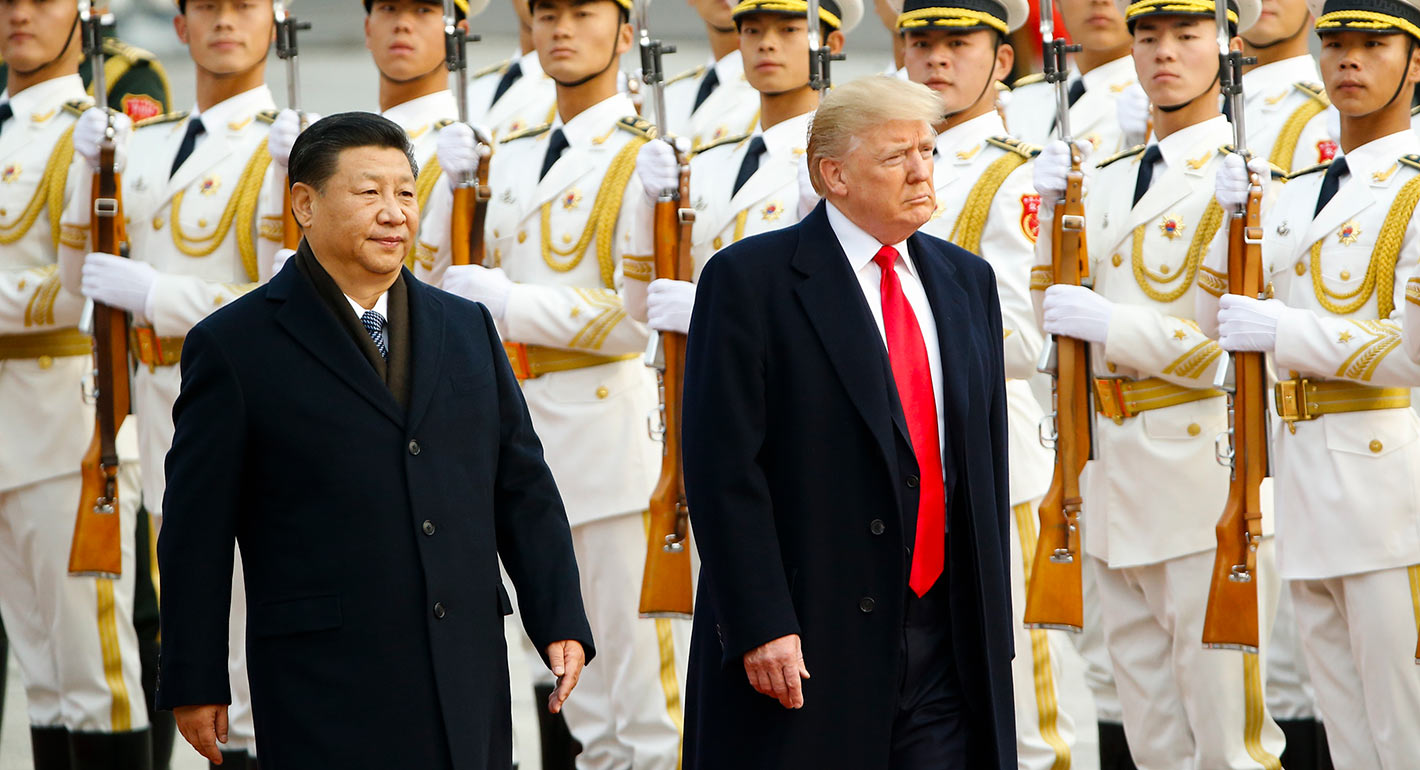
Both China and the United States have vested interests in fighting against cyber crimes, countering cyberterrorism, and promoting cyber norms. But with the rapid deterioration of bilateral relations, the most worrisome are in the security domain.
Source: East Asia Forum
Cyber relations between China and the United States have always been an integral part of the bilateral relationship. As debate on whether the two countries are entering a new Cold War intensifies, similar concerns about their cyber relations are arising: are the two destined for rivalry in the cybersphere? If so, how can cyber conflict be prevented or limited?
Despite some differences in cyberspace, convergent interests have generally been greater than divergent ones between the largest (China) and the most advanced (the United States) cyber powers. Both are tempting targets for malicious actors and vulnerable to destructive cyber attacks. So both have vested interests in fighting against cyber crimes, countering cyberterrorism and promoting cyber norms. These overlapping interests facilitated the successful completion and release of United Nations Group of Government Experts (UN GGE) consensus reports in 2013 and 2015.
But with the rapid deterioration of bilateral relations, there are signs of cyberspace behaviour following suit: less cooperation, more confrontation and higher risk of conflict. Among the potential developments, such as a new technology Cold War or failure to agree on cyber rules, the most worrisome are in the security domain.
US concerns over Chinese military modernisation and issues in the Taiwan Strait, East China Sea, South China Sea and beyond are growing. China holds similar concerns over the United States’ recent assessment that China is its primary security challenge both in a general sense and in cyberspace, and over the change in US policy direction from its ‘pivot to Asia’ to the Indo-Pacific strategy.
If conflict erupts, one of the earliest and most destabilising venues would be conflict in cyberspace. Cyber actions are more inclined to be escalatory due to the difficulties of differentiating intentions and predicting consequences. To prevent such a scenario, several precautionary measures can and should be implemented.
Although there are channels for bilateral communication and coordination, such as the High-Level Joint Dialogue on Cybercrime and Related Issues, the Law Enforcement and Cybersecurity Dialogue, and cooperation between computer emergency response teams (CERTs), they all lack the involvement of militaries. Because of this, they are far from sufficient to avert potentially explosive incidents in the security sphere.
An ongoing bilateral coordination mechanism is urgently needed. The Ministry of National Defense–Department of Defense telephone link was once used to discuss tensions in the South China Sea by the US and Chinese navies. It could be given the same function for communication in cyber crises.
To enhance information sharing and mutual understanding, it is also worth considering how to apply the Memorandum of Understanding on Notification of Major Military Activities in cyberspace. The two sides could explore similar ways of increasing transparency such as briefing each other on their cyber strategy publications, interpreting their cyber doctrines and inviting one another to observe cyber exercises.
The United States and China should exercise self-restraint in cyber conflicts and encourage similar responses from other countries as the foundation for establishing accepted rules of behaviour. To this end, rules prohibiting the use of escalatory, cross-domain deterrence measures — such as the computer worm Stuxnet that was used against Iranian nuclear facilities and the ‘Left of Launch’ cyber efforts to disable the launch of North Korean missiles — require further discussion. As do rules forbidding attacks on specific targets such as critical infrastructure, and rules regarding after-use damage control such as the function of self-destruction mechanisms.
The United States and China already have several agreed crisis management principles in place, such as sending clear signals, avoiding commitment traps and making proportionate responses. Now it is time to think about how to apply these principles in cyberspace. Cyber crisis management should become an important topic in security dialogues at all levels. To start with, think tanks can explore crisis scenarios and management measures by conducting tabletop exercises and relevant discussions.
More importantly, China and the United States need to develop a deeper understanding of one another’s critical interests in cyberspace. Both sides must behave cautiously and maintain strategic constraint to avoid eroding those critical interests, leaving enough space for either side to make concessions and ease tensions.
No matter what suspicions and differences remain, China and the United States can and should seek to cooperate, even as rivals, on conflict prevention in cyberspace.
Former Visiting Scholar, Cyber Policy Initiative
Lyu Jinghua was a visiting scholar with Carnegie’s Cyber Policy Initiative. Her research focuses primarily on cybersecurity and China-U.S. defense relations.
Recent Work


George Perkovich, Ariel (Eli) Levite, Lyu Jinghua, …

Jon Bateman, Lyu Jinghua
Carnegie does not take institutional positions on public policy issues; the views represented herein are those of the author(s) and do not necessarily reflect the views of Carnegie, its staff, or its trustees.

But their "principal to principal" model will only be as effective as the political strength of each leader back home.

Damien Ma

U.S. unpredictability has allowed China to capitalize on its positioning as the “responsible great power”. Paradoxically, the more China wins the perception game, the more likely expectations will rise for Beijing to deliver not just words but to demonstrate with its deeds.

Chong Ja Ian

Hanoi and Beijing have long treated each other as distant cousins rather than comrades in arms. That might be changing as both sides draw closer to hedge against uncertainty and America’s erratic behavior.

Nguyễn Khắc Giang

Across Asia, China is better positioned to withstand energy shocks from the fallout of the Iran war. Its abundant coal capacity can ensure stability in the near term. Yet at the same time, the country’s energy transition away from coal will make it even less vulnerable during the next shock.
Damien Ma
In the latest Five-Year Plan, the Chinese president cements the shift to an innovation-driven economy over a consumption-driven one.
Damien Ma