

Commentary
Marc Pierini
{
  "authors": [
    "Marc Pierini"
  ],
  "type": "other",
  "centerAffiliationAll": "dc",
  "centers": [
    "Carnegie Endowment for International Peace",
    "Carnegie Europe"
  ],
  "collections": [
    "Europe’s Eastern Neighborhood"
  ],
  "englishNewsletterAll": "ctw",
  "nonEnglishNewsletterAll": "",
  "primaryCenter": "Carnegie Europe",
  "programAffiliation": "EP",
  "programs": [
    "Europe"
  ],
  "projects": [],
  "regions": [
    "Russia",
    "Europe",
    "Iran"
  ],
  "topics": [
    "EU",
    "Economy",
    "Climate Change",
    "Foreign Policy"
  ]
}
Source: Getty
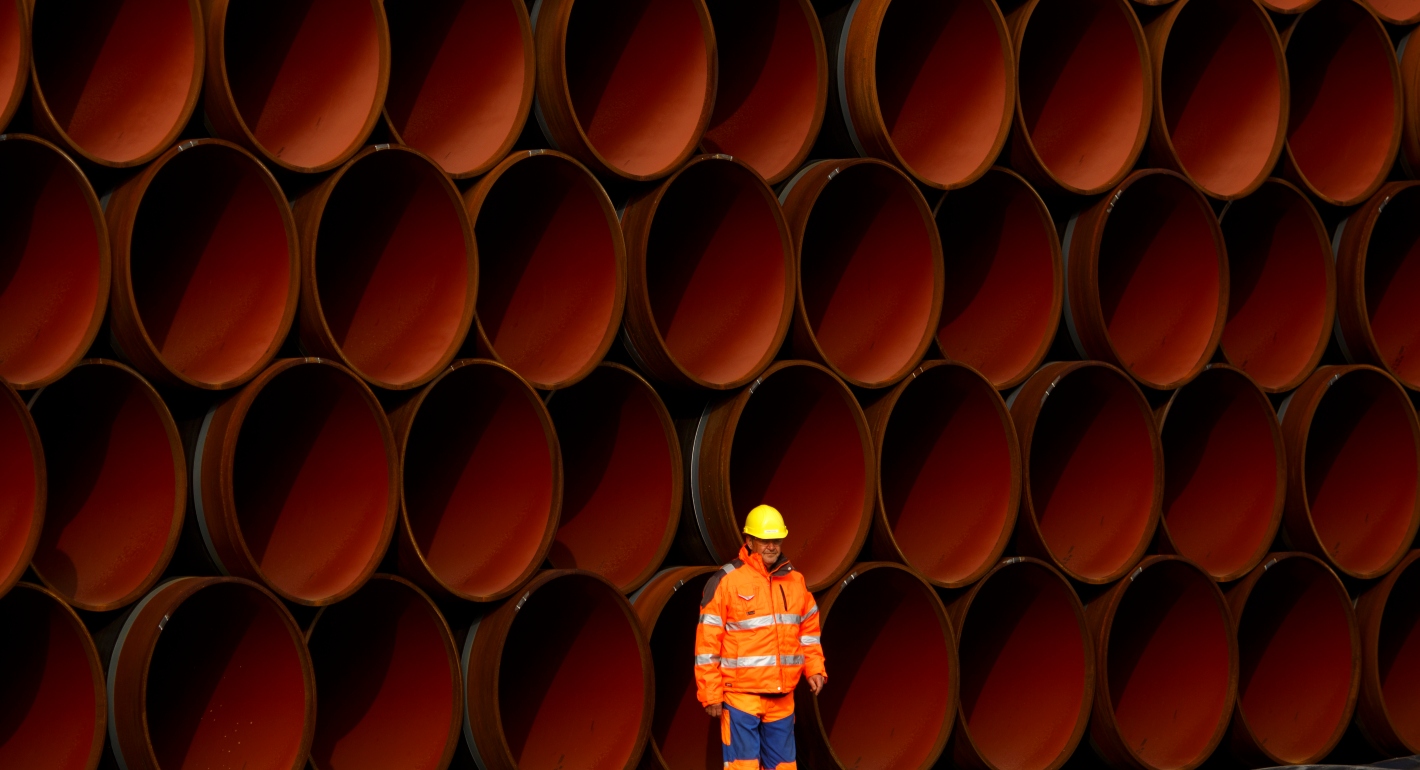
Russia continuously uses energy politics as a foreign policy instrument, thwarting EU diversification efforts, setting foot in the MENA region, and establishing itself as a major supplier of energy to China.
Source: IEMed Mediterranean Yearbook 2019
Since Russian President Vladimir Putin has been in power in Moscow, oil and gas have been an integral part of Russia’s strategy to regain influence on the world stage. Mastering gas supplies to the European Union and thwarting EU diversification efforts have long been key components of this strategy.
Other policy elements have gained importance over the years, such as setting foot in the Middle East and North African (MENA) region and catering for new customers such as China. In addition, in the medium term, the surge of the United States as a major liquefied natural gas (LNG) supplier to the EU will create a new challenge for Moscow.This article was originally published in the IEMed Mediterranean Yearbook 2019.

Senior Fellow, Carnegie Europe
Marc Pierini is a senior fellow at Carnegie Europe, where his research focuses on developments in the Middle East and Turkey from a European perspective.
Recent Work
Marc Pierini
Marc Pierini
Carnegie does not take institutional positions on public policy issues; the views represented herein are those of the author(s) and do not necessarily reflect the views of Carnegie, its staff, or its trustees.

China has showcased its engineering prowess with small modular reactor demonstration projects. But turning these technological achievements into commercial success will be a greater challenge.

Tong Zhao

The Plaza Accord was not an externally imposed punishment of Japan but part of a broader restructuring that Japanese economists and policymakers themselves recognized was necessary. Its effects were undermined, however, when Tokyo responded to the resulting slowdown with policies that exacerbated investment, credit expansion, and the very imbalances the adjustment was intended to resolve.

Michael Pettis
China’s banking crisis in the 2000s was resolved by transferring the costs to households through financial repression—a decision that recapitalized the banks while exacerbating the structural imbalances that continue to shape the Chinese economy today.
Michael Pettis

But their "principal to principal" model will only be as effective as the political strength of each leader back home.

Damien Ma

U.S. unpredictability has allowed China to capitalize on its positioning as the “responsible great power”. Paradoxically, the more China wins the perception game, the more likely expectations will rise for Beijing to deliver not just words but to demonstrate with its deeds.

Chong Ja Ian