

Paper
The nuclear relationship between China and the United States is increasingly shaped by widening perception gaps rather than deliberate strategic design.
Tong Zhao
{
  "authors": [
    "Ariel (Eli) Levite",
    "Toby Dalton"
  ],
  "type": "legacyinthemedia",
  "centerAffiliationAll": "",
  "centers": [
    "Carnegie Endowment for International Peace"
  ],
  "collections": [
    "U.S. Nuclear Policy",
    "Korean Peninsula"
  ],
  "englishNewsletterAll": "",
  "nonEnglishNewsletterAll": "",
  "primaryCenter": "Carnegie Endowment for International Peace",
  "programAffiliation": "",
  "programs": [],
  "projects": [],
  "regions": [
    "North America",
    "United States",
    "East Asia",
    "North Korea"
  ],
  "topics": [
    "Security",
    "Nuclear Policy",
    "Arms Control"
  ]
}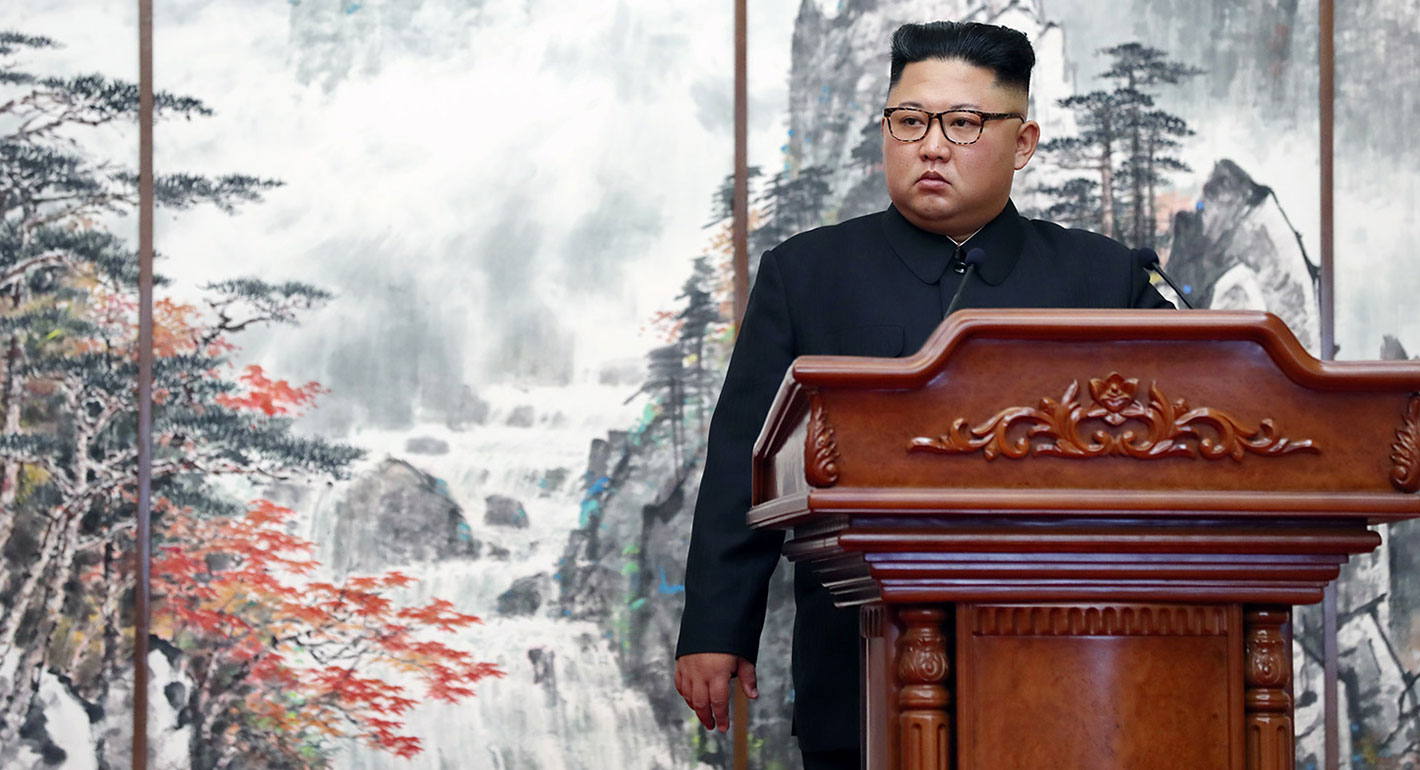
Source: Getty
In holding out for the big deal, unfortunately, the Trump administration—like its predecessors—sacrificed a more immediate and necessary operational objective: stopping North Korean progress toward a larger and more menacing nuclear arsenal that could reliably target the mainland United States.
Source: War on the Rocks
At the end of December, having paid his respects to his ancestral heritage by riding a white stallion to Mt. Paektu, Kim Jong Un returned to Pyongyang to deliver a lengthy address to the North Korean Worker’s Party Central Committee. In the speech, Kim laid out his new strategic vision, one that puts little faith in denuclearization talks with President Donald Trump. North Korea, he stated, would no longer be bound by a self-imposed moratorium on nuclear and missile testing, and that soon “the world will witness a new strategic weapon.” More ominously, he committed to “reliably maintain the constant readiness for action of the powerful nuclear deterrent,” a destabilizing development that increases the likelihood of a nuclear detonation. The bottom line: North Korea will remain a state that possesses a deadly nuclear arsenal and plans to further modernize and expand it. Now what?
Kim’s speech puts the final nail in the coffin of Trump’s policy of seeking a “big deal” of fully verified and irreversible denuclearization in return for economic rewards. Kim’s pronouncements reaffirm the centrality of self-reliance and sufficiency in North Korea’s strategic doctrine and make clear it will no longer agree in principle to unilateral disarmament. Nor is it any longer committed to the denuclearization path it endorsed in previous agreements.
Instead, North Korea “will steadily develop indispensable and prerequisite strategic weapons for national security until the United States rolls back its hostile policy and [a] lasting and durable peace mechanism is in place.” Kim warned his citizens of “tightening our belts” in preparation for a long confrontation with the United States. Judging by this yardstick, denuclearization of the Korean peninsula is a remote possibility, certainly while Kim’s regime remains, and no matter how miserable international sanctions make life in North Korea.

Senior Fellow, Nuclear Policy Program, Technology and International Affairs Program
Levite was the principal deputy director general for policy at the Israeli Atomic Energy Commission from 2002 to 2007.

Senior Fellow and Co-director, Nuclear Policy Program
Toby Dalton is a senior fellow and co-director of the Nuclear Policy Program at the Carnegie Endowment. An expert on nonproliferation and nuclear energy, his work addresses regional security challenges and the evolution of the global nuclear order.
Carnegie does not take institutional positions on public policy issues; the views represented herein are those of the author(s) and do not necessarily reflect the views of Carnegie, its staff, or its trustees.

The nuclear relationship between China and the United States is increasingly shaped by widening perception gaps rather than deliberate strategic design.

Tong Zhao

Chinese biotech companies have been on the receiving end of U.S. economic coercion. Yet their responses have differed significantly because firm and state interests are not uniformly aligned. For Washington, treating all Chinese tech firms the same, irrespective of their actual interests, risks pushing them farther into Beijing’s corner.

Xue Gong

But their "principal to principal" model will only be as effective as the political strength of each leader back home.

Damien Ma

U.S. unpredictability has allowed China to capitalize on its positioning as the “responsible great power”. Paradoxically, the more China wins the perception game, the more likely expectations will rise for Beijing to deliver not just words but to demonstrate with its deeds.

Chong Ja Ian

Across Asia, China is better positioned to withstand energy shocks from the fallout of the Iran war. Its abundant coal capacity can ensure stability in the near term. Yet at the same time, the country’s energy transition away from coal will make it even less vulnerable during the next shock.
Damien Ma