

Commentary
Steve Feldstein
{
  "authors": [
    "Steve Feldstein"
  ],
  "type": "legacyinthemedia",
  "centerAffiliationAll": "dc",
  "centers": [
    "Carnegie Endowment for International Peace"
  ],
  "collections": [],
  "englishNewsletterAll": "democracy",
  "nonEnglishNewsletterAll": "",
  "primaryCenter": "Carnegie Endowment for International Peace",
  "programAffiliation": "DCG",
  "programs": [
    "Democracy, Conflict, and Governance"
  ],
  "projects": [],
  "regions": [
    "East Asia",
    "China"
  ],
  "topics": [
    "Economy",
    "Trade",
    "Technology"
  ]
}
Source: Getty
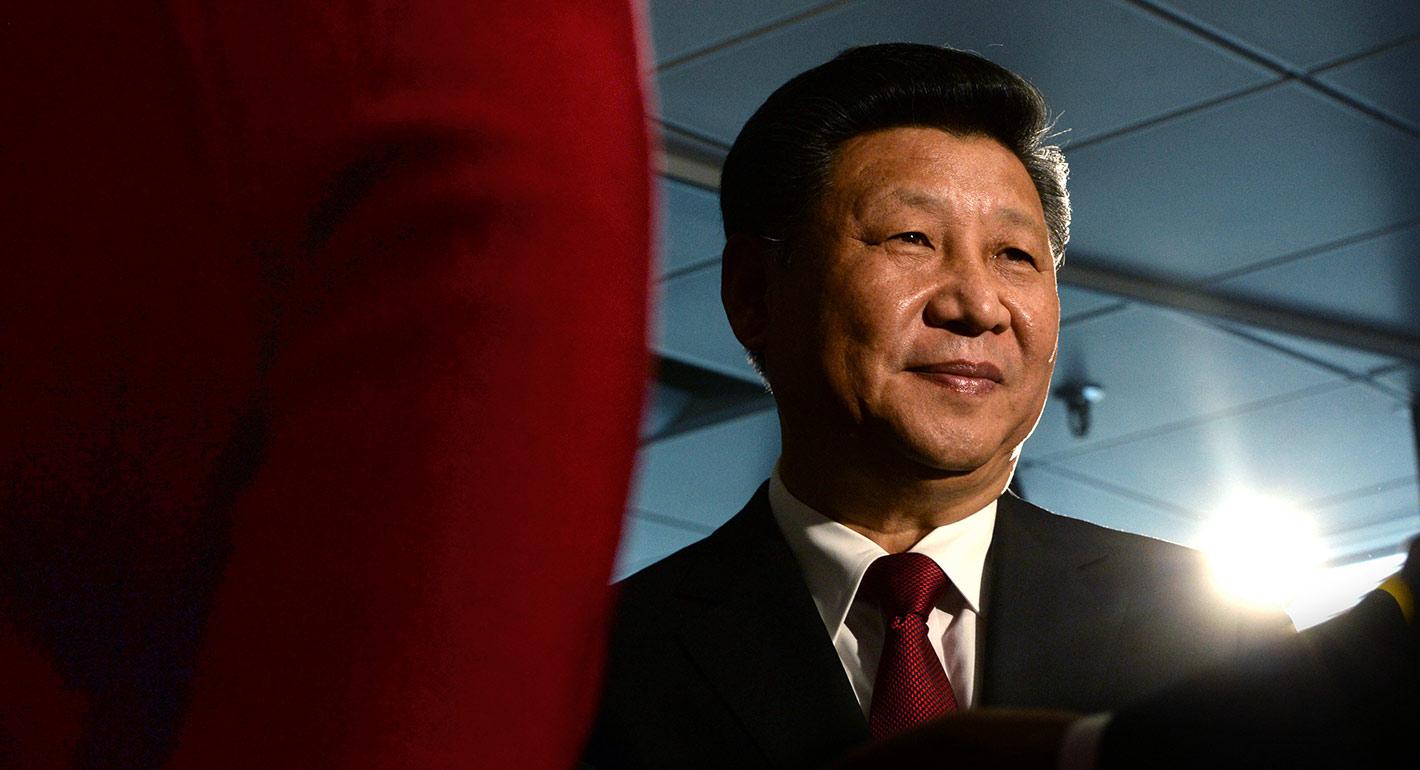
China’s proliferation of digital authoritarian tools presents serious challenges. Its technology is used by repressive regimes to quell mass protests, monitor political opponents, and keep autocratic leaders in power.
Source: War on the Rocks
Last year, the Wall Street Journal and AP broke stories about how Chinese technicians from Huawei were working directly with government security forces in Uganda and Serbia to install advanced facial recognition cameras for surveillance purposes. Both countries have spotty human rights records. In Uganda, longtime ruler Yoweri Museveni faces upcoming elections in 2021 and is laying a repressive groundwork to intimidate would-be political opponents and suppress opposition voters. Similarly, Serbia under the ruling Serbian Progressive Party has increasingly moved in an illiberal direction. Both governments have strong incentives to use digital tools to counter their opponents and ensure their political survival. In both cases, the Chinese have proven to be willing partners.
What can we make of China’s involvement? Do its actions represent a larger effort to spread coercive technology in order to bolster non-democratic leaders? What is driving these trends?

Director and Senior Fellow, Democracy, Conflict, and Governance Program
Steve Feldstein is a senior fellow and director of the Democracy, Conflict, and Governance Program at the Carnegie Endowment for International Peace. His research focuses on technology, national security, the global context for democracy, and U.S. foreign policy. His new book, Bytes and Bullets: Global Rivalry, Private Tech, and the New Shape of Modern Warfare, is now available from St. Martin’s Press.
Recent Work
Steve Feldstein
Steve Feldstein, Shreya Joshi
Carnegie does not take institutional positions on public policy issues; the views represented herein are those of the author(s) and do not necessarily reflect the views of Carnegie, its staff, or its trustees.

The Plaza Accord was not an externally imposed punishment of Japan but part of a broader restructuring that Japanese economists and policymakers themselves recognized was necessary. Its effects were undermined, however, when Tokyo responded to the resulting slowdown with policies that exacerbated investment, credit expansion, and the very imbalances the adjustment was intended to resolve.

Michael Pettis

The nuclear relationship between China and the United States is increasingly shaped by widening perception gaps rather than deliberate strategic design.

Tong Zhao
China’s banking crisis in the 2000s was resolved by transferring the costs to households through financial repression—a decision that recapitalized the banks while exacerbating the structural imbalances that continue to shape the Chinese economy today.
Michael Pettis

Chinese biotech companies have been on the receiving end of U.S. economic coercion. Yet their responses have differed significantly because firm and state interests are not uniformly aligned. For Washington, treating all Chinese tech firms the same, irrespective of their actual interests, risks pushing them farther into Beijing’s corner.

Xue Gong

China’s latest energy plan explicitly calls for integrating data centers into the electricity system, particularly connecting them to green energy. It appears Beijing wants to use compute as a source of domestic demand to absorb renewables excess capacity.

Damien Ma